

Influence of Rolling Direction of Grain-Oriented Electrical Steel on Transformer Core Performance
The rolling direction of grain-oriented electrical steel is a key factor affecting transformer core performance. This special electrical steel forms fixed grain texture during cold rolling. Its magnetic properties show obvious directional differences in different directions.
The rolling direction achieves the best magnetic conductivity and the lowest core loss. Complete Goss texture arranges grains along the rolling direction. Magnetic flux passes through the steel plate with minimal resistance. Hysteresis loss and eddy current loss stay at the lowest level. This state ensures the highest working efficiency of transformer cores.
The transverse direction shows poor magnetic performance. Magnetic flux perpendicular to the rolling direction faces large grain resistance. It produces obvious magnetic hysteresis and high core loss. Transformer cores with wrong direction arrangement will have rising no-load loss directly.
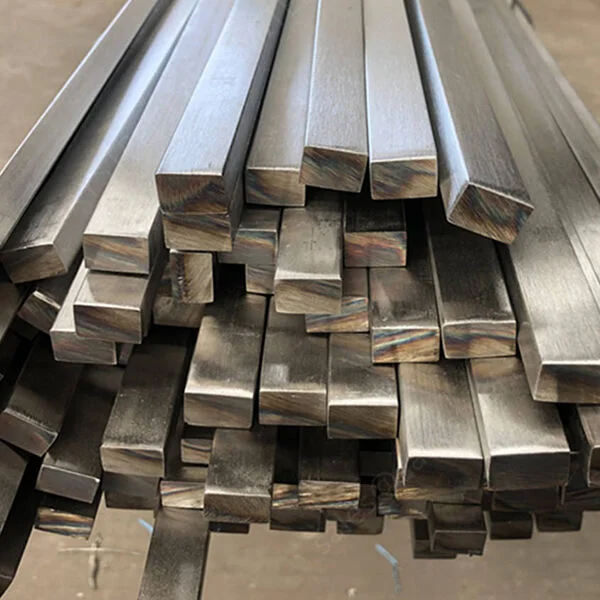
Reverse rolling direction use causes severe performance deterioration. Wrong assembly direction increases core loss by more than 40%. It also raises transformer working temperature and operating noise. Long-term reverse use accelerates magnetic aging of electrical steel plates.
Reasonable direction matching optimizes core splicing effects. Transformer iron cores adopt lap joint and step lap structures. Workers arrange rolling direction consistent with magnetic flux circulation direction. This matching eliminates local magnetic resistance mutation. It ensures uniform magnetic flux distribution in the whole core.
Accurate direction control reduces transformer local overheating. Disordered rolling directions cause unbalanced local magnetic loss. Unbalanced loss leads to partial temperature rise of iron cores. Standard direction layout makes loss distribution uniform. It improves overall heat dissipation and operation stability.
Direction standardization also lowers equipment operation noise. Ordered grain arrangement reduces magnetostriction differences. It weakens irregular vibration of iron cores during magnetization. Finally, it realizes noise reduction of the whole transformer equipment.
In conclusion, rolling direction determines the magnetic performance upper limit of oriented electrical steel. Standard direction matching guarantees low loss and low noise operation. Wrong direction arrangement causes comprehensive performance degradation of transformer cores.







 English
  Japanese
  Korean
  French
  German
  Spanish
  Portuguese
  Russian
  Arabic
  Italian
  Turkish
  Dutch
Dutch  Polish
  Swedish
  Danish
  Norwegian
  Finnish
  Greek
Greek  Hungarian
  Czech
Czech  Romanian
  Bulgarian
  Slovenian
  Croatian
  Slovak
  Malay
Malay  Indonesian
  Thai
Thai  Vietnamese
  Myanmar
  Khmer
Khmer  Lao
Lao  Tagalog
  Hindi
Hindi  Bengali
  Urdu
Urdu  Nepali
  Sinhala
  Hebrew
  Ukrainian
  Serbian
  Icelandic
  Swahili