
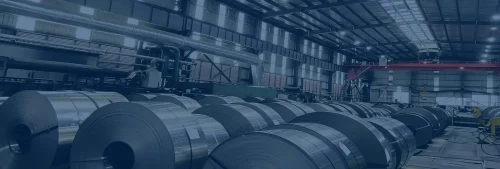
China’s Steel Self-Sufficiency Hits 100% with Optimized Product Structure
The self-sufficiency rate of steel in China has basically reached 100%, and the product structure is moving towards a new and better direction
The steel industry has refined hard work
Baoshan, Shanghai, Baosteel Cold Rolling Plant, utilizes artificial intelligence to process and predict hundreds of parameters in real-time, reducing the annual cost of blast furnaces by approximately 15 million yuan.
In Anshan, Liaoning Province, the production workshop of Ansteel Steel’s silicon steel division has modern production lines running at high speed, and all the electricity required for production is green electricity.
From south to north, the two scenarios of “intelligence” and “greenness” reflect the transformation achievements of China’s steel industry.
The steel industry is an important foundational industry in China. In recent years, how can the steel industry, which is in a period of deep adjustment, create new quality productivity? The reporter conducted an interview.
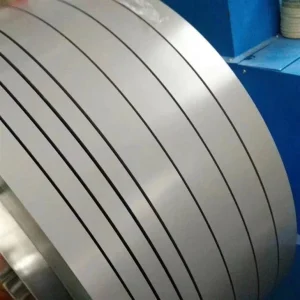
0.1mm thick electrical steel
The supply of high-end materials continues to increase
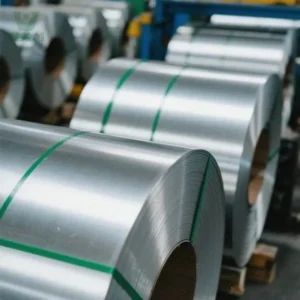
At the Shougang Zhixin Electrical Steel Production Line, the robotic arm operates efficiently and rolls of electrical steel products are continuously produced offline.
This electrical steel was first released globally in August last year, with a thickness of only 0.1 millimeters, “said An Dongyang, chief technical expert of Shougang Zhixin, holding a sample in his hand and introducing to reporters. Electrical steel is a key material for new energy vehicle motor cores, high-end home appliances, ultra-high voltage transformers and other products.
Our product is aimed at the development trend of small size and high power of new energy vehicle motors. As soon as the product was launched, more than ten car companies wanted to cooperate with us and apply it in new products. “An Dongyang said that compared with the widely used 0.25mm thick electrical steel in the industry, its iron loss is reduced by more than 30%, the energy conversion efficiency of the motor is higher, and it can greatly improve the range of new energy vehicles.
Nowadays, one out of every three new energy vehicles in China is equipped with a ‘Shougang core’, “said An Dongyang. In the future, Shougang will continue to focus on new fields such as electrical steel for humanoid robots, and continue to promote product upgrades to the high-end.
In recent years, China’s steel industry has focused on promoting a new and better variety structure, continuously enhancing the supply capacity of high-end materials. During the 14th Five Year Plan period, China’s steel industry has continued to increase its investment in innovation, with nearly 20 new global steel debut products added by 2025 alone.
China Baowu Magang high-speed wheels support the world’s fastest high-speed train CR450, successfully reaching speed; Ansteel Group’s Pangang blade steel assists in the delivery of China’s first domestically produced F-class 50 MW heavy-duty gas turbine; Nangang Ship Plate and Section Steel Exclusive Supply of China’s First Domestic Large Cruise Ship “Aida Magic City”
Supply creates demand, and demand drives supply. High end products are witnessing the changes in China’s steel demand structure. By 2025, the proportion of steel used in China’s construction industry will decrease from 58% in 2020 to 49%, while the proportion of steel used in manufacturing will increase from 42% to 51%.
For the first time in the history of our country, the steel used in the manufacturing industry has exceeded that used in the construction industry. This is the result of the steel industry actively adapting to changes in demand and promoting product quality and upgrading. “Jiang Wei, Vice President and Secretary General of the China Iron and Steel Industry Association, said that during the” 14th Five Year Plan “period, China’s self-sufficiency rate of steel has basically reached 100%, ensuring high-quality and high-level support for the demand for steel in the development of the national economy.
Intelligent agent capable of steelmaking
The full process application of artificial intelligence technology
At the production site of Tangshan Iron and Steel Company’s steelmaking division of Hebei Iron and Steel Group, molten steel at 1650 degrees Celsius continuously gushed out from the No.1 converter.
Several tens of meters away, in the main control room of the converter of the steelmaking division of Tangshan Iron and Steel Company, Chief Expert Zhou Quanlin stared closely at the central control screen, lightly tapping his fingertips, and the system independently completed the key smelting process.
Accurately controlling the temperature of molten steel is not a simple task.
Last year, Hegang integrated its large model into its self built platform, developed a steelmaking intelligent agent, and officially applied it to key processes in steel smelting.
In the past, we had to stare at the flames at the furnace mouth and judge the timing and amount of feeding based on experience, “said Zhou Quanlin. The large model is based on the massive data accumulated from past steelmaking production operations, and analyzes real-time data such as furnace sound and flue gas to accurately control the reaction state inside the furnace.
The intelligent upgrade has achieved significant results – since the intelligent agent was put into use on Tangshan Iron and Steel’s steelmaking production line, the steelmaking efficiency has increased by 10.3%, and the comprehensive energy consumption has been reduced by about 10%.
Not just in the steelmaking process. In the quality inspection process, the artificial intelligence cloud table inspection system developed by Baosteel Group has a key defect recognition accuracy rate of 96% and a defect omission rate reduced by 35%; In the supply chain management process, after applying artificial intelligence technology, Zhaogang Group can process more than 10 million transaction messages per day, with an accuracy rate of over 95%, and complete billions of intelligent transaction matching
Artificial intelligence technology has been applied to various aspects of steel production, manufacturing, and operation, greatly accelerating the intelligent manufacturing upgrade of the steel industry. Among the key statistical enterprises of the China Iron and Steel Association, 95% of them have incorporated digital transformation strategies into their overall development process, and the intelligent manufacturing of steel is shifting from “single point exploration” to “systematic promotion”.
As an important basic industry of the national economy, steel has rich data foundation and industrial application scenarios, making it an ideal practice field for the deep empowerment of the new generation of artificial intelligence. Zhang Longqiang, the director of the Metallurgical Industry Information Standards Research Institute, said that in the future, “AI+steel” has broader development space. With the deep application of big model technology to the entire process of steel production, the intelligence level of the steel industry will be further improved.
Reduce production by over 100 million tons
The effectiveness of ‘anti internal competition’ continues to emerge
Through a piece of data, we can glimpse the operational quality and efficiency of the steel industry over the past year: in 2025, the China Iron and Steel Association will focus on calculating the total profit of enterprises, which will reach 115.1 billion yuan, a year-on-year increase of 1.4 times. Among them, the main business of steel will generate a profit of 44.5 billion yuan, achieving a turnaround from losses to profits.
In 2025, although domestic demand has declined and the foreign trade situation is complex and severe, the steel industry has achieved stable operation, with a year-on-year decrease in production and significant improvement in efficiency.
The reporter learned that the improvement of the efficiency of the steel industry is due to the downward shift of the focus of raw material costs, as well as the self-discipline and production control of steel enterprises to stabilize prices, and the continuous improvement of the modernization level of industry governance.
The data can prove that in 2025, the national crude steel production will be 961 million tons, a year-on-year decrease of 4.4%. During the 14th Five Year Plan period, the steel industry actively explored new mechanisms for capacity management that are in line with market laws, promote industrial transformation and upgrading, and eliminate the fittest. It continued to reduce production by over 100 million tons, further optimized the industry layout, and achieved sustained results in the fight against internal competition. By 2025, the CR10 of the steel industry (the top 10 steel companies in terms of industry concentration) will reach 43.1%, an increase of 4.2 percentage points from 2020.
Many steel companies have actively abandoned the old mindset of blindly pursuing scale and begun to attach importance to controlling production, no longer simply diluting costs with scale, “said Wu Wenwen, founder and chairman of Steel Home website. The change in mindset has driven the decline in crude steel production and laid the foundation for improving market supply and demand relations.
Jiang Wei said that in the past year, the self-discipline and production control of enterprises have been good, and steel inventory is relatively low. On the one hand, this has led to a decrease in demand for raw materials and a downward shift in prices. On the other hand, it has maintained a basic balance between supply and demand in the steel market, and steel prices have remained relatively stable, achieving a gradual return of industry benefits to a reasonable profit level that can support high-quality development.
Looking ahead to the future, the main steel industry will maintain a stable operating trend, and the steel industry has the conditions to achieve high-quality and efficient development. Among them, the development focus of the real estate industry is inclined to the construction of “good houses”, the supply of affordable and improved housing is increased, and urban renewal is promoted in an orderly manner; The manufacturing industry is paying more attention to improving quality and upgrading. Traditional steel industries such as machinery, automobiles, ships, household appliances, and equipment will continue to show steady growth, while emerging industries such as new energy, low altitude economy, and artificial intelligence are giving birth to new growth points in steel consumption.
This year marks the beginning of the 15th Five Year Plan. Jiang Wei stated that in the process of reducing development and optimizing stock in the industry, we will always maintain strategic determination, prevent “internal competition”, focus on high-end, intelligent, and green goals, and the steel industry will be able to achieve high-quality development in a higher level of supply-demand dynamic balance. (Reporter Wang Shanshu)
Source: People’s Daily




 English
  Japanese
  Korean
  French
  German
  Spanish
  Portuguese
  Russian
  Arabic
  Italian
  Turkish
  Dutch
Dutch  Polish
  Swedish
  Danish
  Norwegian
  Finnish
  Greek
Greek  Hungarian
  Czech
Czech  Romanian
  Bulgarian
  Slovenian
  Croatian
  Slovak
  Malay
Malay  Indonesian
  Thai
Thai  Vietnamese
  Myanmar
  Khmer
Khmer  Lao
Lao  Tagalog
  Hindi
Hindi  Bengali
  Urdu
Urdu  Nepali
  Sinhala
  Hebrew
  Ukrainian
  Serbian
  Icelandic
  Swahili