
High-End Silicon Steel Saves Massive Power via Transformer Upgrades
The NDRC and nine departments released the 2023 transformer renewal guidelines. These rules set clear efficiency targets for existing units. However, many low-efficiency transformers still carry conventional oriented steel. Therefore, replacing that sheet with Hi-B grade is the fastest saving available.
For example, a single large power transformer loses energy every hour it runs. Subsequently, those hourly losses scale across the whole national fleet. As a result, the accumulated waste equals billions of kilowatt-hours annually.
Demand forecasts confirm the shift. From 2023 to 2030, Chinese oriented steel demand will add 2.5–3 Mt. Meanwhile, high-grade non-oriented demand should hit 4.7 Mt by 2025, a net gain of 2.7 Mt over 2020.
Grade Selection by Equipment
- UHV main transformer: 0.23–0.27 mm Hi-B, judged on P1.7/50.
- Distribution transformer: 0.30 mm conventional or Hi-B sheet.
- EV traction motor: 0.20–0.25 mm non-oriented, high frequency.
- Wind generator: 0.35–0.50 mm non-oriented, thick and stable.
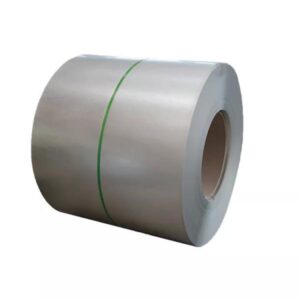
We stock M3 Grain Oriented Electrical Steel for UHV cores. Buyers also use M5 Grain Oriented Electrical Steel in distribution units. Furthermore, M19 Non Oriented Electrical Steel covers traction motors and wind generators.
What Buyers Check at the Coil Level
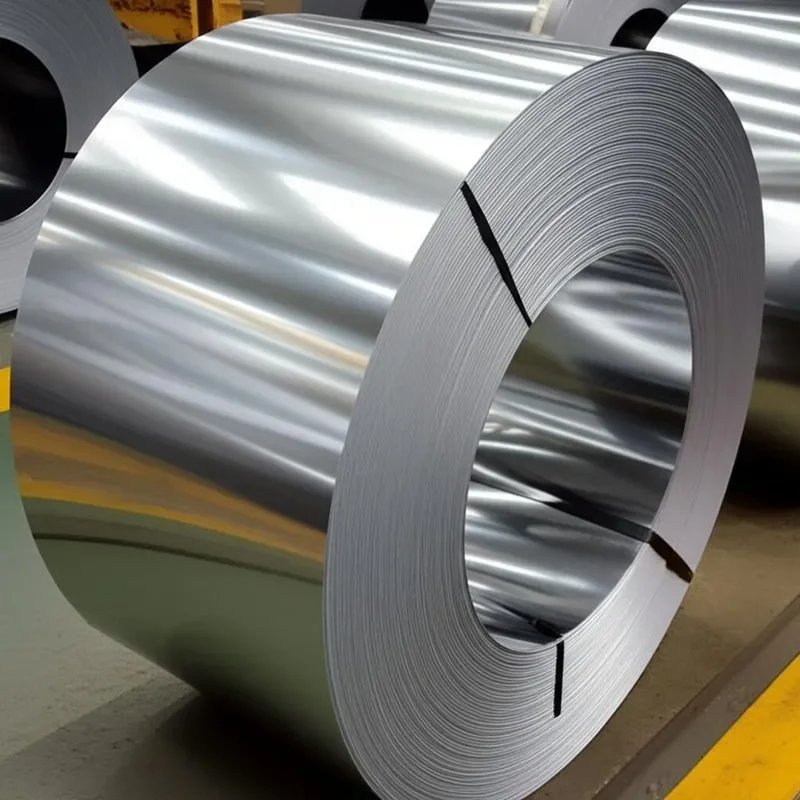
Thickness tolerance matters first. Typically, a 0.27 mm coil holds ±0.02 mm across the strip. Coating choice follows: C-5 for standard cores, C-6 for heavy stacking. Slit width should stay within ±0.05 mm, otherwise stamping yield drops.
Of course, documentation decides acceptance. Every coil ships with MTC EN 10204 3.1. Core loss is tested under ASTM A343 or IEC 60404-2. Without those sheets, overseas QA teams will reject the lot.
Frequently Asked Questions
Yes, it carries a premium. Nevertheless, it delivers more kVA per kilogram. Therefore, cost per transformer rating often falls.
Most designs use 0.27 mm. Some compact cores go to 0.23 mm instead.
No. Loss rises sharply in the rolling-transverse direction. Subsequently, no-load loss and temperature both climb.
Stock grades ship in 3–7 days. Custom slit widths take 5–10 working days.
CRGO sits near multi-year lows. For the latest movement, read our oriented silicon steel price 2026 analysis.
What We Do Not Do
- We do not manufacture transformers or motors.
- We do not stamp finished laminations.
- We do not supply amorphous or nanocrystalline cores.
Consequently, we remain an upstream coil supplier, not a competitor to your factory. Separately, our CRGO export grades guide explains which specifications clear overseas customs.
Specify Your Order
- State the equipment type and rated voltage.
- Name the grade (M3, M4, M5, or M19).
- Give thickness and slit width.
- Confirm tonnage and destination port.
We will reply with stock, price, and lead time within one working day.
- Email: vera.liang@ztwysteel.com
- Location: Xishan District, Wuxi, Jiangsu, China
- Supply range: CRGO grain-oriented M3/M4/M5, CRNGO non-oriented M19–M43, slit coil
- Slitting tolerance: ±0.05 mm
- Documentation: MTC EN 10204 3.1, core loss per ASTM A343 / IEC 60404-2






 English