
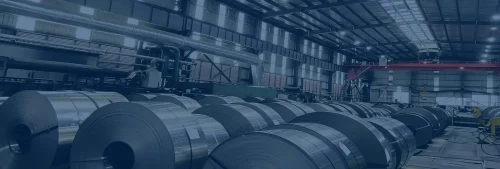
Are Sheets Electrically Conductive?
I. Electrical Conductivity of Silicon Steel Sheets and Influencing Factors
The electrical conductivity of सिलिकॉन स्टील sheets is mainly determined by silicon content and crystal structure. Silicon content generally ranges from 1% to 4.5%. Silicon atoms hinder the movement of free electrons of iron atoms, thereby reducing electrical conductivity.
Grain-oriented सिलिकॉन स्टील sheets feature uniformly aligned crystal grains, resulting in lower electric resistance when current flows along the rolling direction. Non-oriented सिलिकॉन स्टील sheets have randomly distributed grains, delivering relatively consistent conductivity in all directions.
In practical applications, the conductivity of silicon steel sheets must strike a balance between two conflicting requirements: maintaining efficient magnetic flux transmission while restraining eddy current loss. Among mainstream gauges ranging from 0.23 mm to 0.5 mm, thinner silicon steel sheets possess higher resistance and suppress high-frequency eddy currents more effectively.
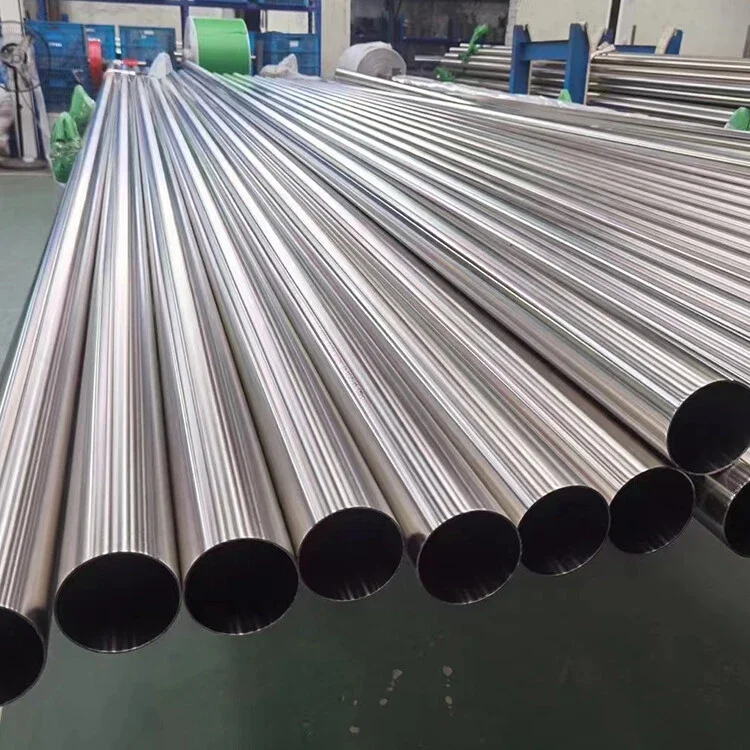
II. Application of Silicon Steel Sheets in Power Transformers
Grain-oriented silicon steel sheets are the preferred material for transformer cores. Their low conductivity, combined with the designated rolling direction, aligns the magnetization direction with grain orientation and keeps eddy current loss at a low level.
Non-oriented silicon steel sheets are widely adopted for rotating electrical machines, where isotropic magnetic performance is required.
The conductivity of silicon steel sheets is not an absolute binary property. Instead, a balanced performance profile is achieved by adjusting chemical composition and microstructure for specific application scenarios. This principle explains why silicon steel acts as an electrical conductor while its conductivity is intentionally suppressed.



 English
  Japanese
  Korean
  French
  German
  Spanish
  Portuguese
  Russian
  Arabic
  Italian
  Turkish
  Dutch
Dutch  Polish
  Swedish
  Danish
  Norwegian
  Finnish
  Greek
Greek  Hungarian
  Czech
Czech  Romanian
  Bulgarian
  Slovenian
  Croatian
  Slovak
  Malay
Malay  Indonesian
  Thai
Thai  Vietnamese
  Myanmar
  Khmer
Khmer  Lao
Lao  Tagalog
  Hindi
Hindi  Bengali
  Urdu
Urdu  Nepali
  Sinhala
  Hebrew
  Ukrainian
  Serbian
  Icelandic
  Swahili