
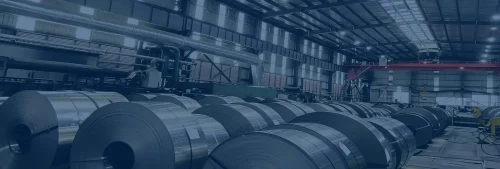
Why Silicon Steel Possesses Magnetism
I. Microscopic Origin of Magnetism
The magnetic properties of кремниева стомана stem from atomic-scale magnetic alignment. Each iron atom carries unpaired electrons, analogous to tiny built-in compass needles. When these atomic magnetic moments align uniformly, microscopic magnetic domains form. The addition of silicon optimizes this alignment process: acting like a choreographer, silicon widens the spacing between iron atoms and reduces lattice distortion. This allows magnetic domains to easily align uniformly under an external magnetic field, resulting in strong macroscopic magnetism.
II. The Dual Beneficial Effects of Silicon
Silicon serves two critical functions within the steel matrix:
- Resistivity regulator: Each 1% increase in silicon content raises electrical resistivity by roughly 5%, drastically cutting eddy current loss.
- Crystal structure optimizer: It facilitates the formation of cubic texture favorable for magnetic domain movement.
- Stabilizer: It suppresses iron carbide precipitation and maintains a stable ferritic microstructure.
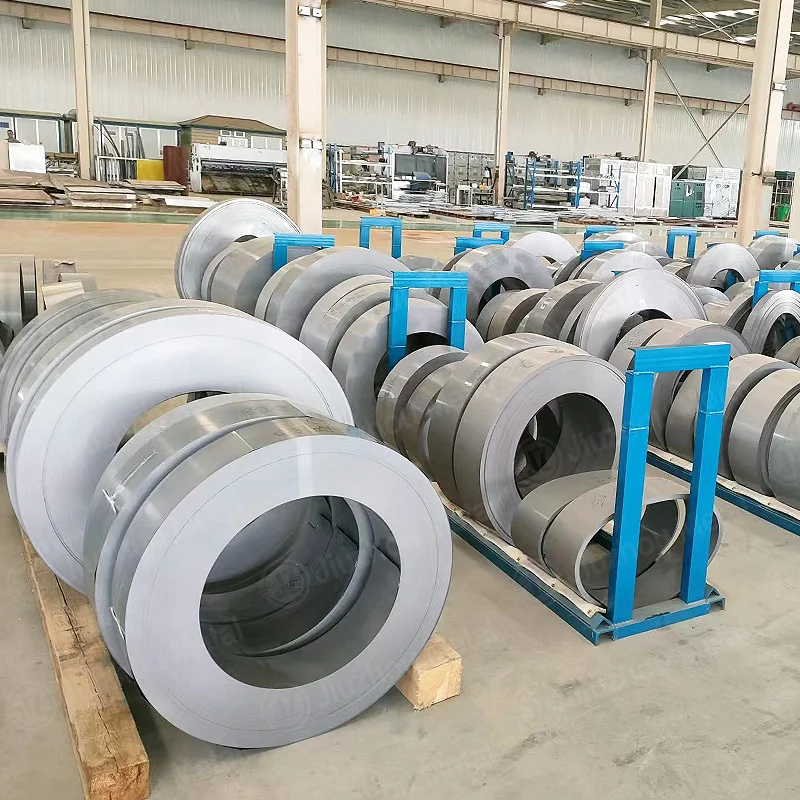
III. Balanced Alloy Design for Industrial Applications
Electrical engineers must strike a careful trade-off when selecting кремниева стомана grades:
- Transformers require high silicon content (~3%) to suppress noisy eddy current losses.
- Motor rotors need limited silicon content (~1%), as excessive silicon causes brittleness and impairs high-speed operation.
Magnetic induction and core loss are mutually exclusive performance indicators, and кремниева стомана alloy design represents the precise art of compromise.



 English
  Japanese
  Korean
  French
  German
  Spanish
  Portuguese
  Russian
  Arabic
  Italian
  Turkish
  Dutch
Dutch  Polish
  Swedish
  Danish
  Norwegian
  Finnish
  Greek
Greek  Hungarian
  Czech
Czech  Romanian
  Bulgarian
  Slovenian
  Croatian
  Slovak
  Malay
Malay  Indonesian
  Thai
Thai  Vietnamese
  Myanmar
  Khmer
Khmer  Lao
Lao  Tagalog
  Hindi
Hindi  Bengali
  Urdu
Urdu  Nepali
  Sinhala
  Hebrew
  Ukrainian
  Serbian
  Icelandic
  Swahili