
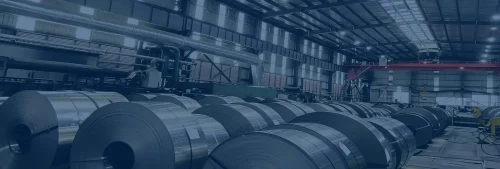
Can Silicon Steel Sheets Be Attracted by Magnets?
I. Material Properties of Silicon Steel Sheets
فولاذ السيليكون sheets are essentially low-carbon steel alloyed with silicon, with silicon content generally ranging from 1% to 4.5%. This alloy composition endows the material with both the mechanical strength of steel and optimized electromagnetic performance.
Iron-based materials are inherently ferromagnetic, which is the fundamental reason why فولاذ السيليكون sheets can be attracted by magnets. The addition of silicon modifies the material’s microstructure, making it more suitable for service under alternating magnetic fields.
Silicon serves two core functions in the alloy: boosting electrical resistivity and refining magnetic domains. Higher resistivity leads to lower eddy current loss under alternating magnetic fields; finer magnetic domain structures reduce energy loss during magnetization. Thanks to these properties, فولاذ السيليكون sheets maintain favorable magnetic permeability while featuring far lower hysteresis loss than ordinary steel sheets.

II. Performance in Practical Applications
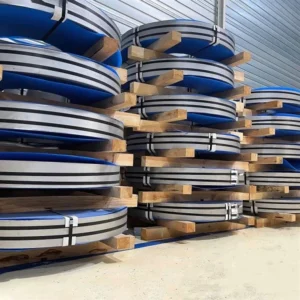
In electric motors and transformers, silicon steel sheets are normally stacked and pressed to form iron cores. Obvious magnetic attraction occurs when a magnet approaches the stacked laminations, consistent with their magnetic conduction performance during operation.
It should be noted that silicon steel sheets of different grades deliver divergent magnetic properties. Non-oriented silicon steel sheets exhibit nearly uniform magnetic characteristics in all directions, whereas grain-oriented silicon steel sheets possess superior magnetic performance along the rolling direction.
The susceptibility of silicon steel sheets to magnetic attraction is a fundamental trait of this electromagnetic material, directly correlating with its functional performance in electrical equipment.



 English
  Japanese
  Korean
  French
  German
  Spanish
  Portuguese
  Russian
  Arabic
  Italian
  Turkish
  Dutch
Dutch  Polish
  Swedish
  Danish
  Norwegian
  Finnish
  Greek
Greek  Hungarian
  Czech
Czech  Romanian
  Bulgarian
  Slovenian
  Croatian
  Slovak
  Malay
Malay  Indonesian
  Thai
Thai  Vietnamese
  Myanmar
  Khmer
Khmer  Lao
Lao  Tagalog
  Hindi
Hindi  Bengali
  Urdu
Urdu  Nepali
  Sinhala
  Hebrew
  Ukrainian
  Serbian
  Icelandic
  Swahili