
What is non‑oriented silicon steel?
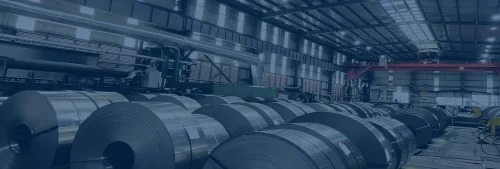
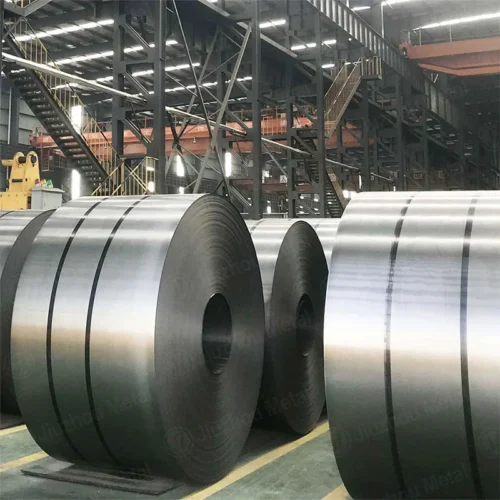
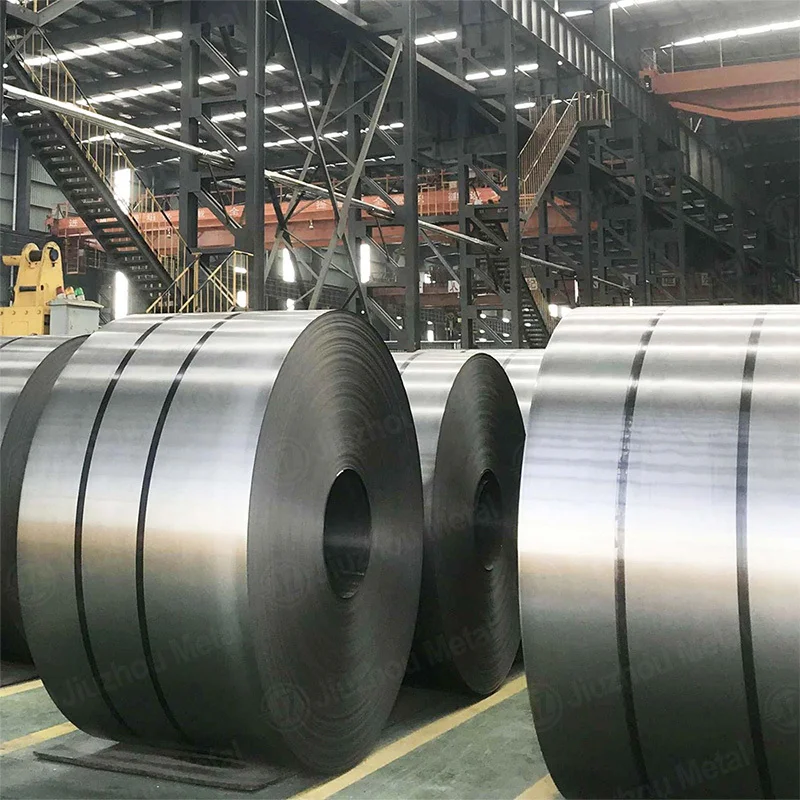
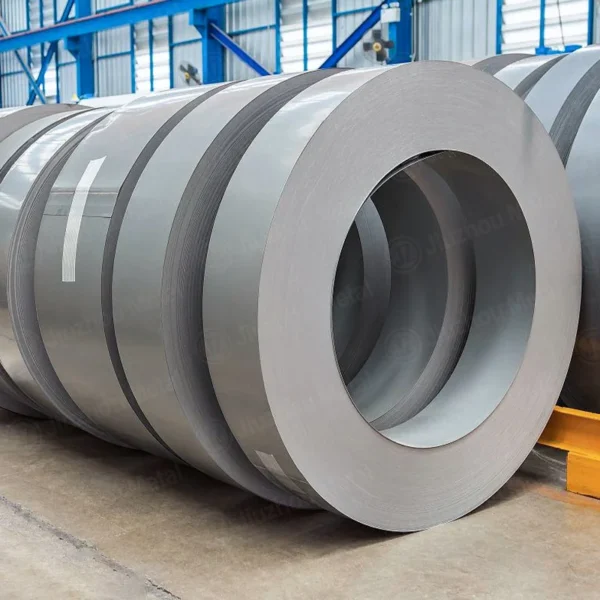
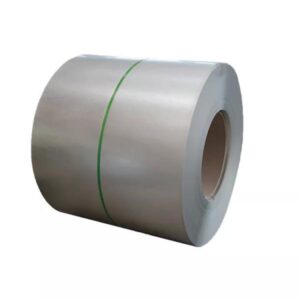
Non-oriented silicon steel is a flat-rolled iron-silicon alloy carrying 0.5–3.5% silicon. Its grains stay randomly oriented, so the sheet magnetises almost equally in every direction. Consequently, rotating machines rely on this grade while static cores usually take oriented sheet. Jiangsu Zhongtong Weiye Special Steel Co., Ltd. supplies it as coil and slit strip from Wuxi. Below, therefore, is both the working definition and the grade-selection logic.
What the Specification Actually Contains
Silicon raises resistivity, and higher resistivity suppresses eddy currents. Aluminium additions, in addition, trim loss slightly further. Standard gauge runs 0.35–0.65 mm, although thin grades reach 0.20 mm. Coating options include organic, inorganic, and semi-organic films. Loss is usually quoted at 1.5 T and 50 Hz, whereas thin grades also report 1.0 T figures.
Decision Tree: Picking a Non-Oriented Silicon Steel Grade
If the flux rotates, then choose a non-oriented grade. If frequency stays near 50 or 60 Hz, take 0.50 mm and watch P1.5/50. Once frequency climbs toward 400 Hz, drop to 0.35 mm or thinner. Above 2000 rpm, thin gauge matters more than nominal grade. If noise binds, then select a lower-loss grade and stiffen the stack. If cost dominates, stay mid-grade and accept slightly higher loss. That tree settles most enquiries in one pass. Edge cases, however, need loss curves rather than catalogue labels.
Why Isotropy Changes the Design
Rotating flux sweeps through 360 degrees. A directional grade would therefore waste its advantage on every off-axis angle. Non-oriented sheet avoids that penalty entirely. Punching yield improves too, since laminations nest in any orientation. In practice, that saving often exceeds the price gap against oriented sheet. Stacking follows the same logic, because uniform properties keep the assembled core predictable.
Grade Codes Decoded
Legacy AISI M-codes still dominate spec sheets. In that series, a lower number means lower core loss at a given gauge. Hence M19 outperforms M36, and M36 outperforms M47. Chinese GB designations work differently, where 50W470 means 0.50 mm gauge and 4.70 W/kg maximum loss. Therefore, the number after the W states the actual loss limit. Never compare an M-code against a W-code directly; instead, convert both to P1.5/50 first.
Three Places Loss Leaks Away
Dull dies leave burrs that short adjacent laminations, and eddy loss climbs immediately. Stamping strain, meanwhile, degrades permeability unless you anneal at 750–800 °C. Scratched insulation creates local shorts, and varnish impregnation hides the fault until the unit overheats. Each leak costs more than a one-grade upgrade, so process discipline beats grade shopping.
Test Evidence to Demand
Ask for loss measured on an Epstein frame per ASTM A343 or IEC 60404. Production control may instead use a single-sheet tester. Both are acceptable, provided the report states frequency, induction, and sample orientation. Typical reporting points are 1.5 T at 50 Hz, while oriented comparisons use 1.7 T. Aerospace grades, moreover, add 400 Hz figures. Generator duty also needs mechanical strength data, which our note on mechanical strength parameters already covers.
Where It Goes
Induction motors use it for stator and rotor cores. Servo and synchronous machines, similarly, benefit from the uniform response. Wind and hydro generators depend on it under varying load. Distribution transformers often prefer non-oriented grades, since voltage stays lower. Reactors and welding sets apply it at moderate frequency. Oriented sheet, by contrast, still wins in large power transformers where flux never turns.
Traction and industrial stators usually take M19 Non Oriented Electrical Steel, which spans the 0.47–0.50 mm band. Larger machines often choose M36 Non Oriented Electrical Steel, because it trades some loss for cost. Where flux never turns, M4 Grain Oriented Electrical Steel remains the better fit.
Frequently Asked Questions
Yes, routinely. Our note on generator core applications explains the limits.
Only above roughly 400 Hz. At 50 Hz, thinner sheet mainly raises cost.
Around 2.5–3.2% for motor grades. Higher silicon turns brittle.
ASTM A343 and IEC 60404 for testing. GB/T 2521 covers Chinese grades.
Yes. High-frequency traction designs need thin, low-loss sheet; see our EV motor core note.
What We Do Not Do
- We do not roll or anneal steel.
- We do not stamp laminations or build motors.
- We do not certify efficiency classes.
Consequently, we supply coil, slit to width, with test documentation.
Specify Your Order
- State the machine type and frequency.
- Name the grade or the loss limit.
- Give gauge and slit width.
- Confirm tonnage and port.
We reply with stock, price, and lead time within one working day.
- Email: vera.liang@ztwysteel.com
- Location: Xishan District, Wuxi, Jiangsu, China
- Supply range: CRNGO M19–M47 at 0.35–0.65 mm, CRGO M3–M5 at 0.23–0.35 mm
- Slitting tolerance: ±0.05 mm
- Documentation: MTC EN 10204 3.1, core loss per ASTM A343 / IEC 60404-2, coating specification





 English