

What sizes and wall thicknesses are available for copper pipes?
Only two numbers matter, since copper pipe sizes run from 2 to 300 mm outside diameter. Wall runs 0.2 to 50 mm. Length comes cut to order, and the mill marks each bundle. Jiangsu Zhongtong Weiye Special Steel Co., Ltd. stocks C12200/TP2 copper pipe across that range, and it quotes inch and metric callouts side by side.
The Short Answer
Outside diameter spans 2 to 300 mm, and wall spans 0.2 to 50 mm. A buyer picks the diameter and the wall, while the bore follows from arithmetic. Hence three numbers describe a tube, yet only two belong on the order.
Three Numbers, Two Choices
The outside diameter sets the fitting, since a compression ring grips the outer surface. Wall thickness sets the pressure rating, because a thicker wall carries more load. The bore follows as diameter minus twice the wall, so it needs no separate line. Therefore, a drawing that lists all three may contradict itself.
Nominal Size vs Real Size
A half-inch tube measures 12.7 mm across, not 12.5 mm, since the callout came from inches. DN15 pipe measures about 15 mm nominal, yet its real outside diameter may reach 15.9 mm. A metric order states the true millimetre, so no one converts twice. Hence a buyer should write the millimetre beside any inch callout.
Wall Schedules in Practice
Water tube comes in three weights, often called K, L, and M, from heavy to light. A K wall suits buried service, while an M wall suits an interior run. A condenser tube uses a thinner wall again, since the shell carries the load. Therefore, the schedule letter answers a pressure question before the price does.
The Pressure Arithmetic
A thin-wall tube fails by hoop stress, so the rating follows the wall divided by the diameter. Doubling the wall roughly doubles the burst pressure, while doubling the diameter halves it. A 22 mm tube with a 1 mm wall therefore holds far less pressure than a 10 mm tube. Hence the bore and the wall trade against each other.
Thin Wall — 0.2 to 1 mm
An instrument line, a condenser tube, and a refrigerant coil use this band. Bending is easy here, since a thin wall forms without a spring. A wrong bend radius still flattens the bore, so a mandrel helps. Therefore, this band suits a coil run rather than a heavy header.
Middle Wall — 1 to 5 mm
A water riser, a heating loop, and a compressed-air header sit here. The wall carries normal service pressure, and the tube still cuts with a wheel. A threaded joint needs more wall than a brazed one, since a thread removes metal. Hence the joint type sets the wall floor.
Heavy Wall — 5 to 50 mm
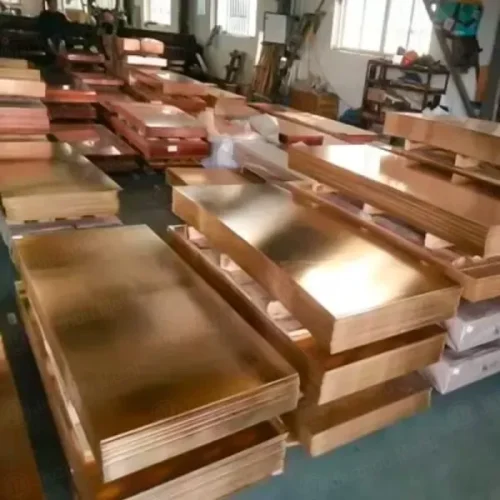
A process pipe, a mould cooling channel, and a marine sea-water line use this band. A thick wall resists both pressure and external load, yet it bends only with a machine. Weight also grows fast, so a 300 mm pipe at 50 mm wall needs a crane. Therefore, this band belongs to fabricated systems, not coils.
Coil or Straight Length
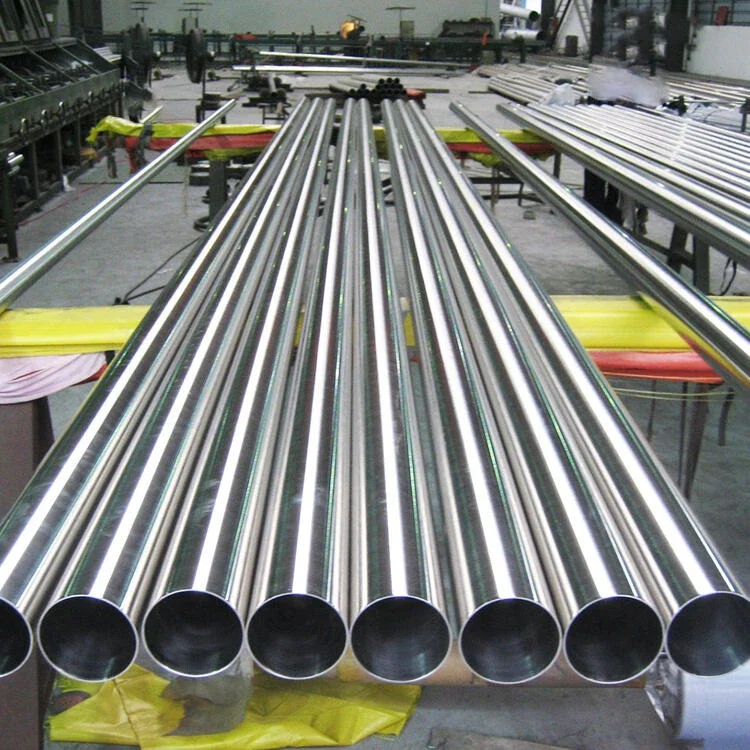
A coil suits a small diameter, since a large tube cannot wind without a wrinkle. Straight length suits a wide bore, and it ships in a crated bundle. A condenser needs straight tube for a bundle, while a refrigerant circuit needs coil. Hence the form limits the size before the mill does.
Tolerance and Ovality
A drawn tube holds an ovality limit, since a roller pass can flatten it. Thin walls also drift more than heavy ones at the same tolerance band. Buyers who clamp a soft tube should expect a slight oval, and a fitting may not seal. Therefore, the tolerance line belongs beside the wall line.
Grades Across the Range
The same size range applies to C10200, C11000, C12000, C12200, and the cupronickel grades. T2 copper pipe covers general water and air in that range. C70620 cupronickel pipe covers seawater at the same diameters. Hence the size question and the grade question answer together.
Where Buyers Get It Wrong
A buyer orders a 12.5 mm tube for a half-inch fitting and finds a loose ring. Another specifies a thin wall for a threaded header and strips the thread. A third orders a 200 mm pipe as a coil, which no mill can wind. Those three errors cover most of our returns.
What We Do Not Do
We do not melt or roll copper. We do not draw a tube or thread a joint. Nor do we promise a wall below the mill’s published floor.
Those limits keep the range honest.
Specify Your Order
First, name the outside diameter in millimetres, and add the inch callout if the fitting is imperial. Second, state the wall and the standard. Then give the form and the quantity, so the packing matches the weight.
Related Reading
The grade naming note shows how a designation is built, so a UNS number reads against a GB number. Cut-length practice appears in the cut-to-size note, which matters when a coil is cut to a run length.
Frequently Asked Questions
What diameters do you supply? 2 to 300 mm outside diameter, or customized.
What wall range? 0.2 to 50 mm, or customized.
Is a half-inch tube 12.5 mm? No, it measures 12.7 mm, since the callout came from inches.
Which wall suits a threaded joint? A heavier wall, since a thread removes metal.
Can a 200 mm pipe come as a coil? No, that size ships straight.
- Email: vera.liang@ztwysteel.com
- Location: Xishan District, Wuxi, Jiangsu, China
- Supply range: copper pipe OD 2–300 mm, wall 0.2–50 mm, length customized
- Cutting: coil cut to run length, straight length per standard
- Documentation: MTC EN 10204 3.1 with grade, size and standard, 3.2 on request






 English