

What is Nickel 270 used for?
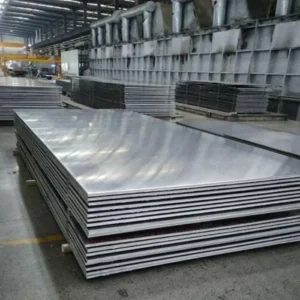
Nickel 270 is the highest-purity commercially wrought nickel grade, at 99.97% minimum nickel content. Produced by powder metallurgy, it delivers extreme ductility, high conductivity and very low outgassing. Jiangsu Zhongtong Weiye Special Steel Co., Ltd. supplies it as sheet, strip and foil on request.
The Core Property That Drives All Uses
Every application traces back to purity. Trace elements such as cobalt, chromium, sulfur and silicon are held below 0.001% each. Carbon caps at 0.02%, and iron stays under 0.005%. That tight control delivers consistent electrical, thermal and magnetic behaviour that lower-purity grades cannot match.
Use 1 — Vacuum and Electron Tube Components
Hydrogen thyratrons, magnetrons and high-voltage tubes rely on Nickel 270 for anodes, grids and cathode supports. Its low outgassing rate preserves vacuum integrity over long service life. Clean grain boundaries also prevent contamination of the gas fill inside the tube.
Most specialty tube manufacturers specify it for any part that faces the vacuum envelope.
Use 2 — Precision Sensors and Resistance Thermometers
Its stable temperature coefficient of resistance makes Nickel 270 a standard sensing element for resistance temperature detectors. The tight impurity control ensures repeatable readings across calibration cycles. It also appears in strain gauges and precision instrumentation where signal consistency is critical.
Laboratory and metrology equipment therefore favour this grade over standard nickel.
Use 3 — Battery Connectors and Tabs
High electrical conductivity and good formability suit Nickel 270 for battery tabs and bus connectors in NiMH, NiCd and lithium-ion packs. Its ductility allows tight bending without cracking, and its corrosion resistance protects the joint over charge-discharge cycles.
Aerospace and medical battery packs often use it for mission-critical assemblies.
Use 4 — Semiconductor and Microelectronic Packaging
Lead frames, electrode supports and thin-film substrates use Nickel 270 where purity and dimensional stability matter. It also serves as a base material for precious-metal cladding, since a clean substrate ensures uniform bond strength.
Semiconductor fabs and hybrid circuit makers are regular buyers for this reason.
Use 5 — High-Purity Chemical and Laboratory Equipment
Crucibles, sample boats and reactor liners use Nickel 270 in analytical and research settings. It resists hot concentrated alkalis better than carbon steel, and it introduces almost no metallic contamination into the process.
High-purity caustic work and fluorochemical processing also benefit from its clean surface chemistry.
Use 6 — Electroplating Anodes and Specialised Coatings
High-purity soluble anodes made from Nickel 270 dissolve uniformly without sludge. That quality is critical for electronic, medical and aerospace plating lines where bath contamination would ruin the deposit.
Bright nickel and engineering nickel plating lines therefore use this grade for critical runs.
Where Other Nickel Grades Work Better
For general chemical vessels and hot caustic evaporators, Nickel 201 offers better value. For seawater and brine service, Monel 400 is the standard choice. Nickel 270 is therefore a specialty grade, not a general-purpose workhorse.
Temperature Limits to Observe
Nickel 270 stays ductile at cryogenic temperatures and performs well up to roughly 315 °C. Above that range, grain growth and gradual softening reduce mechanical strength. For continuous high-temperature structural duty, Nickel 201 or a higher alloy is usually preferred.
Fabrication Notes
The grade welds readily with matching nickel filler metal, and it deep-draws and spins easily because of its high ductility. It cannot be hardened by heat treatment; strength gains come only from cold working. Tool shops should therefore plan forming sequences accordingly.
Available Forms and Thicknesses
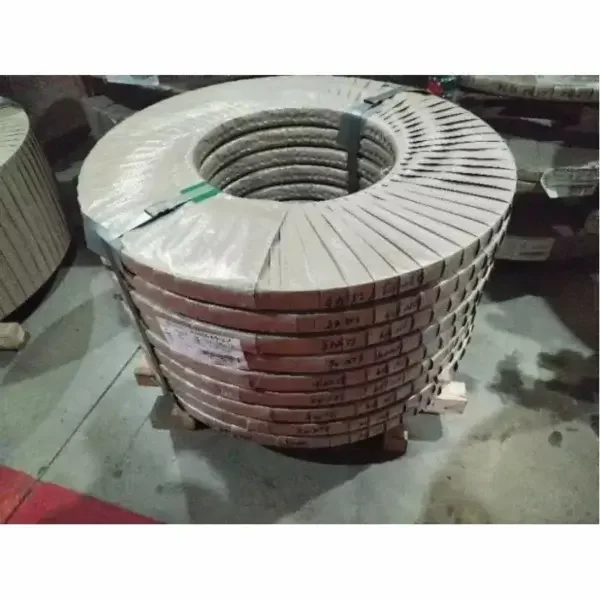
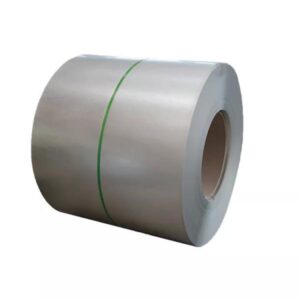
We supply Nickel 270 as sheet from 0.5 mm upward, and slit strip from 20 mm width. Foil and thin gauge material are available on request with longer lead times. Round bar and wire can also be sourced through partner mills.
What the Certificate Should Show
A full certificate must state UNS N02270, the nickel minimum, and the key trace-element limits. It should also list the temper and the test standard. Without those details, a high-purity claim cannot be audited.
Related Reading
The standard pure-nickel comparison appears in the Nickel 200 vs 201 note. Chemical processing applications appear in the Nickel 201 note.
Frequently Asked Questions
How pure is Nickel 270? At least 99.97% nickel, with most trace elements held below 0.001%.
Is Nickel 270 stronger than Nickel 201? No, it is softer and more ductile in the annealed condition.
Can it be used for hot caustic evaporators? It works, but Nickel 201 usually offers better value for large chemical vessels.
What is its UNS number? UNS N02270, also known as W. Nr. 2.4050 in Europe.
Does it come as foil? Yes, on request, with lead time depending on gauge and width.
What We Do Not Do
We do not produce powder or refine nickel ingots ourselves. We do not sell lower-purity nickel labelled as 270 grade. Nor do we recommend it for continuous structural service above 315 °C.
Those limits keep the specification honest.
Specify Your Order
First, name the grade and the form you need. Second, give thickness, width, and length. Then state the application, so we can confirm temper and surface finish.
Nickel 200 Pure Nickel Plate covers general ambient-temperature service. Nickel 201 High-Temperature Nickel Sheet serves hot alkali duty. Monel 400 Copper-Nickel Alloy suits brine and marine chemical environments.
- Email: vera.liang@ztwysteel.com
- Location: Xishan District, Wuxi, Jiangsu, China
- Supply range: Nickel 270 / UNS N02270 sheet, strip and foil on request
- Cutting: length under 4 m, ±1 mm, squareness 1 mm per metre
- Documentation: MTC EN 10204 3.1, chemistry and trace elements stated per sheet







 English