

What is 4Cr13H plastic mold steel used for?
It is used wherever the resin attacks the steel. 4Cr13H plastic mold steel carries about 13% chromium, and it ships pre-hardened. That combination suits PVC, POM, and medical parts, where a P20 mould would rust. Jiangsu Zhongtong Weiye Special Steel Co., Ltd. cuts the plate to size in Wuxi.
The Grade in One Line
4Cr13H holds roughly 0.40% carbon and 13% chromium, and stockists deliver it near 30 to 34 HRC. The H suffix signals a pre-hardened condition, so the block machines without a heat cycle. Hence it behaves like a stainless P20.
Why Chromium Guards the Cavity
Chromium above roughly 12% forms a passive film that blocks moisture. That film survives normal mould washing, since it renews within minutes in air. A scratch that exposes bare metal re-passivates within hours. Therefore, the steel resists staining that plagues plain alloy plate.
What 13% Chromium Does Not Do
It does not resist wet chlorine gas, since chloride ions break the passive film. It does not survive stagnant water, which depletes oxygen locally. Hence the grade suits resins, not chemical plant piping.
Use 1 — PVC Moulds
PVC releases hydrogen chloride, so it condenses into hydrochloric acid on a cool cavity. A P20 face pits within months, while 4Cr13H holds its polish. Consequently, pipe fittings and profiles lead its applications.
Use 2 — POM and Acetal
POM depolymerises at high melt temperature and releases formaldehyde. That vapour attacks a plain steel cavity, since it stays acidic. Hence acetal moulds often use a stainless grade, especially in thin walls.
Use 3 — Acetic Acid and Medical Parts
Some resins carry acetic acid residues, while medical moulds face frequent cleaning. Stainless resists both, since the passive film renews after washing. Therefore, syringe and filter housings often specify it. Those parts also tolerate steam cleaning between batches.
Where It Sits Against P20
P20 costs less and machines faster, although it rusts in humid air. 4Cr13H costs more and polishes better, so it wins on corrosive resins. Therefore, resin chemistry picks between them.
Use 4 — Humid Storage and Sea Freight
A mould stored in a humid warehouse can rust before its first run, since condensation forms on cool steel. Stainless plate only needs dry packing, not oil coating. Hence maintenance cost falls across a long project.
How to Store It
Store under a dry cover, because night air condenses on a cold plate. Avoid shared racks with carbon steel, because rust spots transfer on contact. Hence a dedicated rack protects the surface.
Use 5 — Transparent and Optical Parts
4Cr13H polishes to a mirror finish, which suits lenses, light guides, and cosmetic packaging. A clean matrix helps, since inclusions show as haze. Therefore, ask for a polished sample before committing.
Where It Still Fails
Wet chlorine gas, hydrochloric acid mist, and chloride-rich cooling water attack even 13% chromium. Stagnant water in a cooling channel pits the steel from inside, since oxygen runs out there. Consequently, drain and dry the circuit after every run.
Hardness and Heat Treatment
Pre-hardened plate arrives at 30 to 34 HRC, which covers most PVC work. Hardening lifts it to 50 to 54 HRC for abrasive or high-volume tools. Annealed stock sits near 200 to 235 HB if a shop prefers to cut soft.
Machining and Welding Notes
Machining runs slower than P20, since the stainless work-hardens under a dull tool. Welding needs preheat near 150 to 200 °C, so use a matching filler. Therefore, plan repair work before the cavity is finished.
When to Choose Hardened Plate
Long runs with abrasive fillers favour 50 to 54 HRC. Short runs favour pre-hardened plate, since it skips a cycle. Therefore, volume decides the condition.
Cooling Design With Lower Conductivity
Stainless conducts heat roughly a third less than P20, so heat stays in the cavity longer. Cycle time may therefore stretch by a few percent. Hence cooling channels need closer spacing than a P20 layout.
What a Mould Maker Notices First
A drill bites harder than on P20, so feed rates drop. A mirror polish takes longer, yet it lasts longer in service. Consequently, the tool cost shifts, not the tool life.
What We Supply
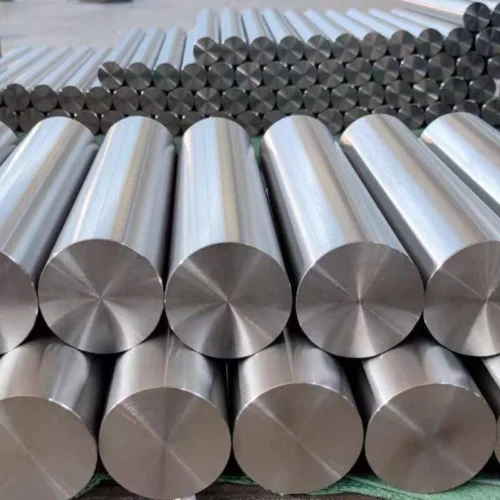
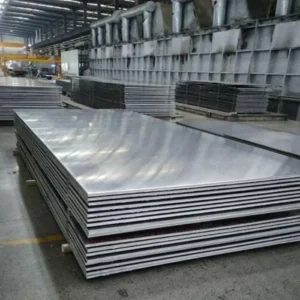
Plate runs from 12 to 400 mm thick, cut to length under 4 m. Cutting holds ±1 mm, and squareness stays within 1 mm per metre. Therefore, a block arrives ready for rough milling, and a pre-cut plate saves a week.
Related Reading
The grade family appears in the mould steel note, and the label comparison appears in the three-name note.
Frequently Asked Questions
Close, since both are 13% chromium with about 0.4% carbon.
Usually 30 to 34 HRC, pre-hardened.
Usually 30 to 34 HRC, pre-hardened.
It does, and a clean melt helps the mirror finish.
It is, since the stainless work-hardens faster.
What We Do Not Do
We do not heat-treat, polish, or machine cavities. We do not sell it as a universal stainless answer. Nor do we promise corrosion resistance in chloride water.
Those limits keep the advice accurate.
Specify Your Order
First, name the grade and the delivery hardness. Second, give thickness, width, and length. Then state the resin and the cooling water chemistry, so the plate matches the duty.
4Cr13H Plastic Mould Steel covers PVC and medical tooling. H13 Tool Steel 1.2344 serves hot work. D2 Cold-Work Steel serves blanking.
- Email: vera.liang@ztwysteel.com
- Location: Xishan District, Wuxi, Jiangsu, China
- Supply range: 4Cr13H plate 12–400 mm, pre-hardened 30–34 HRC
- Cutting: length under 4 m, ±1 mm, squareness 1 mm per metre
- Documentation: MTC EN 10204 3.1, hardness and chemistry stated per plate






 English