
What industries commonly use Hastelloy alloys?
Six industries carry most of the demand, and each one buys Hastelloy alloys for a reason. A cheaper steel dies at a specific point in each of them. Chemical processing buys C-276 for mixed acids, and offshore oil and gas buys it for sour chlorides. Jiangsu Zhongtong Weiye Special Steel Co., Ltd. supplies C-276, C-22, B-2, B-3 and X, so the industry list below matches what we ship.
Why the List Is Short
These alloys cost several times the price of 316L, so only a real failure justifies them. Each industry below has such a failure, and each one names the medium that causes it. Hence the list reads as a set of failure stories, not as a market survey.
Chemical Processing
A chemical plant mixes hydrochloric, sulphuric, and nitric streams in one building. Chlorides pit 316L at welds within months, since the acid finds the chromium-depleted zone. C-276 covers that mix, because its molybdenum handles reducing attack and its chromium handles oxidizing attack. Reactors, heat exchangers, and column internals form the bulk of the orders.
Oil and Gas
Sour gas carries H2S, CO2, and chlorides together, and that trio defeats most stainless grades. 316L cracks under sulphide stress, since the combination of stress and H2S opens a crack path. C-276 resists that trio, and it meets NACE MR0175 for sour service. Wellhead components, flow lines, and offshore topside piping use it, often as bar and forgings.
Power and Flue Gas Desulfurization
A wet scrubber takes flue gas with chloride, sulphate, and fly ash, and the slurry runs acidic. 316L corrodes at the absorber wall, because chlorides concentrate under deposits. C-276 lines the absorber, and the plate often runs 4 to 6 mm thick. Stacks, ducting, and mist eliminators add to the order, so this sector consumes the largest tonnage.
Pharmaceutical
A reactor making an active ingredient often runs a chloride solvent with a clean-down cycle. 316L pits at the jacket, since chlorides concentrate during evaporation. C-22 suits that duty, because its higher chromium handles the oxidizing side of the solvent. A bright annealed finish also supports cleaning validation, which matters as much as corrosion.
Pulp and Paper
A bleach plant uses chlorine dioxide at a low pH, and the wash water carries chloride. 316L fails at the seal and the weld, because the dioxide attacks the chromium-depleted zone. C-276 covers the bleach stage, and it often runs as coil for lining a tower. The same mill also uses C-22 on the chlorine dioxide generator.
Waste Incineration
Municipal waste burns into a gas with HCl, SO2, and heavy metals, and that gas condenses on cool metal. 316L fails where the acid dew point sits, since liquid HCl forms on the wall. C-276 covers the scrubber and the quench zone, while X covers the hotter furnace parts. Hence one plant can use two Hastelloy grades side by side.
Fertilizer and Phosphoric Acid
Phosphate rock brings fluoride with the acid, and that pair defeats the C grades. G-30 carries enough chromium for phosphoric duty, since fluoride needs a higher chromium level. G-35 goes further for nitric plus fluoride. Hence this sector buys the G family rather than C-276.
Chlor-Alkali and Wet Chlorine
Wet chlorine attacks most metals, and dry chlorine behaves differently. Titanium covers much of that plant, while C-22 covers the wet sections where titanium cannot. Therefore, this sector buys C-22 in modest volume, not C-276.
How to Match Your Plant
Start from the medium, not the industry name, since a plant may run several duties. List the acid, the concentration, the temperature, and the oxidant level for each stream. Then map each stream to a grade, and buy the grade that covers the widest set. Hence one plate often serves three streams.
Where the Industry Label Misleads
A “chemical plant” may run only caustic, which needs Nickel 200 rather than Hastelloy. An “offshore project” may carry no H2S, which allows a duplex grade. A “pharma plant” may run only water, which needs no alloy at all. Hence the medium beats the label every time.
What the Tonnage Looks Like
Flue gas work consumes the largest share, since absorbers are large and walls are thick. Chemical processing comes second, because vessels are smaller but numerous. Oil and gas comes third, since bar and forgings weigh less than plate. Therefore, stock availability usually favours C-276 plate.
What We Do Not Do
We do not specify a grade for an untested medium. We do not sell C-276 into a phosphoric duty, since fluoride defeats it. Nor do we quote an industry average price, because the form changes the number.
Those limits keep the advice useful.
Specify Your Order
First, name the stream and its chemistry. Second, give the form and the size. Then state the industry standard your auditor expects, so the certificate matches the file.
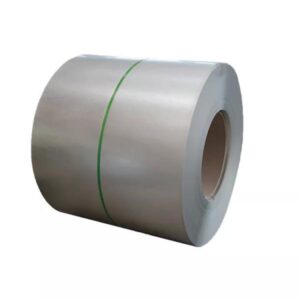
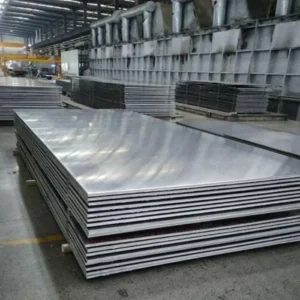
Our C-276 plate and sheet covers scrubbers and reactors. C-22 coil and strip covers oxidizing duty. B-2 bar covers hydrochloric service.
Related Reading
Grade naming systems read best in the silicon steel grade note, since both explain how a spec is encoded. Cut-length practice appears in the cut-to-size note.
Frequently Asked Questions
Which industry uses the most Hastelloy? Flue gas desulfurization, since absorbers are large and walls run thick.
Do pharmaceutical plants use C-276? They often prefer C-22, because oxidizing solvents favour higher chromium.
Is Hastelloy used in oil and gas? Yes, in sour service that carries H2S and chlorides together.
Does pulp bleaching need C-276? It does, since chlorine dioxide attacks weld zones.
Which grade suits phosphoric acid? G-30 or G-35, because fluoride defeats the C family.
- Email: vera.liang@ztwysteel.com
- Location: Xishan District, Wuxi, Jiangsu, China
- Supply range: C-276 plate 1–50 mm, C-22 coil 0.5–3 mm, B-2 bar 12–250 mm
- Cutting: length under 4 m, ±1 mm, squareness 1 mm per metre
- Documentation: MTC EN 10204 3.1 with UNS number, 3.2 on request






 English