

What export packaging does Zhongtong Weiye use for coils and plates?
Our export packaging follows the cargo, the route, and the destination. A coil that survives Shanghai may still fail in Jakarta, because humidity decides more than distance. Coils travel strapped on cradles with VCI film and desiccant, while plates travel in strapped bundles or wooden cases. Consequently, the packing decision starts with transit time and humidity, not with price. Jiangsu Zhongtong Weiye Special Steel Co., Ltd. packs in Wuxi under a documented standard.
Packaging Has Four Jobs
Protection comes first, since a scratched coating becomes a shorted core. Moisture control comes second, because condensation ruins insulation resistance. Handling survival comes third, as a crane hook can crush a coil edge. Compliance comes last, since timber needs heat treatment for most markets.
Four jobs, four different materials.
Layer by Layer: What Wraps a Coil
Core. Coated steel, oiled lightly where the surface permits.
VCI film. A vapour-phase inhibitor wraps the coil, because it slows rust at the edges.
Edge protectors. Cardboard or plastic angles sit on the rims, since those take the load.
Strapping. Three or four steel bands hold the wrap, and each band carries a seal.
Cradle. A wooden or steel saddle supports the coil, so it cannot roll in transit.
Outer wrap. Woven fabric or stretch film protects the whole package.
Desiccant. Bags sit inside the wrap, since container air condenses at night.
Seven layers sound excessive until you open a three-month-old coil.
Two Coil Orientations
Eye-to-sky means the coil stands on its edge, so the eye faces upward. That saves floor space and suits a forklift with a boom. Eye-to-horizontal means the coil lies flat, so weight spreads over a wider base. Eye-to-horizontal costs more in cribbing, although it protects the wrap during long inland runs.
Therefore, we choose by route rather than by habit.
Sheet and Plate Packaging
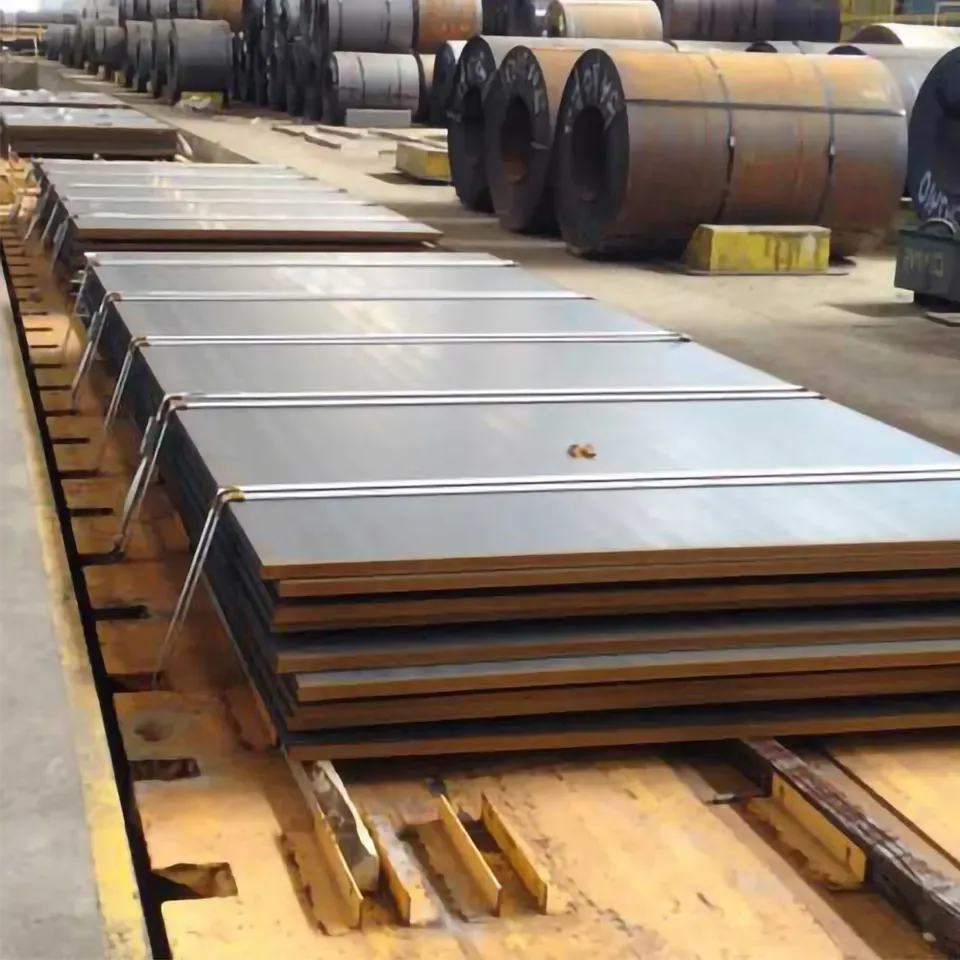
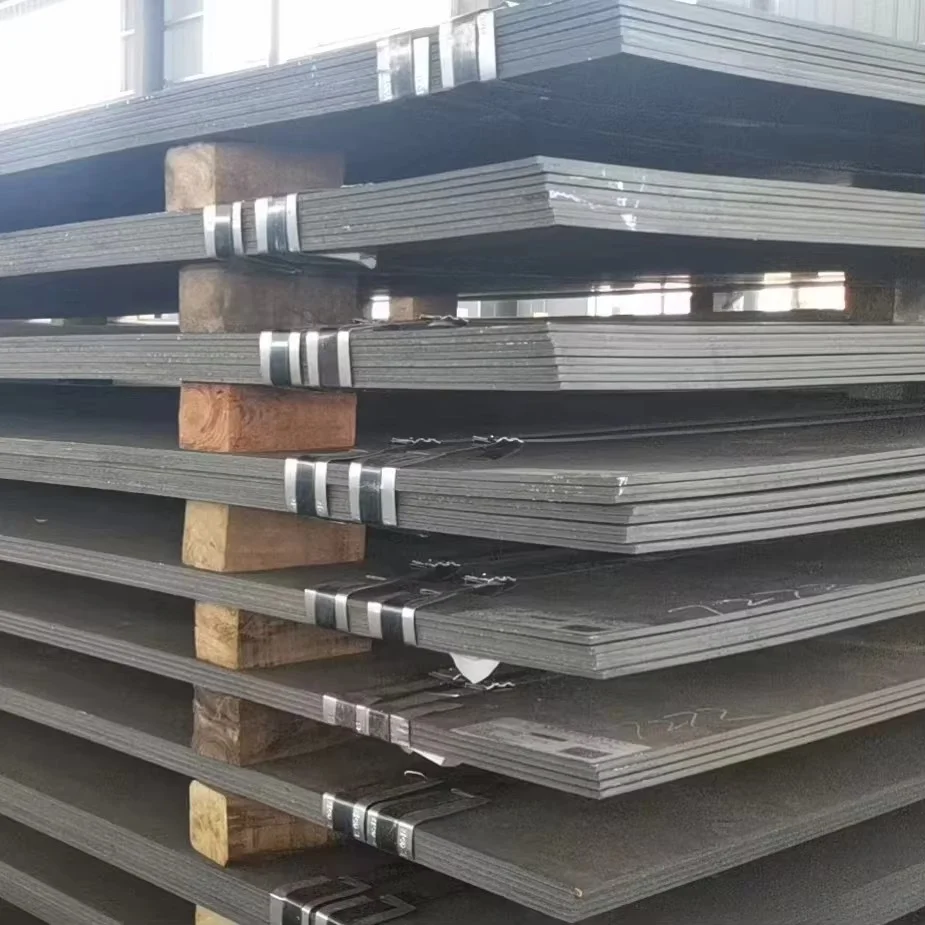
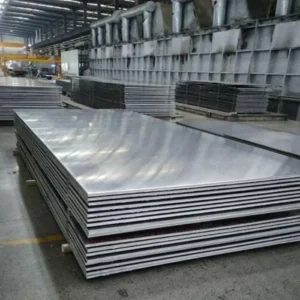
Sheets stack in wooden cases with interleaving paper between faces. Plate ships as a strapped bundle with corner protection, since mill scale rubs and rusts. Both carry a lot label on two sides, because one face is often hidden in the stack.
Timber heat treatment marks appear on every case, since customs rejects untreated wood.
Container Stowage: The Weight Math
A 20-foot container takes about 25–28 tons, and a 40-foot box carries a similar payload. Hence weight binds before volume on steel cargo. Five coils of 5 tons fit a 20-foot box with cribbing and still stay inside the payload limit.
Consequently, a “40-foot” enquiry rarely doubles the tonnage, and that surprises first-time buyers.
Transit Moisture: The Hidden Variable
Container air swings between hot day and cold night, so water condenses on cold steel. Desiccant absorbs that moisture until saturation, and then it stops working. Therefore, a long voyage needs more bags rather than better film. We size the load by days at sea, since a 35-day voyage is not a 14-day one.
What Changes by Destination
- Humid tropics: more desiccant, plus VCI film on every coil.
- Long inland haul: eye-to-horizontal and extra cribbing.
- Transshipment: heavier strapping, since the box gets handled twice.
- Cold climate: film that stays flexible below freezing.
- Rail legs: coil chocks nailed to the floor, not just laid on it.
Each condition adds something, and each omission shows up as a claim later.
Loading Sequence
Cribbing goes in first, since coils must never touch the floor directly. Then coils load from the door inward, because the last coil must stay reachable. Finally, door-area bracing goes in last, so cargo cannot shift at sea.
Markings and Documents
Each package carries the heat number, the coil number, the gross and net weight, and the shipping marks. A packing list repeats those figures, so receiving can reconcile without opening the box. Moreover, the certificate heat number matches the label, which keeps traceability intact.
Ports accept labels; they reject guesses.
What We Cannot Do
We do not vacuum-pack coils. We do not supply fumigated timber beyond the standard heat treatment. Nor do we guarantee a surface against condensation inside a poorly ventilated container.
Stating those limits prevents a claim we cannot settle.
Related Reading
Cut formats and packing options are described in the slit and cut-to-size note. Coil formats appear on the M5 grade page, and plate packing sits on the 400 HB plate page.
Frequently Asked Questions
Yes, since it saves space and suits container loading.
No, coils travel on cradles, although sheets use cases.
Yes for sea freight, because container air condenses nightly.
Certainly, and we print them before packing.
Yes, since eye-to-horizontal and cases both add cost.
What We Do Not Do
We do not reuse damaged cradles. We do not pack coils without strapping seals. Nor do we ship timber without a treatment mark.
Those three rules cover most damage claims.
Specify Your Order
First, state the form, coil or plate. Second, name the destination port. Then confirm the transit time, so we can size the desiccant load.
Reactor Core Lamination ships in cases for gapped cores, and quotes return within one working day.
- Email: vera.liang@ztwysteel.com
- Location: Xishan District, Wuxi, Jiangsu, China
- Supply range: electrical steel 0.23–0.65 mm, wear plate 400/450 HB, nickel alloy sheet and plate, copper tube
- Slitting: 20–1250 mm, ±0.05 mm, burr under 0.02 mm
- Packing: eye-to-sky cradles, VCI film, desiccant, heat-treated timber, custom marks
- Documentation: MTC EN 10204 3.1, packing list, certificate of origin







 English