
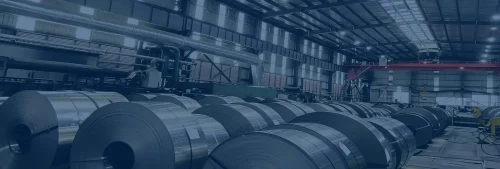
Analysis of Silicon Steel Hardness Characteristics & Key Points for Material Selection
The hardness of кремнієва сталь sheets directly affects their electromagnetic performance and machining efficiency, mainly governed by silicon content, rolling processes and heat treatment. This article systematically analyzes hardness characteristics and their guiding value for practical applications.
I. Hardness Testing Methods and Property Correlations
Silicon steel hardness is commonly measured with Rockwell or Vickers hardness testers, with the following test precautions:
- Clean surface oxide layers before testing to eliminate reading deviations of кремнієва сталь inspection equipment
- Match indenters to sheet thickness gauges to avoid substrate deformation skewing test results
💡 Core Distinction: Cold-rolled silicon steel is typically 15%–20% harder than hot-rolled grades, which exerts a direct impact on subsequent stamping efficiency.
II. Hardness Discrepancies from Rolling Processes
Multi-pass rolling refines grain structures of cold-rolled silicon steel, delivering HRB 75–90 hardness ideal for precision stamping of motor cores. Hot-rolled silicon steel generally ranges HRB 60–75 and is widely used for transformers and other applications with loose forming tolerance requirements.
🔍 Selection Tip: Cold-rolled silicon steel is the priority when balancing magnetic loss and machining costs.
Grain-oriented silicon steel exhibits anisotropic hardness due to aligned crystal grains: hardness along the rolling direction is roughly 10% lower than the transverse direction, a trait perfectly suited for transformer core manufacturing. Non-oriented silicon steel features uniform hardness distribution, and this process route is adopted for most electrical steel intended for rotating motors.
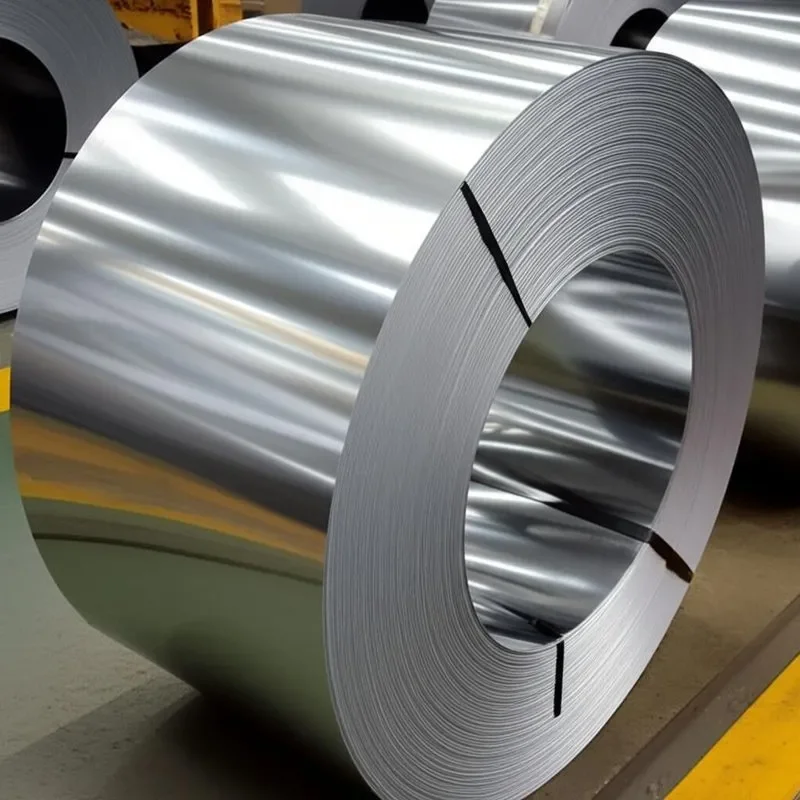
III. Dominant Influence of Silicon Content
Silicon drastically modifies the material’s crystal structure:
- High-silicon steel (silicon content above 3%) gains higher hardness yet suffers increased brittleness
- Low-silicon steel (1%–2% silicon) offers superior machinability but lower magnetic permeability
📌 Note: Silicon content selection for electrical steel requires trade-offs between electromagnetic performance and process feasibility.
Annealing effectively tunes silicon steel hardness:
- Stress-relief annealing reduces hardness by 5–8 HRB units
- Recrystallization annealing optimizes grain size distribution
- High-temperature annealing markedly lowers hardness of grain-oriented silicon steel
When operating silicon steel annealing furnaces, heating rate and holding time must be precisely regulated according to target hardness curves.
IV. Matching Hardness with Machining Processes
When hardness exceeds HRB 85, wear of standard silicon steel stamping dies accelerates by over threefold. Recommended countermeasures:
- Adopt cemented carbide dies
- Increase feed cycles of silicon steel cutting machines
- Limit stamping speed to 15–20 strokes per minute
⚠️ Pitfall Reminder: Conduct small-batch die trials before mass stamping of transformer silicon steel to verify die service life.
V. Selection Logic for Auxiliary Materials
Harder silicon steel surfaces are prone to microcracks, requiring silicon steel adhesives with stronger penetration capacity. For materials harder than HRB 80, epoxy adhesives provide better gap-filling performance than acrylic alternatives.
Anti-rust agents for high-hardness silicon steel demand higher proportions of corrosion inhibitors. Formulations containing benzotriazole are recommended, as they form denser protective films on high-stress surfaces.
✅ Decision Framework: When specifying silicon steel hardness, first confirm electromagnetic performance requirements, then assess machining process constraints, and finally fine-tune via heat treatment. Higher hardness does not equal better performance; hardness must be systematically matched to specific application scenarios.






 English
  Japanese
  Korean
  French
  German
  Spanish
  Portuguese
  Russian
  Arabic
  Italian
  Turkish
  Dutch
Dutch  Polish
  Swedish
  Danish
  Norwegian
  Finnish
  Greek
Greek  Hungarian
  Czech
Czech  Romanian
  Bulgarian
  Slovenian
  Croatian
  Slovak
  Malay
Malay  Indonesian
  Thai
Thai  Vietnamese
  Myanmar
  Khmer
Khmer  Lao
Lao  Tagalog
  Hindi
Hindi  Bengali
  Urdu
Urdu  Nepali
  Sinhala
  Hebrew
  Ukrainian
  Serbian
  Icelandic
  Swahili