
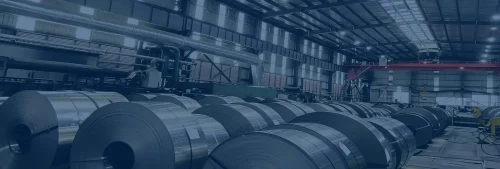
Which structure types are available for ultra-thin silicon steel?
Ultra-thin silicon na bakal plays a key role in modern electrical devices. Its unique properties reduce energy losses. Engineers often ask which structure types are available. This question matters for motor and transformer design. The answer depends on thickness, coating, and grain orientation. Each structure offers distinct magnetic and mechanical benefits.

Grain-Oriented Structures
Grain-oriented silicon na bakal has a highly ordered crystal lattice. This structure aligns magnetic domains along one easy axis. As a result, it delivers low core loss in one direction. Manufacturers use it mainly for transformer cores. The rolling process creates a sharp Goss texture. This texture improves permeability under alternating current. For ultra-thin grades, thickness often falls below 0.20 mm. Such thin sheets reduce eddy current losses. However, they require careful handling to avoid damage. Grain-oriented types remain the top choice for power transformers.
Non-Oriented Structures
Non-oriented silicon na bakal shows random grain orientation. This structure provides uniform magnetic properties in all directions. It suits rotating machines like motors and generators. Ultra-thin non-oriented grades gain popularity in high-speed applications. Their isotropic behavior simplifies motor design. Additionally, they lower iron losses at high frequencies. Silicon content typically ranges from 2.5% to 3.5%. Higher silicon boosts resistivity but can make the steel brittle. Therefore, producers balance magnetic needs with mechanical strength. Non-oriented structures support compact, efficient electric vehicles.
High-Silicon Structures
High-silicon steel contains more than 4% silicon. This structure increases electrical resistivity dramatically. Eddy currents drop, especially at high frequencies. Yet, high silicon reduces ductility and complicates rolling. Ultra-thin high-silicon sheets often use special casting methods. For instance, rapid solidification prevents cracks. These structures serve aerospace and high-frequency inductors. They also appear in some premium audio transformers. However, cost remains higher than conventional grades. Engineers select them only when loss reduction justifies the expense.
Coated and Laminated Structures
Surface coatings create another structural category. An insulating layer sits on each ultra-thin sheet. This coating reduces inter-laminar eddy currents. Common coatings include inorganic minerals and organic resins. The choice affects punchability and heat resistance. Laminated structures stack many coated sheets together. This design further limits circulating currents. For ultra-thin silicon steel, coating thickness must stay uniform. Otherwise, magnetic performance suffers. Coated structures are standard in high-efficiency transformers and motors.
Amorphous and Nanocrystalline Alternatives
Some engineers compare silicon steel with amorphous metals. These materials lack a crystalline structure. They show very low core loss at low frequencies. However, amorphous ribbons are even thinner than ultra-thin silicon steel. They also have lower saturation flux density. Nanocrystalline alloys offer high permeability and low loss. Yet, their cost and brittleness limit wide use. Ultra-thin silicon steel remains more practical for most mass markets. It balances performance, price, and manufacturability well.
In summary, several structure types exist for ultra-thin silicon steel. Grain-oriented, non-oriented, high-silicon, coated, and laminated forms each serve specific needs. The right choice depends on frequency, direction, and mechanical limits. By understanding these structures, designers can optimize electrical efficiency. This knowledge supports better motors, transformers, and power electronics. As demand grows for compact devices, ultra-thin silicon steel will stay essential.





 English
  Japanese
  Korean
  French
  German
  Spanish
  Portuguese
  Russian
  Arabic
  Italian
  Turkish
  Dutch
Dutch  Polish
  Swedish
  Danish
  Norwegian
  Finnish
  Greek
Greek  Hungarian
  Czech
Czech  Romanian
  Bulgarian
  Slovenian
  Croatian
  Slovak
  Malay
Malay  Indonesian
  Thai
Thai  Vietnamese
  Myanmar
  Khmer
Khmer  Lao
Lao  Tagalog
  Hindi
Hindi  Bengali
  Urdu
Urdu  Nepali
  Sinhala
  Hebrew
  Ukrainian
  Serbian
  Icelandic
  Swahili