
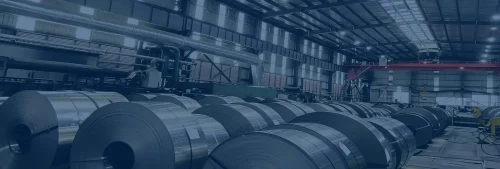
Why Silicon Steel Sheets Require Insulation
The core purpose of insulating Chuma cha silikoni sheets is to reduce eddy current loss. When alternating magnetic fields pass through stacked laminations, uninsulated Chuma cha silikoni sheets form closed-loop circulating currents, and such energy is ultimately dissipated in the form of heat.
I. Insulation and Eddy Current Loss
When Chuma cha silikoni sheets are stacked to form iron cores, direct contact between sheets induces circulating currents within the plane of laminations under alternating magnetic fields — these are eddy currents. Eddy currents not only waste energy but also trigger localized temperature rises.
Insulating coatings create a resistive barrier between sheets, which is equivalent to breaking conductive paths. Actual measurements show that under identical operating conditions, insulated silicon steel sheets cut core loss by 15%–20%. This loss reduction margin expands as frequency increases, hence high-frequency transformers impose stricter insulation standards.

II. Implementation Forms of Insulating Materials
Common insulation solutions apply to distinct working scenarios:
- Insulating coating: Micron-scale inorganic film formed via phosphating or spraying, balancing heat resistance and adhesion.
- Insulating varnish: Continuous film cured from organic resin solutions, suitable for intricately shaped stamped laminations.
- Insulating paper: Cellulose-based material with high mechanical strength, widely adopted in oil-immersed transformers.
All above materials share a volume resistivity above \(10^6\ \Omega\cdot\text{cm}\), which effectively blocks inter-sheet currents. However, excessively thick insulation layers will lower the stacking factor; the coating thickness is generally controlled within 3–15 μm.





 English
  Japanese
  Korean
  French
  German
  Spanish
  Portuguese
  Russian
  Arabic
  Italian
  Turkish
  Dutch
Dutch  Polish
  Swedish
  Danish
  Norwegian
  Finnish
  Greek
Greek  Hungarian
  Czech
Czech  Romanian
  Bulgarian
  Slovenian
  Croatian
  Slovak
  Malay
Malay  Indonesian
  Thai
Thai  Vietnamese
  Myanmar
  Khmer
Khmer  Lao
Lao  Tagalog
  Hindi
Hindi  Bengali
  Urdu
Urdu  Nepali
  Sinhala
  Hebrew
  Ukrainian
  Serbian
  Icelandic
  Swahili