

Spot Welding Operation Guide for Silicon Steel Sheets
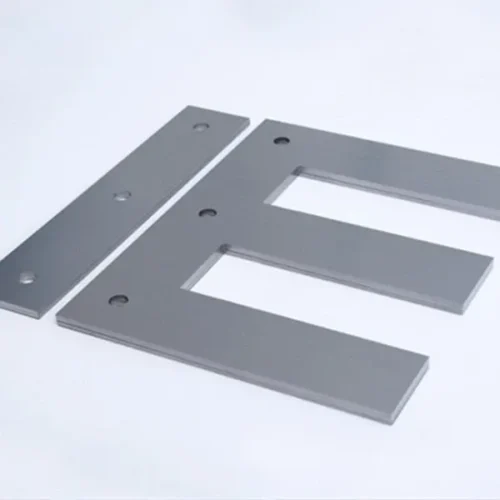
A welder joins two laminations and the core loses efficiency, since the nugget shorts a path that insulation was protecting. Spot welding silicon steel therefore needs an order, not just a current setting. Jiangsu Zhongtong Weiye Special Steel Co., Ltd. supplies silicon steel sheet with a coating chosen for this step, so the guide starts before the torch ever fires.
The Short Answer
Six steps run from a coupon to a finished stack, and three habits stay banned throughout. Sheet of 0.50 mm wants a nugget near 2.8 mm, since four times the square root of thickness sets it. A core checked only for a shiny nugget then hides its loss.
Step One — Check the Coating
Standard C5 films block current, so a weld through one arcs and spatters. Either strip the film at the spot or use a weldable grade that carries a thin film. A buyer who skips this step welds a bad joint and blames the electrode. Hence the film is the first variable.
Step Two — Set the Coupon
Cut three coupons from the same heat, a CRGO sheet or a non-oriented one, then tune on scrap. A 0.50 mm pair takes a short pulse, while a stack of three needs more force. A coupon that welds clean then predicts the run. Therefore, never tune on a customer’s core.
Step Three — Fix the Force
Electrode force holds the sheets together, since a light touch lets the current arc at the gap. A pneumatic head delivers 1.5 to 3 kN on a small tip, while a hand welder gives far less. A stack of laminations needs the higher end. Hence force comes before current.
Step Four — Set the Current
A thin pair welds between 3 and 8 kA with a 5 to 10 cycle pulse. Silicon raises resistivity, so a non-oriented grade above 2 percent needs a longer pulse. A short pulse under-welds and a long one burns through. Therefore, tune in small steps.
Step Five — Hold the Tip
A copper-chromium tip of 4 to 6 mm diameter concentrates the current, while a wide tip spreads it and stalls. The tip also cools the nugget, so a worn tip welds colder. Dress the tip every few hundred welds. Hence tip maintenance is part of the recipe.
Step Six — Place the Weld
Keep welds away from the tooth and the joint, since a nugget there distorts the flux path. Space welds at least three nugget diameters apart, so the current paths do not overlap. A stacked core often takes welds on the outer limb only. Therefore, placement matters as much as power.
Ban One — No Weld Through a Thick Film
Thick films or two coatings force the current to arc, and the arc pits the surface. Pits then short the sheet and rust at the same point. A weldable film exists for this purpose. Hence never force a weld through a standard coating.
Ban Two — No Wet or Oily Sheet
Moisture at the gap flashes into steam, and the steam blows the nugget apart. Oil adds carbon to the nugget and raises its hardness. A clean dry surface welds with less current. Therefore, wipe and dry before the tip touches.
Ban Three — No Rework Without Anneal
Second pulses on a cold nugget raise stress, since silicon steel is brittle at a weld. Rework also grows the heat-affected zone. A stress anneal near 750 C recovers loss, if the coating survives it. Hence rework is a last resort.
Check One — The Nugget Size
Break a coupon with a chisel and measure the button, since a button near 2.8 mm suits 0.50 mm sheet. A smaller button fails the peel test at a lower load. A cross-section then shows penetration and any void. Therefore, measure before you ship.
Check Two — The Loss Shift
Measure core loss on a small stack before and after welding, since a weld adds an eddy path. A well-placed weld adds a few percent, while a weld across the limb adds far more. A loss test then catches a bad habit early. Hence the number closes the loop.
Check Three — The Surface
Burn marks, a blue tint, or a spatter ball each signal too much current or too little force. A clean grey nugget with a light halo suggests a good weld. Cracked edges show a brittle nugget. Therefore, look before you measure.
Check Four — The Fit
Welded stacks must still fit the bobbin, since distortion closes the window slightly. Some cores need a fixture to hold shape during cooling. Stacks that fit cold may bind when warm. Hence check the fit at temperature.
Where Welders Get It Wrong
One welder tunes on the production core instead of a coupon. Another welds through a thick coating and calls the steel poor. A third re-welds a cold nugget without an anneal. Those three errors cover most of our returns.
What We Do Not Do
We do not melt or roll steel. We do not weld a customer’s core. Nor do we guarantee a weld setting for an unknown machine.
Those limits keep the answer honest.
Specify Your Order
First, name the grade and the thickness. Second, state the coating and the weld method. Then give the stack count, so the sheet arrives ready for the coupon.
Related Reading
The insulation note explains why a weld costs loss. The coating and core note shows which geometry takes welds, since placement follows the core.
Frequently Asked Questions
What nugget size suits 0.50 mm? About 2.8 mm across.
Why strip the coating first? A thick film blocks current and arcs.
What current range is typical? Roughly 3 to 8 kA for a thin pair.
Does a weld change core loss? Yes, since it shorts a local path.
Can a bad weld be reworked? Rarely, and only with a stress anneal.
- Email: vera.liang@ztwysteel.com
- Location: Xishan District, Wuxi, Jiangsu, China
- Supply range: CRGO and CRNGO 0.23–0.65 mm, weldable coating on request
- Slitting: 20–1,250 mm, ±0.05 mm, burr under 0.02 mm
- Documentation: MTC EN 10204 3.1 with grade, thickness and coating class, 3.2 on request







 English