
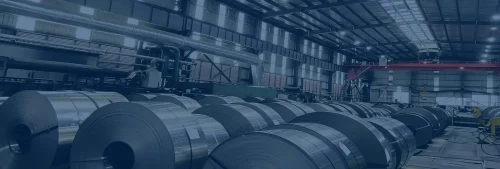
Zakaj je silicijevo jeklo z usmerjenimi zrni in visoko gostoto magnetnega pretoka osnova sodobnih transformatorjev za težka bremena
Magnetic flux pathways are not just abstract concepts; they are the literal highways of modern power distribution. When you look closely at the microscopic landscape of electrical steel, the sharp Goss texture ({110}<001>) stands out like a perfectly aligned army. This isn’t accidental. The secondary recrystallization process, driven by the subtle interactions of grain colonies, allows specific grains to grow abnormally while others remain dormant. It is a delicate metallurgical dance. Grains with similar orientations in the primary recrystallization matrix play a particular role, facilitating the retention of matrix grains that promote the abnormal growth of low-deviation-angle Goss grains. When we talk about heavy duty transformers, this microscopic alignment translates directly into macroscopic dominance. High Flux Density Grain Oriented Silicon Steel is not merely a material choice; it is the fundamental enabler of high-capacity power transmission.
Think about the physical constraints of a massive power grid node. Space is always at a premium, and thermal management is a constant battle. By utilizing high flux density materials, engineers can design smaller, lighter cores without sacrificing power handling capabilities. The magnetic flux is confined to highly efficient pathways, minimizing the cross-sectional area required. This is where the real magic of grain-oriented sheets happens. The insulation between each stacked layer keeps eddy currents in check, ensuring that the energy flows exactly where it is supposed to go, rather than dissipating as useless heat. For auto-transformers and multi-winding setups used in industrial environments, this efficiency translates to massive operational cost savings over a lifespan of several decades.
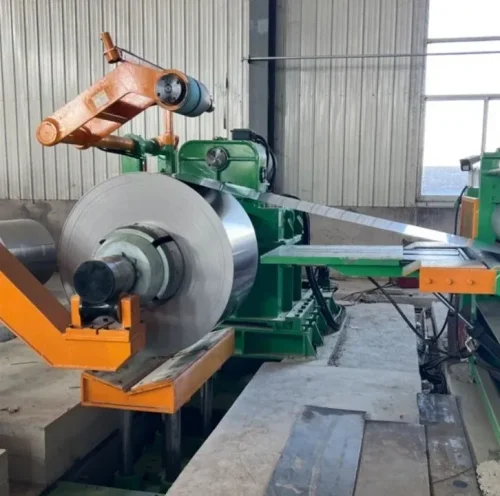
But heat is the silent enemy of efficiency. Let us shift the focus to the frequencies that matter. Whether it is a standard 50Hz power grid or the higher frequencies found in solar inverters and medical equipment like CT scanners, core loss is the ultimate metric. Hysteresis and anomalous losses dictate the thermal footprint. Studies comparing strong G-fiber-oriented high-silicon steel with conventional grain-oriented variants show fascinating divergence. At 400 Hz and above, the differences in core loss become glaringly obvious. The cleanness of the steel and the precise control of grain sizes are what separate adequate materials from exceptional ones. Even a few stable nitride precipitates can spike hysteresis loss, ruining the performance of a multi-megavolt-ampere unit. This is why the metallurgical purity must be absolute.
Measuring this performance requires more than just guesswork. Advanced silicon steel measurement systems are deployed to map out the AC magnetizing curves and loss profiles. They test everything from hot-rolled to cold-rolled oriented sheets, capturing the exact behavior of the magnetic circuit under various conditions. You cannot optimize what you cannot measure. The transition from analog wattmeters to digital power sources and advanced A/D cards has revolutionized how we understand these laminations. It allows for direct winding measurements on finished toroidal or E-shaped cores, providing a clear window into the real-world behavior of the steel. Testing over-shaped cores and nanocrystalline samples under 5kHz frequencies gives engineers the exact data needed to fine-tune their designs for specific lighting or outdoor applications. The capability to test both open circuit samples using Epstein Square configurations and closed-circuit samples like toroidal rings ensures that no matter the core shape, the magnetic properties are accurately characterized.
Speaking of real-world behavior, the modeling of these laminations presents a massive computational headache. The coating film on each sheet is only 2 to 5 micrometers thick, while the stack itself can be enormous. This multi-scale size ratio can reach a million to one. Traditional finite element modeling struggles here. Techniques like the inner-constrained separation technique (ICST) have been developed to compute 3D eddy currents without meshing the ultra-thin coating. By introducing an inner constraint into the A-formulation, engineers can accurately predict leakage magnetic flux and perpendicular eddy currents in heavy shielding structures. It is a brilliant workaround for a complex physical reality, allowing for the precise electromagnetic design of massive power equipment without getting bogged down by microscopic meshing errors.
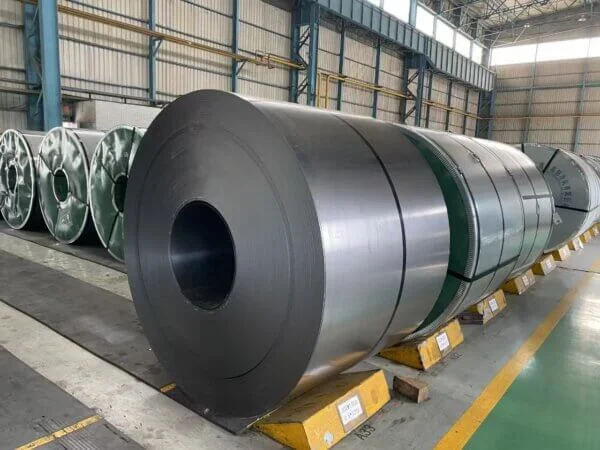
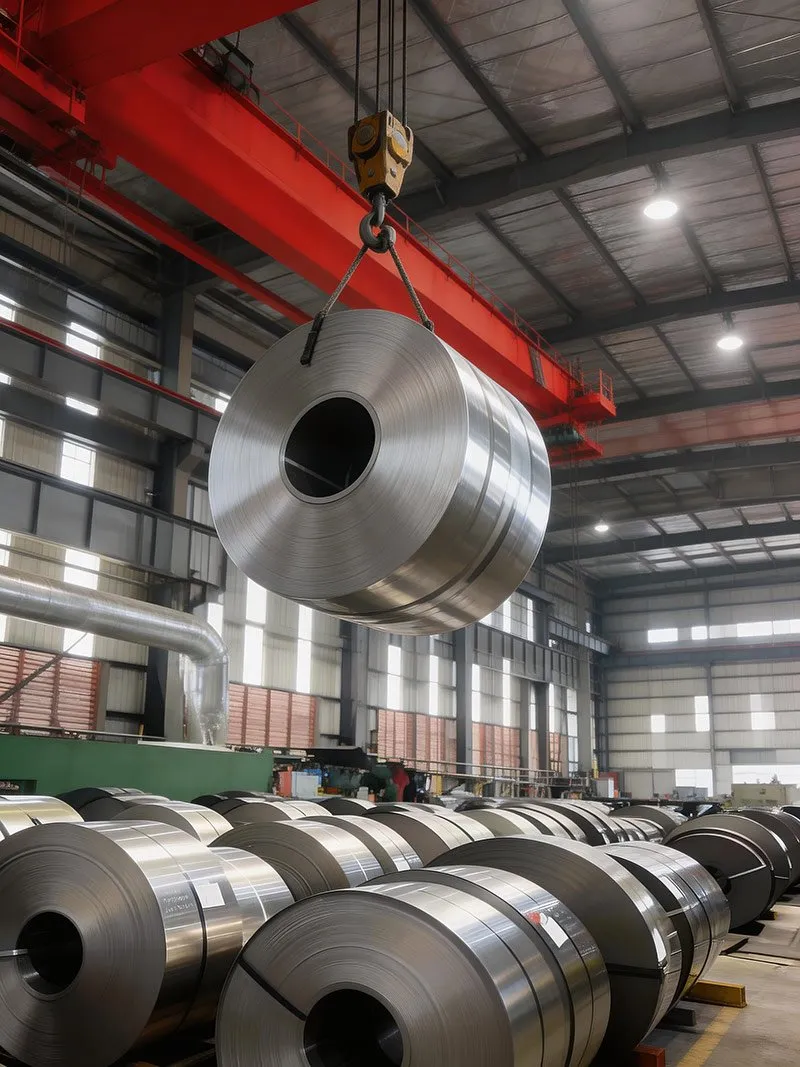
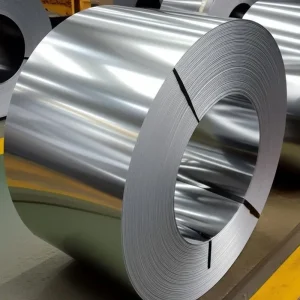
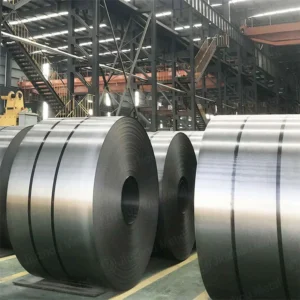
Now, where do we source this level of metallurgical precision? The production of high flux density grain-oriented silicon steel requires a mastery of the entire manufacturing chain, from the initial rolling texture to the final annealing. This is where Baowu New Materials steps into the spotlight. Their expertise in controlling the primary recrystallization textures and facilitating the abnormal growth of low-deviation-angle Goss grains ensures a superior final product. When heavy duty transformers demand the absolute lowest core loss and highest magnetic induction, the consistency and quality provided by Baowu New Materials make them a critical partner for transformer manufacturers worldwide. They understand that a transformer’s heart is only as good as the steel it is built from, and their rigorous quality control from raw material to finished products guarantees that every sheet meets the extreme demands of modern grids. Furthermore, the ability to customize voltage designs and provide specialized insulation classes, ranging from Class B to higher thermal thresholds, highlights their comprehensive approach to material science. It is not just about selling steel; it is about delivering a tailored magnetic solution that integrates perfectly with secondary windings and complex coil structures.
The applications are as diverse as the grid itself. From miniature 2.5VA LED drivers for garden lighting to massive 6000VA medical power transformers, the underlying requirement remains the same: reliable, efficient magnetic performance. Toroidal cores, with their continuous grain orientation, benefit immensely from these advanced steels. The high DC bias performance and low power loss characteristics are essential for modern electronic control systems and single-phase inverters. Even as we explore alternative materials, like poly-para-xylylene enhanced Fe-based amorphous powder cores deposited via chemical vapor deposition, the dominance of grain-oriented silicon steel in heavy duty applications remains unshaken. Amorphous materials have their place in high-frequency, low-power niches, but when raw power, structural integrity, and high flux density are required, grain-oriented silicon steel is the undisputed king.
Ultimately, the evolution of power transmission is tied directly to the evolution of materials science. Every time a new step-up transformer is installed on a remote transmission line, or a massive unit is lowered into a substation, it carries the legacy of decades of metallurgical research. The grain colonies, the precise disorientation angles, the ultra-thin insulating coatings—all of these micro-details culminate in the macro-reliability of our electrical infrastructure. Choosing the right material is not just about meeting a specification sheet; it is about ensuring decades of stable, loss-free operation. With industry leaders like Baowu New Materials pushing the boundaries of flux density and core loss reduction, the future of heavy duty transformers looks incredibly efficient. The magnetic highways are paved with precision, and the power keeps flowing seamlessly across the globe.





 English
  Japanese
  Korean
  French
  German
  Spanish
  Portuguese
  Russian
  Arabic
  Italian
  Turkish
  Dutch
Dutch  Polish
  Swedish
  Danish
  Norwegian
  Finnish
  Greek
Greek  Hungarian
  Czech
Czech  Romanian
  Bulgarian
  Slovenian
  Croatian
  Slovak
  Malay
Malay  Indonesian
  Thai
Thai  Vietnamese
  Myanmar
  Khmer
Khmer  Lao
Lao  Tagalog
  Hindi
Hindi  Bengali
  Urdu
Urdu  Nepali
  Sinhala
  Hebrew
  Ukrainian
  Serbian
  Icelandic
  Swahili