
Kremíková oceľ s vysokým saturačným tokom: Zlepšenie výkonu pri výrobe vysokovýkonných motorov
High Saturation Flux Kremíková oceľ: Enhancing Performance in High-Power Motor Manufacturing
The manufacturing of high-power motors is a complex process that relies heavily on the quality and efficiency of the materials used. Among these materials, high saturation flux kremičitá oceľ plays a pivotal role in enhancing the performance of motors. This specialized steel is designed to optimize magnetic properties, leading to more efficient energy conversion and reduced losses. However, the selection and application of this material come with several challenges and considerations. This article aims to explore the key aspects of high saturation flux kremičitá oceľ, addressing potential questions and providing insights into its benefits and applications in high-power motor manufacturing.
What is High Saturation Flux Silicon Steel?
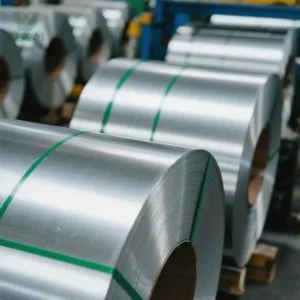
High saturation flux silicon steel is a type of electrical steel that is engineered to have a high magnetic saturation flux density. This means it can carry more magnetic flux per unit volume compared to conventional silicon steel. The addition of silicon enhances the magnetic permeability and reduces hysteresis losses, making it ideal for use in high-performance motors.
Why is High Saturation Flux Silicon Steel Important for High-Power Motors?
High-power motors are used in a variety of applications, including electric vehicles, industrial machinery, and renewable energy systems. The efficiency and performance of these motors are directly influenced by the quality of the magnetic core material. High saturation flux silicon steel offers several advantages, such as lower core losses, higher magnetic flux density, and improved energy efficiency. These benefits contribute to the overall performance and reliability of high-power motors.
What are the Challenges in Using High Saturation Flux Silicon Steel?
Despite its numerous benefits, the use of high saturation flux silicon steel in high-power motor manufacturing is not without challenges. One of the primary concerns is the cost, as this specialized steel is often more expensive than conventional materials. Additionally, the manufacturing process requires precise control to ensure optimal performance. Any deviations in the production process can lead to reduced efficiency and increased costs.
How is High Saturation Flux Silicon Steel Manufactured?
The manufacturing of high saturation flux silicon steel involves several steps. The process begins with the selection of high-quality raw materials, including iron and silicon. These materials are then mixed and melted in a furnace. The molten material is cast into sheets and cooled under controlled conditions. To enhance magnetic properties, the sheets may undergo additional treatments, such as annealing. The final product is then tested to ensure it meets the required specifications.
What are the Performance Benefits of High Saturation Flux Silicon Steel?
High saturation flux silicon steel offers several performance benefits that make it ideal for high-power motor applications. These benefits include:
- Lower Core Losses: The high magnetic permeability of this steel reduces hysteresis and eddy current losses, leading to more efficient energy conversion.
- Higher Magnetic Flux Density: The ability to carry more magnetic flux per unit volume allows for the design of more compact and lightweight motors.
- Improved Energy Efficiency: By reducing energy losses, high saturation flux silicon steel contributes to overall energy efficiency, making it suitable for applications where energy savings are critical.
How Does High Saturation Flux Silicon Steel Impact Motor Design?
The use of high saturation flux silicon steel allows for innovative motor design. Manufacturers can create motors that are smaller, lighter, and more powerful. This is particularly important in applications where space and weight are significant constraints, such as in electric vehicles and portable machinery. Additionally, the improved magnetic properties enable the design of motors with higher power density, making them more suitable for demanding industrial applications.
What are the Future Prospects for High Saturation Flux Silicon Steel?
As the demand for high-performance motors continues to grow, the role of high saturation flux silicon steel is expected to become even more significant. Ongoing research and development efforts are focused on further enhancing the magnetic properties of this material and reducing production costs. The adoption of advanced manufacturing techniques and materials science is likely to drive innovation in this field, leading to the development of even more efficient and reliable motors.
Záver
High saturation flux silicon steel is a critical material in the manufacturing of high-power motors. Its ability to enhance magnetic properties and improve energy efficiency makes it an indispensable component in modern motor design. While there are challenges associated with its use, the benefits far outweigh the drawbacks. As technology advances, the potential applications of high saturation flux silicon steel are expected to expand, further driving the growth of the electric motor industry.
Keyword: high saturation flux silicon steel, high-power motor manufacturing, magnetic properties, energy efficiency, core losses, motor design, electric vehicles, industrial machinery, renewable energy systems, material science, manufacturing processes





 English
  Japanese
  Korean
  French
  German
  Spanish
  Portuguese
  Russian
  Arabic
  Italian
  Turkish
  Dutch
Dutch  Polish
  Swedish
  Danish
  Norwegian
  Finnish
  Greek
Greek  Hungarian
  Czech
Czech  Romanian
  Bulgarian
  Slovenian
  Croatian
  Slovak
  Malay
Malay  Indonesian
  Thai
Thai  Vietnamese
  Myanmar
  Khmer
Khmer  Lao
Lao  Tagalog
  Hindi
Hindi  Bengali
  Urdu
Urdu  Nepali
  Sinhala
  Hebrew
  Ukrainian
  Serbian
  Icelandic
  Swahili