
Does transformer steel belong to soft magnetic materials or hard magnetic materials
Introduction

Transformer steel plays a vital role in electrical equipment. Engineers often ask whether it belongs to soft or hard magnetic materials. The answer matters for design and efficiency. In short, transformer steel is a soft magnetic material. This article explains why and how it works.
What Are Soft Magnetic Materials
Soft magnetic materials easily magnetize and demagnetize. They have low coercivity and high permeability. Consequently, they suit applications with alternating magnetic fields. Transformers, motors, and generators rely on them. Their low energy loss keeps devices cool and efficient. Soft materials also respond quickly to field changes. Thus, they are ideal for power conversion.
What Are Hard Magnetic Materials
Hard magnetic materials resist demagnetization. They have high coercivity and high remanence. These traits make them permanent magnets. Speakers, motors, and magnetic separators use them. However, hard materials do not reverse polarity easily. So, they cannot handle rapid field cycles. Their high hysteresis loss wastes energy in AC systems.
Why Transformer Steel Is Soft Magnetic
Transformer steel contains iron with added silicon. This silicon increases electrical resistivity. As a result, eddy current losses drop significantly. The material also has very low carbon content. Low carbon reduces hysteresis loss. These features allow fast magnetization reversals. Each cycle of AC power flips the magnetic field. Transformer steel follows those flips with minimal resistance. Therefore, it functions as a soft magnetic material.
Key Properties of Transformer Steel
High permeability lets magnetic flux pass easily. Low coercivity means the material demagnetizes with little effort. Low hysteresis loss converts less energy into heat. High resistivity limits unwanted eddy currents. These properties work together for high efficiency. They also extend the life of transformer cores. Without them, power grids would waste huge amounts of electricity.
Comparison with Hard Magnetic Materials
Hard magnets keep their magnetism after removal of a field. Soft magnets lose it almost immediately. Transformer steel loses magnetism as soon as current stops. This behavior is essential for AC operation. Hard magnets would overheat and fail in transformers. Thus, the two material types serve opposite purposes. Soft materials handle changing fields. Hard materials store magnetic energy permanently.
Common Uses of Transformer Steel
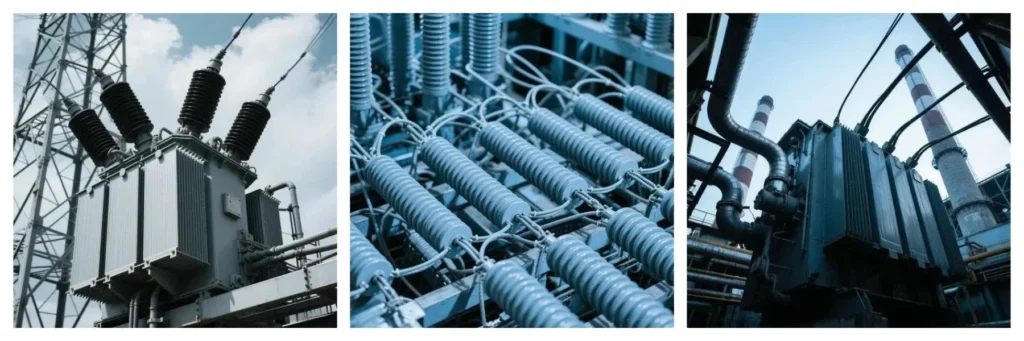
Power transformers use it in laminated cores. Distribution transformers rely on it for grid stability. Audio transformers employ it for signal clarity. Electric motors and inductors also benefit from it. In each case, the material reduces energy losses. It also keeps equipment smaller and lighter. These benefits lower operating costs over time.
Conclusion
Transformer steel clearly belongs to soft magnetic materials. Its low coercivity and high permeability prove this point. Silicon additions and low carbon content enhance its performance. As a result, it enables efficient AC power management. Engineers should select soft magnetic materials for such tasks. Hard magnetic materials serve different needs. Understanding this distinction improves design choices. Ultimately, transformer steel remains a cornerstone of modern electrical systems.




 English
  Japanese
  Korean
  French
  German
  Spanish
  Portuguese
  Russian
  Arabic
  Italian
  Turkish
  Dutch
Dutch  Polish
  Swedish
  Danish
  Norwegian
  Finnish
  Greek
Greek  Hungarian
  Czech
Czech  Romanian
  Bulgarian
  Slovenian
  Croatian
  Slovak
  Malay
Malay  Indonesian
  Thai
Thai  Vietnamese
  Myanmar
  Khmer
Khmer  Lao
Lao  Tagalog
  Hindi
Hindi  Bengali
  Urdu
Urdu  Nepali
  Sinhala
  Hebrew
  Ukrainian
  Serbian
  Icelandic
  Swahili