
Correlation Between Transformer Core Joint Gaps and Electrical Steel Splicing Processes
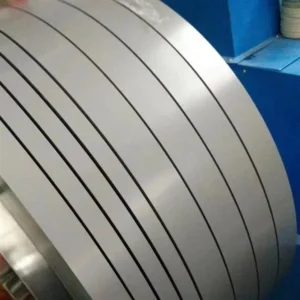
Transformer core joint gaps are directly determined by electrical steel splicing processes. Different splicing technologies control gap size and uniformity precisely. Gaps further affect core overall performance.
Direct seam splicing produces large and uneven joint gaps. Simple butt joint cannot eliminate tiny gaps. Large air gaps increase local magnetic resistance. It causes obvious no-load loss rise.
Step-lap splicing process effectively reduces joint gaps. Multi-stage staggered lap fitting makes steel plates fit closely. It minimizes air gap volume at core joints. Magnetic flux transmission is smoother.
Full step-lap splicing achieves the optimal gap control effect. Four-stage or three-stage lap structure averages gap errors. It eliminates local excessive gap points. It keeps overall core magnetic performance uniform.
Precision steel cutting guarantees gap consistency. High-precision shearing equipment ensures neat steel edges. It avoids gap deviation caused by uneven cutting sizes.

Unqualified splicing processes lead to excessive gap loss. Over-larger joints increase core excitation current. It raises transformer energy consumption and operating noise.
Standardized splicing process improves gap stability. Workers follow unified lap distance and angle standards. It ensures consistent gap level of the whole core.
In short, electrical steel splicing process is the key to control core joint gaps. Advanced step-lap technology effectively reduces gaps and optimizes transformer energy efficiency.







 English
  Japanese
  Korean
  French
  German
  Spanish
  Portuguese
  Russian
  Arabic
  Italian
  Turkish
  Dutch
Dutch  Polish
  Swedish
  Danish
  Norwegian
  Finnish
  Greek
Greek  Hungarian
  Czech
Czech  Romanian
  Bulgarian
  Slovenian
  Croatian
  Slovak
  Malay
Malay  Indonesian
  Thai
Thai  Vietnamese
  Myanmar
  Khmer
Khmer  Lao
Lao  Tagalog
  Hindi
Hindi  Bengali
  Urdu
Urdu  Nepali
  Sinhala
  Hebrew
  Ukrainian
  Serbian
  Icelandic
  Swahili