

What is stacking factor and how it affects transformers
Understanding the Stacking Factor in Transformer Cores
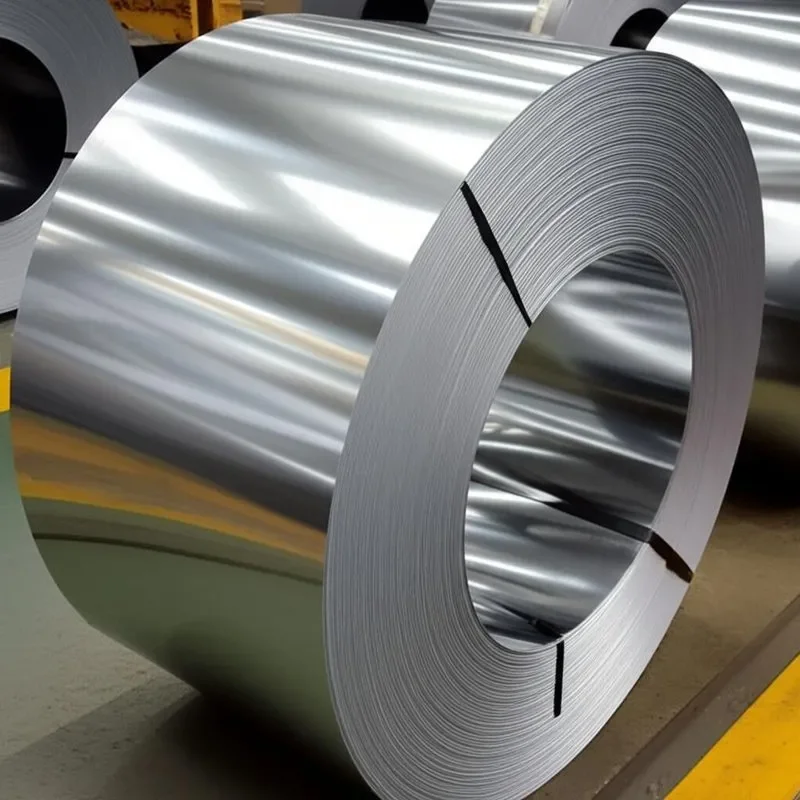
The stacking factor is a key measure in transformer design. It describes how much actual magnetic material fills a core space. Engineers often call it the lamination factor or space factor. This value directly affects transformer size, cost, and efficiency. Therefore, anyone working with electrical steel must understand it well.
What Exactly Is the Stacking Factor?
The stacking factor compares two volumes. The first is the active magnetic material. The second is the total core volume. In practice, a transformer core uses thin steel sheets. These sheets are called laminations. Insulation coats each sheet to reduce eddy currents. As a result, gaps and coating take up space. The stacking factor equals the net steel volume divided by the gross core volume. A typical value ranges from 0.90 to 0.97. Higher values mean less wasted space. Lower values indicate more insulation or air gaps.
Why Insulation Creates a Lower Stacking Factor
Insulation is necessary for efficient transformer operation. Without it, eddy currents would cause heavy losses. However, insulation adds non-magnetic material. This material does not carry magnetic flux. Consequently, the effective core area shrinks. Engineers must account for this reduction during design. A lower stacking factor forces a larger physical core. That larger core increases weight and material cost. Thus, the stacking factor becomes a trade-off between loss reduction and space efficiency.
How the Stacking Factor Affects Transformer Performance
The stacking factor influences several performance areas. First, it changes the effective cross-sectional area. A smaller area reduces magnetic flux capacity. To compensate, the designer must add more turns or use a bigger core. Second, it affects core losses. A low factor often means more insulation. That insulation can slightly reduce eddy currents. However, the larger core may increase hysteresis losses. Third, it impacts temperature rise. A poorly stacked core traps heat. This heat shortens insulation life. Therefore, a good stacking factor supports reliable thermal performance.
Design and Manufacturing Considerations
Manufacturers control the stacking factor through careful processing. They use precise punching and stacking methods. Burrs, waves, and misalignment lower the factor. For instance, a burr creates an air gap between sheets. Even a small gap reduces magnetic efficiency. Additionally, the type of insulation matters. Thin coatings like Carlite improve the factor. Thick coatings lower it but may offer better loss reduction. Wound cores often have higher stacking factors than stacked laminations. This difference comes from tighter winding and fewer air gaps.
The Role of Material Thickness
Steel thickness also interacts with the stacking factor. Thinner laminations reduce eddy current losses. Yet thinner sheets need more insulation layers. More layers lower the stacking factor. For example, 0.23 mm steel may have a factor near 0.90. In contrast, 0.35 mm steel may reach 0.95. Designers must balance loss requirements against space limits. High-frequency transformers often use thin steel. Low-frequency power transformers may use thicker steel. Each choice changes the final stacking factor.
Measuring and Verifying the Stacking Factor
Accurate measurement is essential for quality control. Engineers measure the gross core dimensions. Then they weigh the core or count laminations. From these data, they calculate the net steel volume. The ratio gives the stacking factor. Common standards include ASTM A34 and IEC 60404. These standards ensure consistent testing. A verified factor helps predict real transformer behavior. Without it, designs may fail to meet efficiency targets.
Practical Impact on Cost and Size
The stacking factor has direct business implications. A low factor requires more steel and copper. That need raises material costs. It also increases shipping weight and installation space. Conversely, a high factor allows a compact design. Compact transformers save money on enclosures and mounting. They also reduce no-load losses in many cases. Therefore, optimizing the stacking factor improves both performance and profitability.
Conclusion: A Small Number with Big Consequences
The stacking factor is not just a theoretical detail. It shapes transformer efficiency, size, and cost. Engineers who understand it can make better design choices. They can select proper steel thickness and insulation. They can also predict core losses more accurately. Ultimately, a well-managed stacking factor leads to reliable, economical transformers. For anyone in power electronics, this concept deserves careful attention.





 English
  Japanese
  Korean
  French
  German
  Spanish
  Portuguese
  Russian
  Arabic
  Italian
  Turkish
  Dutch
Dutch  Polish
  Swedish
  Danish
  Norwegian
  Finnish
  Greek
Greek  Hungarian
  Czech
Czech  Romanian
  Bulgarian
  Slovenian
  Croatian
  Slovak
  Malay
Malay  Indonesian
  Thai
Thai  Vietnamese
  Myanmar
  Khmer
Khmer  Lao
Lao  Tagalog
  Hindi
Hindi  Bengali
  Urdu
Urdu  Nepali
  Sinhala
  Hebrew
  Ukrainian
  Serbian
  Icelandic
  Swahili