
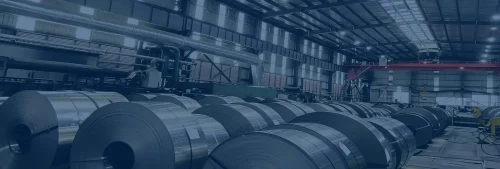
Silicon Steel vs Stainless Steel: In-Depth Comparison
I. Chemical Composition: Two Distinct Alloy Design Philosophies
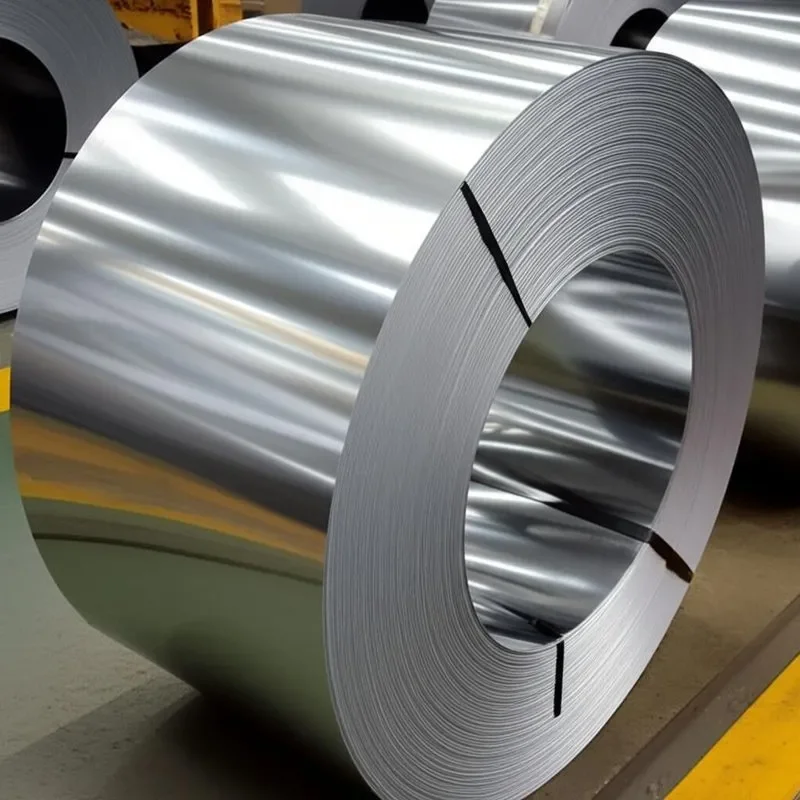
If metals were seasonings, oțel siliconic would be coffee with sugar. It incorporates 0.5%–4.5% silicon into iron to enable smoother magnetic flux transmission. Stainless steel is comparable to pickled vegetables: chromium above 12% forms a rust-proof passive film, while nickel acts as a preservative to further boost corrosion resistance. Interestingly, oțel siliconic is vulnerable to humid conditions, which degrade its electromagnetic performance.
II. Core Properties: Material for Transformers vs Medical Operating Tables
- Electrical resistivity: Silicon steel serves as a smooth channel for magnetic flux, with resistivity 30%–50% lower than stainless steel.
- Mechanical strength: Stainless steel withstands impact loads 2 to 3 times greater than silicon steel.
- Temperature resistance: Silicon steel undergoes structural deformation at 800 °C, whereas stainless steel maintains integrity up to 1200 °C.
- Magnetic performance: Silicon steel is strongly attracted by magnets, while austenitic stainless steel is non-magnetic.

III. Application Scenarios: Electromagnetic Fields vs Medical & Chemical Environments
Silicon steel sheets facilitate efficient electromagnetic energy conversion inside transformers and undergo 50 cycles of magnetic pole reversal every second in motors. Stainless steel delivers long-lasting corrosion resistance on medical operating tables and resists acid and alkali erosion in chemical pipelines. In household kitchens, silicon steel induction cooktops work perfectly with stainless steel cookware: one transmits magnetic fields, and the other resists water corrosion, forming an ideal metal pairing.





 English
  Japanese
  Korean
  French
  German
  Spanish
  Portuguese
  Russian
  Arabic
  Italian
  Turkish
  Dutch
Dutch  Polish
  Swedish
  Danish
  Norwegian
  Finnish
  Greek
Greek  Hungarian
  Czech
Czech  Romanian
  Bulgarian
  Slovenian
  Croatian
  Slovak
  Malay
Malay  Indonesian
  Thai
Thai  Vietnamese
  Myanmar
  Khmer
Khmer  Lao
Lao  Tagalog
  Hindi
Hindi  Bengali
  Urdu
Urdu  Nepali
  Sinhala
  Hebrew
  Ukrainian
  Serbian
  Icelandic
  Swahili