

Mandatory inspection items for incoming transformer steel
Incoming transformer steel must pass strict checks before use. These checks protect equipment and reduce costly failures. Mandatory inspection items for incoming transformer steel form a key quality gate. This article explains the main steps in clear terms.
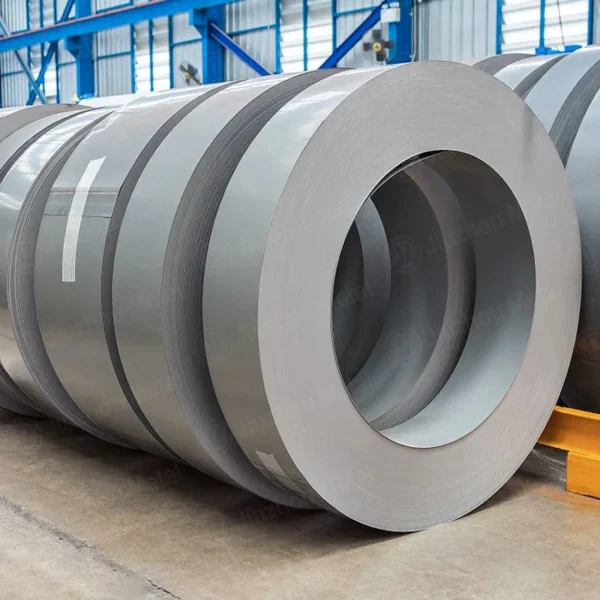
Why Incoming Inspection Matters
Transformer steel carries magnetic flux in cores. Poor quality can raise losses and heat. It can also cause noise or early breakdown. Therefore, every incoming lot needs a formal review. This review confirms the steel meets purchase specs. It also supports safety and long-term reliability. Without this step, hidden defects may enter production. That risk affects both cost and brand trust.
Document and Traceability Checks
First, inspectors check the mill test certificate. This document lists chemical and magnetic properties. Then, they compare the heat number with the packing list. Next, they confirm the steel grade and thickness. They also verify the coating type and surface condition. In addition, they review the date of manufacture. All records must match the actual delivery. Any mismatch triggers a hold and further review.
Chemical Composition Analysis
Chemical content drives magnetic performance. For example, silicon levels affect resistivity and core loss. Carbon, sulfur, and nitrogen must stay very low. Even small amounts can pin domain walls. As a result, core loss may rise. Inspectors often use optical emission spectroscopy. They test samples from different coil positions. This method catches uneven mixing or mill errors. The results must fall within the ordered range.
Magnetic Property Testing
Core loss and permeability are critical values. Testers cut Epstein strips or use single sheet testers. They measure loss at specific frequencies and flux densities. Typically, they check 50 Hz or 60 Hz conditions. They also record induction at given field strengths. These tests show if the steel meets efficiency goals. In addition, they check anisotropy and aging behavior. Consistent magnetic values ensure stable transformer performance.
Mechanical and Dimensional Checks
Thickness variation affects stacking factor and loss. Inspectors measure thickness at several points per coil. They also check width, flatness, and camber. Hardness and yield strength matter for punching and cutting. If the steel is too hard, tool wear increases. If it is too soft, burrs may form. Coating thickness and adhesion also receive attention. Poor coating can cause shorts between laminations.
Surface and Coating Inspection
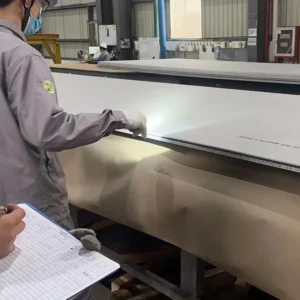
Surface defects harm insulation and magnetic paths. Inspectors look for rust, scratches, and scale. They also check for waves, dents, and edge cracks. Coating must be uniform and tightly bonded. A simple tape test can reveal weak adhesion. In addition, they check insulation resistance. This step prevents interlamination short circuits. Clean, smooth surfaces support good stacking and low loss.
Sampling and Acceptance Rules
Sampling plans must follow a standard or contract. For instance, ISO 2859 or a custom AQL may apply. Inspectors take samples from the start, middle, and end. This approach captures lot variation. If a sample fails, the lot may be rejected. Sometimes, a retest is allowed on double samples. Clear rules avoid disputes and keep supply stable.
Conclusion and Business Value
Mandatory inspection items for incoming transformer steel protect quality and uptime. They cover documents, chemistry, magnetics, mechanics, and surfaces. Each check reduces the chance of hidden defects. As a result, manufacturers avoid scrap, rework, and field failures. They also meet customer and safety requirements. A strong incoming inspection plan saves money over time. It builds trust with suppliers and buyers alike. Ultimately, it supports reliable transformer production and long product life.





 English
  Japanese
  Korean
  French
  German
  Spanish
  Portuguese
  Russian
  Arabic
  Italian
  Turkish
  Dutch
Dutch  Polish
  Swedish
  Danish
  Norwegian
  Finnish
  Greek
Greek  Hungarian
  Czech
Czech  Romanian
  Bulgarian
  Slovenian
  Croatian
  Slovak
  Malay
Malay  Indonesian
  Thai
Thai  Vietnamese
  Myanmar
  Khmer
Khmer  Lao
Lao  Tagalog
  Hindi
Hindi  Bengali
  Urdu
Urdu  Nepali
  Sinhala
  Hebrew
  Ukrainian
  Serbian
  Icelandic
  Swahili