
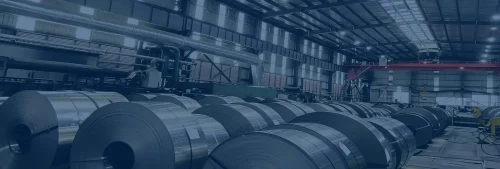
Analysis of Grain-Oriented Silicon Steel Output
septembrie 14, 2026
Blog
I. Current Output Status of Grain-Oriented Silicon Steel
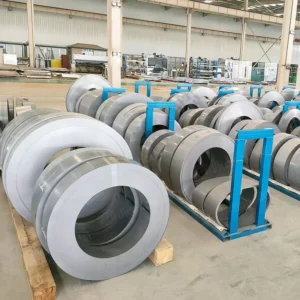
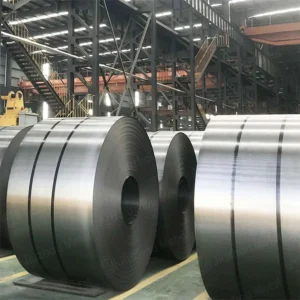
Grain-oriented oțel siliconic serves as a core strategic material for manufacturing power transformers, and its output volume directly mirrors the development level of a country’s power industry. The global output reached approximately 2 million tons in 2023, with China accounting for over 50% of the total, yet high-end grades still rely on imports. Output fluctuations are mainly subject to three major constraints:
- Complex manufacturing process: More than 20 working procedures are required, including decarburization annealing and high-temperature annealing.
- High equipment barriers: Key equipment such as Sendzimir mills still depends on imports.
- Strict energy consumption limits: Power consumption per ton of finished steel hits 800 to 1,000 kWh.

II. Core Approaches to Boost Production Capacity
Practical and proven solutions are available to break output bottlenecks:
- Process innovation: Laser scribing technology improves magnetic domain refinement efficiency by 30%.
- Intelligent manufacturing: Big data is adopted to optimize annealing curves, cutting production cycles by 15%.
- Scrap recycling: Remelting recovered edge trimmings reduces raw material costs by roughly 8%.
III. Industry Trends and Risk Warnings
Three potential hidden risks should be guarded against in the next three years:
- Risk 1: Surging demand for new energy transformers may trigger shortages of 0.23 mm thin-gauge products.
- Risk 2: New environmental regulations may force renovations of traditional pickling processes.
- Risk 3: Extended lead times of imported equipment (18 months on average at present) may restrain capacity expansion.





 English
  Japanese
  Korean
  French
  German
  Spanish
  Portuguese
  Russian
  Arabic
  Italian
  Turkish
  Dutch
Dutch  Polish
  Swedish
  Danish
  Norwegian
  Finnish
  Greek
Greek  Hungarian
  Czech
Czech  Romanian
  Bulgarian
  Slovenian
  Croatian
  Slovak
  Malay
Malay  Indonesian
  Thai
Thai  Vietnamese
  Myanmar
  Khmer
Khmer  Lao
Lao  Tagalog
  Hindi
Hindi  Bengali
  Urdu
Urdu  Nepali
  Sinhala
  Hebrew
  Ukrainian
  Serbian
  Icelandic
  Swahili