
How to distinguish conventional grain-oriented silicon steel (CGO) and high magnetic induction grain-oriented silicon steel (HiB)
Introduction

Grain-oriented aço ao silício plays a key role in electrical transformers. Two main types exist in the market today. They are conventional grain-oriented steel and high magnetic induction steel. Buyers often need to tell them apart. This guide explains how to distinguish CGO and HiB steel clearly. It covers magnetic properties, surface features, and production methods. You will also learn practical tests for identification.
Magnetic Induction Differences
Magnetic induction refers to how well a material carries magnetic flux. HiB steel offers higher induction than CGO steel. For example, HiB grades often reach 1.92 Tesla or more. Conventional grades typically stay near 1.85 Tesla. This gap affects transformer efficiency. Higher induction means less core loss. So, HiB steel saves more energy during operation. You can measure induction with a standard Epstein test. The results will show a clear difference.
Core Loss Comparison
Core loss measures wasted energy as heat. HiB steel produces lower core loss than CGO steel. At 1.7 Tesla and 50 Hz, HiB loss can be 0.85 W/kg. CGO loss may reach 1.20 W/kg under the same conditions. This difference matters for large power transformers. Lower loss reduces operating costs. It also lowers temperature rise in the core. Therefore, HiB steel suits high-efficiency designs. Always check loss data from the mill certificate.
Surface Coating and Appearance
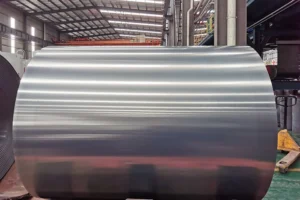
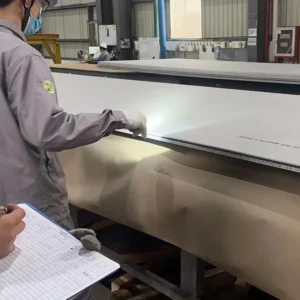
The surface coating offers another clue. HiB steel often has a thinner, more uniform insulation layer. This coating resists heat and stress better. Conventional steel may show a thicker or less even coating. Under light, HiB surfaces look smoother and brighter. CGO surfaces can appear slightly dull or mottled. However, coating alone cannot confirm the grade. You must combine this observation with magnetic tests.
Grain Structure and Orientation
Both types have grains aligned in the rolling direction. Yet HiB steel achieves a sharper orientation. Its grains stay within 3 degrees of ideal. Conventional steel allows up to 7 degrees of deviation. This sharper alignment boosts magnetic performance. You can see the difference with X-ray diffraction. A simpler method uses a magnetic domain viewer. HiB steel shows narrower and more regular domains. CGO steel shows wider and less ordered domains.
Production Process Clues
HiB steel uses a special inhibitor system. It often contains aluminum and nitrogen. Conventional steel relies on sulfur or selenium instead. This chemical difference affects the final properties. Also, HiB steel needs a precise secondary recrystallization step. That step demands tight temperature control. As a result, HiB steel costs more to produce. Its price is typically 10 to 20 percent higher than CGO steel. Price alone is not a reliable test. But it supports other findings.
Practical Identification Steps
Start by checking the mill certificate. It lists grade, induction, and core loss values. Next, perform a magnetic test if possible. Use a single sheet tester for quick results. Then, inspect the surface coating under bright light. Finally, review the production method from the supplier. Combine these steps for a confident conclusion. Do not rely on one single feature.
Conclusion and Value Summary
Distinguishing CGO and HiB grain-oriented aço ao silício requires a balanced approach. Look at magnetic induction, core loss, coating, grain structure, and process details. HiB steel offers higher induction and lower loss. It costs more but saves energy over time. Conventional steel remains a solid choice for standard applications. By using the methods above, you can select the right material. This choice improves transformer efficiency and reduces long-term costs.



 English
  Japanese
  Korean
  French
  German
  Spanish
  Portuguese
  Russian
  Arabic
  Italian
  Turkish
  Dutch
Dutch  Polish
  Swedish
  Danish
  Norwegian
  Finnish
  Greek
Greek  Hungarian
  Czech
Czech  Romanian
  Bulgarian
  Slovenian
  Croatian
  Slovak
  Malay
Malay  Indonesian
  Thai
Thai  Vietnamese
  Myanmar
  Khmer
Khmer  Lao
Lao  Tagalog
  Hindi
Hindi  Bengali
  Urdu
Urdu  Nepali
  Sinhala
  Hebrew
  Ukrainian
  Serbian
  Icelandic
  Swahili