
1.2842 Tool Steel
category
latest Blogs
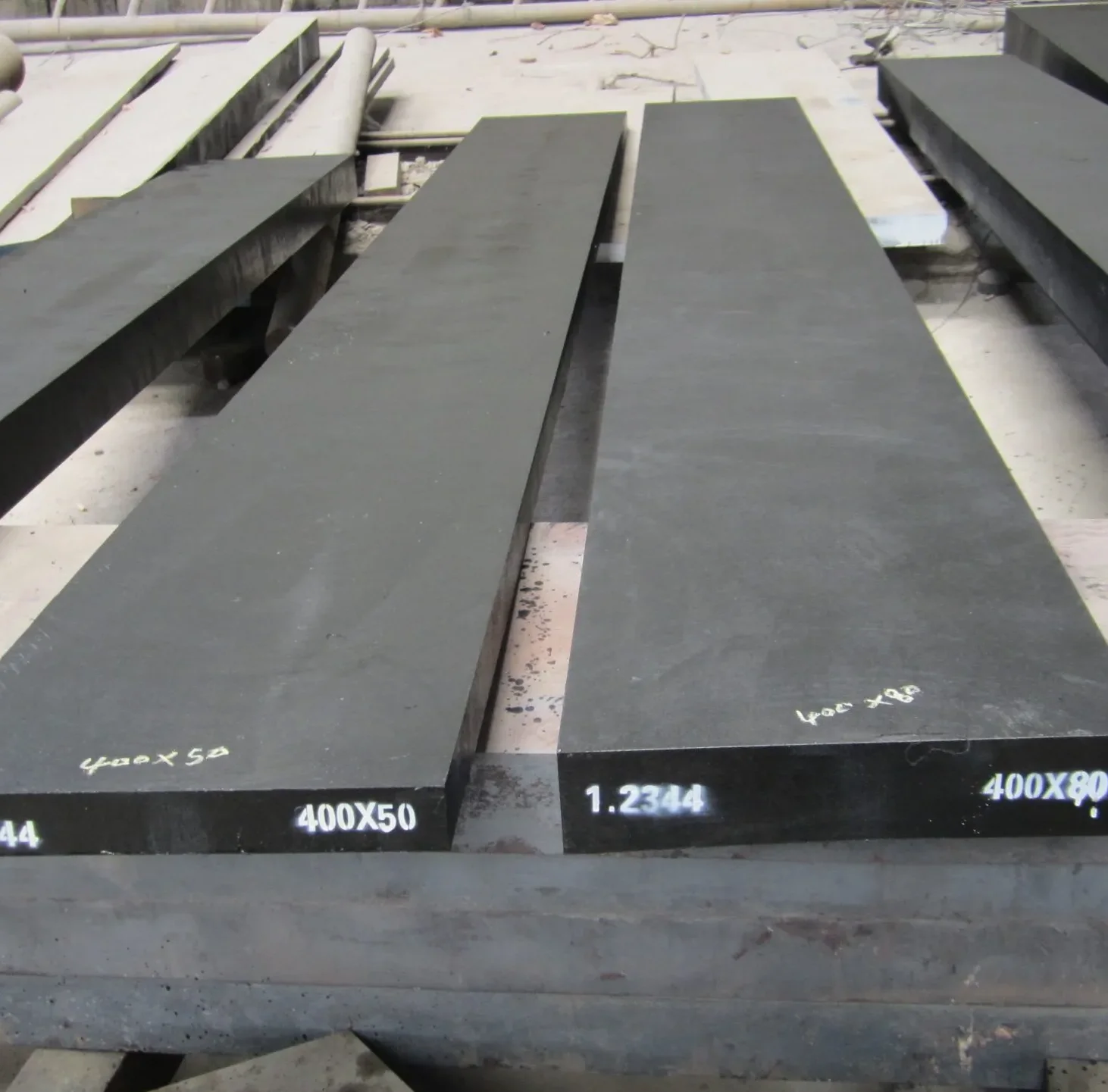
1.2842 Tool Steel
1.2842 (per DIN standard), also known as O2 tool steel, is a high-carbon, low-alloy oil-hardening cold work tool steel.
I. What is 1.2842 Tool Steel?
1.2842 (per DIN standard), also known as O2 tool steel, is a high-carbon, low-alloy oil-hardening cold work tool steel.
High carbon content: Ensures the steel achieves exceptionally high hardness and wear resistance following appropriate heat treatment.
Low-Alloy: The addition of primary alloying elements such as manganese, chromium, and tungsten confers excellent hardenability, toughness, and dimensional stability, while offering a cost advantage over high-alloy steels.
Oil-Quenchable: This denotes a relatively mild heat treatment process, with significantly reduced risks of distortion and cracking compared to water-quenchable steels. This is crucial for moulds featuring complex geometries and precise dimensions.
In summary, 1.2842 achieves an exceptional balance between wear resistance, toughness, and machinability, making it an extremely versatile general-purpose cold work tool steel.
| Equivalent grades | GB | AISI | DIN | – | – | |||||
| 9Mn2V | O2 | 1.2842 | – | – | ||||||
| Chemical Composition | C | Si | Mn | V | P | S | Cr | Mo | – | – |
| 0.85-0.95 | 0.20-0.40 | 1.40-1.80 | ≤0.30 | ≤0.03 | ≤0.03 | ≤0.50 | ≤0.30 | – | – | |
| Available size | Round Bar | Diameter | Length | |||||||
| 16-600mm | 2000-6000mm | |||||||||
| Flat Bar | Thickness | Width | Length | |||||||
| 16-400mm | 200-800mm | 2000-6000mm | ||||||||
| Surface condition | Black surface/ Grinded/ Machined | |||||||||
| Annealed hardness | HB 229 MAX | |||||||||
| Characteristics | Exceptional Wear Resistance, Outstanding Toughness, Superior dimensional stability, Superior machinability and polishability, Broad heat treatment window | |||||||||
| Applications | Stamping dies, Cutting tools, Measuring tools and fixtures, Plastic moulds | |||||||||
II. Core Advantages
Exceptional Wear Resistance: Its high carbon content provides a robust foundation for hardness (achieving HRC 60-62 after heat treatment). This enables 1.2842 moulds to withstand prolonged wear from metal stamping and drawing operations, significantly extending mould life and reducing maintenance and replacement frequency.
Outstanding Toughness: While wear resistance is crucial, excessive brittleness can cause chipping or cracking under impact loads. Through a well-balanced alloy composition, 1.2842 exhibits excellent toughness, enabling it to withstand moderate impacts and intermittent stresses. This makes it suitable for dynamic applications such as blanking and die forging.
Superior dimensional stability: As an oil-hardening steel, it exhibits minimal deformation during heat treatment. This represents a decisive advantage for precision moulds. It ensures the mould maintains precise cavity dimensions after multiple heat treatments and production cycles, thereby guaranteeing dimensional tolerances in the final product.
Superior machinability and polishability: In the annealed condition, 1.2842 exhibits excellent machining properties. Whether milling, turning, or drilling, operations proceed relatively smoothly, effectively reducing tool wear and processing time. Concurrently, its uniform composition allows polishing to exceptionally high surface finishes, meeting stringent aesthetic requirements for applications such as automotive exterior components and appliance panels.
Broad heat treatment window: Compared to certain high-end steels highly sensitive to heat treatment processes, 1.2842’s heat treatment (such as quenching and tempering) is more manageable. This affords heat treatment specialists greater operational flexibility, facilitating consistent and stable final performance.
- Inquiry
Please fill in your name, email and message below. We will read your information carefully and reply to you as soon as possible. Thank you for your contact and support.
 English
  Japanese
  Korean
  French
  German
  Spanish
  Portuguese
  Russian
  Arabic
  Italian
  Turkish
  Dutch
Dutch  Polish
  Swedish
  Danish
  Norwegian
  Finnish
  Greek
Greek  Hungarian
  Czech
Czech  Romanian
  Bulgarian
  Slovak
  Croatian
  Slovenian
  Malay
Malay  Indonesian
  Thai
Thai  Vietnamese
  Myanmar
  Khmer
Khmer  Lao
Lao  Tagalog
  Hindi
Hindi  Bengali
  Urdu
Urdu  Nepali
  Sinhala
  Hebrew
  Ukrainian
  Serbian
  Icelandic
  Swahili