
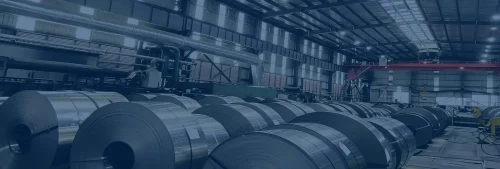
Full Analysis of Non-Oriented Silicon Steel Production
I. Fundamentals of Non-Oriented Silicon Steel Production Processes
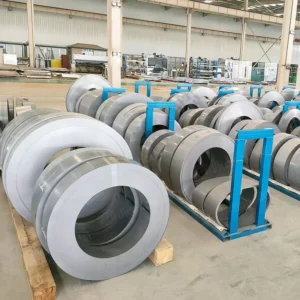
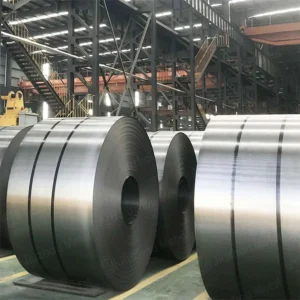
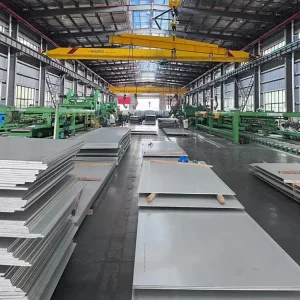
Non-oriented stal krzemowa is a core material for electric motors and transformers, and its manufacturing process directly determines its electromagnetic properties. The production flow mainly consists of smelting, hot rolling, cold rolling, annealing and other procedures. Among them, cold rolling and annealing are particularly critical, as they govern the grain orientation and magnetic performance of the material.
- Smelting: Silicon content is strictly controlled (generally between 2.5% and 3.5%) to guarantee high resistivity and low core loss of the material.
- Hot rolling: Steel slabs are heated to approximately 1100°C for hot rolling to form preliminary stal krzemowa strips.
- Cold rolling: The hot-rolled strips are reduced to the target thickness via multi-pass cold rolling, while the internal microstructure of the material is optimized simultaneously.
II. Impacts of Line Speed Parameters on Production
Production line speed is a vital factor affecting the performance of non-oriented stal krzemowa. Different line speeds (e.g., 160 m/min and 180 m/min) exert distinct influences on finished product properties.
- 160 m/min: Suitable for manufacturing thicker-gauge silicon steel. The finished products feature more uniform crystal grains and stable magnetic performance, yet with relatively low production efficiency.
- 180 m/min: Designed for thin-gauge products with high production efficiency, though it imposes stricter requirements on equipment precision and process control.
- Speed selection: A comprehensive evaluation of product thickness, end application and equipment capacity is required to strike a balance between productivity and product quality.

III. Common Production Defects & Equipment Maintenance
Surface defects, uneven thickness and other flaws frequently emerge during the mass production of non-oriented silicon steel. Key control measures are listed as follows:
- Surface quality control: Conduct regular inspections on work roll surfaces to prevent scratches and oxidation defects.
- Annealing process optimization: Annealing temperature and holding time must be precisely regulated to enable complete recrystallization of crystal grains.
- Equipment maintenance: The stability of rolling mills and annealing furnaces is critical under high-speed operation, which necessitates routine maintenance and calibration.





 English
  Japanese
  Korean
  French
  German
  Spanish
  Portuguese
  Russian
  Arabic
  Italian
  Turkish
  Dutch
Dutch  Polish
  Swedish
  Danish
  Norwegian
  Finnish
  Greek
Greek  Hungarian
  Czech
Czech  Romanian
  Bulgarian
  Slovenian
  Croatian
  Slovak
  Malay
Malay  Indonesian
  Thai
Thai  Vietnamese
  Myanmar
  Khmer
Khmer  Lao
Lao  Tagalog
  Hindi
Hindi  Bengali
  Urdu
Urdu  Nepali
  Sinhala
  Hebrew
  Ukrainian
  Serbian
  Icelandic
  Swahili