
Stal narzędziowa 1.2379
kategoria
najnowsze blogi
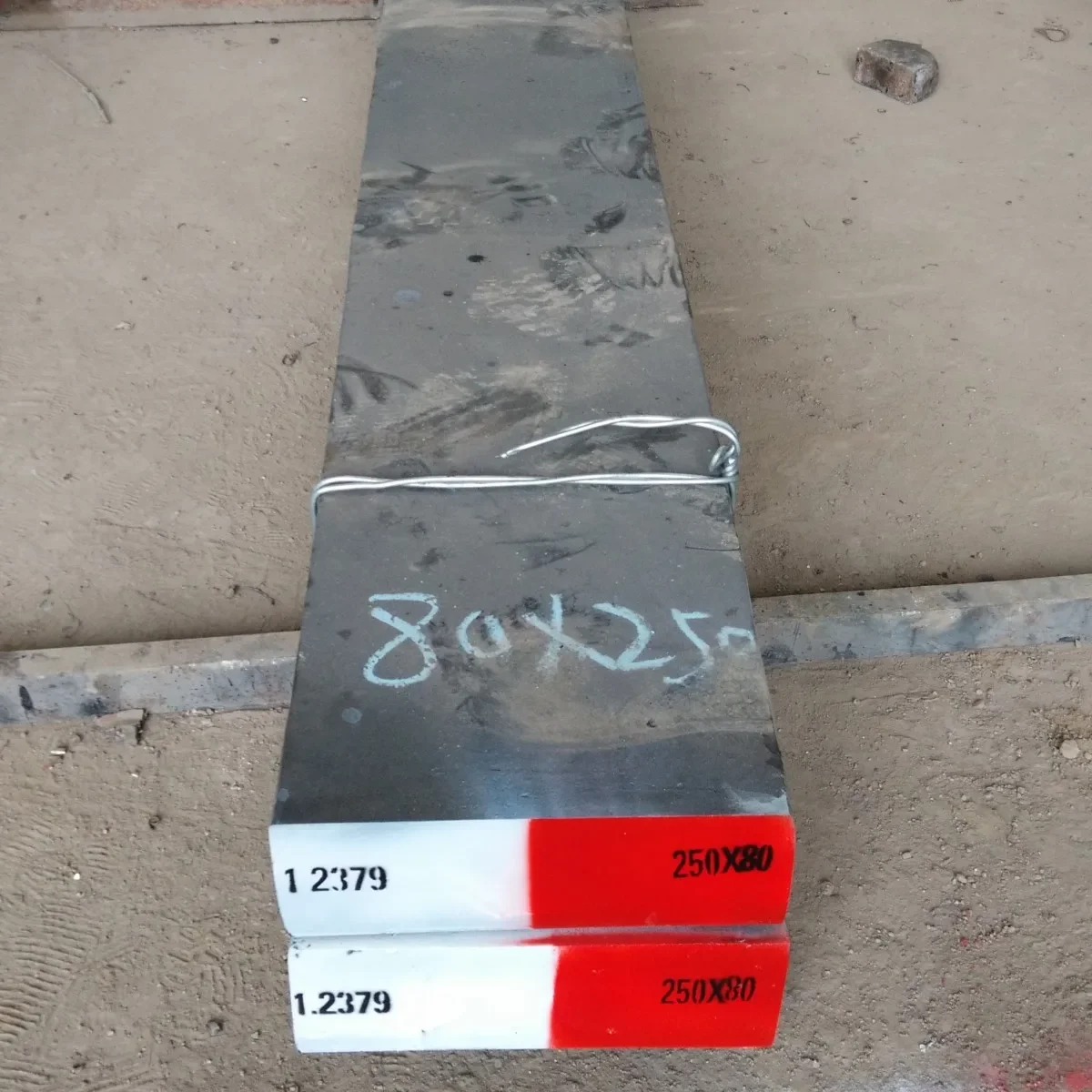
Stal narzędziowa 1.2379
1.2379 is a high-carbon, high-chromium cold-work tool steel characterised by its elevated carbon content (approximately 1.55%) and rich alloying elements including chromium (around 12%), molybdenum, and vanadium. Through optimised chemical composition and heat treatment processes, it achieves an exceptional balance between wear resistance, toughness, and dimensional stability, establishing itself as the “hardcore performer” in modern industrial wear-resistant applications.
What is 1.2379 tool steel?
1.2379 is a high-carbon, high-chromium cold-work tool steel characterised by its elevated carbon content (approximately 1.55%) and rich alloying elements including chromium (around 12%), molybdenum, and vanadium. Through optimised chemical composition and heat treatment processes, it achieves an exceptional balance between wear resistance, toughness, and dimensional stability, establishing itself as the “hardcore performer” in modern industrial wear-resistant applications.
| Równoważne stopnie | GB | DIN | AISI | JIS | BS | |||||
| Cr12Mo1V1 | 1.2379 | D2 | SKD11 | BD2 | ||||||
| Skład chemiczny | C | Si | Mn | Cr | P | S | V | Mo | Other | |
| 1.50-1.60 | 0.10-0.40 | 0.15-0.45 | 11.50-12.50 | 0.03MAX | 0.03MAX | 0.90-1.10 | 0.60-0.80 | - | ||
| Dostępny rozmiar | Okrągły pręt | Średnica | Długość | |||||||
| 16-800mm | 2000-6000 mm | |||||||||
| Płaskownik | Grubość | Szerokość | Długość | |||||||
| 16-400mm | 200-800mm | 2000-6000 mm | ||||||||
| Stan powierzchni | Czarna powierzchnia/ Szlifowane/ Obrabiane | |||||||||
| Twardość po wyżarzeniu | HB225MAX | |||||||||
| Charakterystyka | Very high resistance against abrasive and adhesive wear due to a high volume of hard carbides in the steel matrix moderate machinability, good dimensional stability, toughness and through harden ability | |||||||||
| Zastosowania | Shear blades,Thread rolling dies,Drawing and bending tools Flanging and straightening rolls,Fine cutting tools Deep drawing tools,Plastic mould for abrasive polymers Cold extrusion dies,Drawing dies | |||||||||
| Heat treatment | Hardening Harden from a temperature of 1000-1040oC followed by oil, warm bath (500-550oC, cooling bath or air. Hardness after quenching is 62-64 HRC. Tempering Tempering temperature: 150-550oC Tempering Temperature (oC) vs. Hardness (HRC) | |||||||||
| 100°C | 200°C | 300°C | 400°C | 500°C | ||||||
| 63 | 61 | 58 | 58 | 59 | ||||||
| Mechanical properties | Density | 7.7[g/cm3] | ||||||||
| Thermal Conductivity | 20.20 W/(m/k) | |||||||||
| Specific heat capacity[J/g.K] | 0.46 | |||||||||
| Coefficient of Linear Thermal Expansion 10-6 oC-1 | ||||||||||
| 20-100°C | 20-200°C | 20-300°C | 20-400°C | 20-500°C | ||||||
| 9.8 | 11.7 | 12.1 | 12.8 | 12.9 | ||||||
Core Performance, Forging Exceptional Capabilities:
Superior Wear Resistance: Its high-carbon, high-chromium core formulation generates abundant hard, wear-resistant chromium carbides upon quenching and tempering. This ensures your cutting edges remain sharper for longer, while mould cavities withstand greater abrasion. Significantly reducing downtime for replacements, it effectively boosts equipment utilisation.
Outstanding Toughness: Despite its exceptional hardness, 1.2379 steel retains excellent toughness through precise heat treatment control. This prevents brittle fracture or chipping under impact loads and localised stress concentrations, ensuring safe and stable operation in demanding conditions.
Superior Dimensional Stability: Through meticulously engineered quenching and multiple high-temperature tempering processes, residual austenite within 1.2379 steel undergoes complete transformation, resulting in a stable microstructure. This delivers exceptional resistance to deformation, ensuring precision moulds and cutting tools maintain dimensional accuracy during prolonged use or temperature fluctuations, thereby guaranteeing consistent product batches.
Good Quenchability: Benefiting from a rational alloying element composition, 1.2379 steel achieves a deep hardened layer. Even large-section components attain uniform hardness and properties, meeting the demands of large, complex moulds and components.
Machinability and polishability:Demonstrates excellent machinability in the annealed condition, facilitating the production of intricate geometries. Following appropriate heat treatment, surfaces can achieve exceptionally high finishes, meeting applications demanding superior surface quality.
- Zapytanie
Wpisz poniżej swoje imię i nazwisko, adres e-mail i wiadomość. Uważnie przeczytamy Twoje informacje i odpowiemy tak szybko, jak to możliwe. Dziękujemy za kontakt i wsparcie.
 Polish
  English
  Japanese
  Korean
  French
  German
  Spanish
  Portuguese
  Russian
  Arabic
  Italian
  Turkish
  Dutch
Dutch  Swedish
  Danish
  Finnish
  Greek
Greek  Hungarian
  Czech
Czech  Romanian
  Bulgarian
  Slovak
  Croatian
  Slovenian
  Malay
Malay  Indonesian
  Thai
Thai  Vietnamese
  Myanmar
  Tagalog
  Hindi
Hindi  Bengali
  Urdu
Urdu  Nepali
  Hebrew
  Ukrainian
  Serbian
  Icelandic
  Swahili