
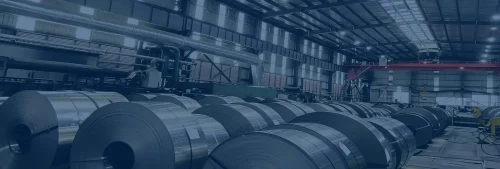
Chińska konferencja poświęcona stali elektrotechnicznej wspiera rozwój branży wysokiej jakości ekologicznej stali krzemowej
A fully competitive silicon steel industry is conducive to the rapid development of the industry chain and technological progress. The severe surplus supply and demand relationship carries huge industry risks. All enterprises should base themselves on long-term and stable expectations, and jointly maintain the healthy development order of silicon steel.
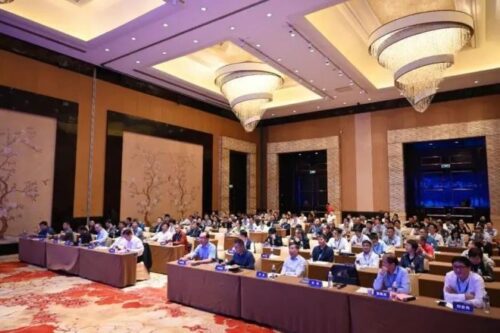
The conference was held in Wuxi, hosted by the Electrical Steel Branch of the Chinese Society of Metals and organized by Baosteel Co., Ltd. The theme was “Promoting the high-end upgrading of silicon steel and supporting downstream green development”. More than 140 representatives from over 90 state-owned enterprises, private steel mills, national level industry organizations, research institutes, and silicon steel industry users engaged in silicon steel production attended the conference.
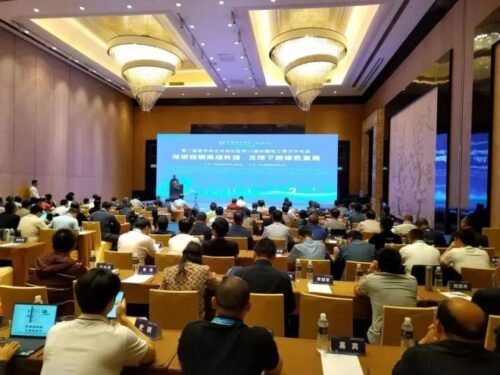
At the meeting, Ding Bo, Minister of the Academic Department of the Chinese Society of Metals, introduced the significance of this conference; Shen Kanyi, member of the Electrical Steel Branch of the Chinese Society of Metals, Deputy General Manager of Baosteel Baoshan Base, Secretary of the Party Committee and General Manager of the Silicon Steel Division, delivered a welcome speech; Wu Shujian, Secretary General of the Third Committee of the Electrical Steel Branch of the Chinese Society of Metals, comprehensively summarized the work of the Electrical Steel Branch. Representatives from enterprises such as Liu Pengcheng, Chairman of Baotou Weifeng New Materials Co., Ltd., Yang Zemin, Working Chairman of Chongqing Wangbian Electric (Group) Co., Ltd., and Chen Haihong, Researcher of China National Institute of Standards, made exchange speeches and reports.
Efficient – Moving from local to overall
Silicon steel has great potential in the future. As the food of industry, steel is still an irreplaceable material in the development of new industrialization and has enormous development potential, “said Liu Baojun. He pointed out that silicon steel plays an important mission in China’s modernization process; There are opportunities and great potential in the new major national strategic deployment.
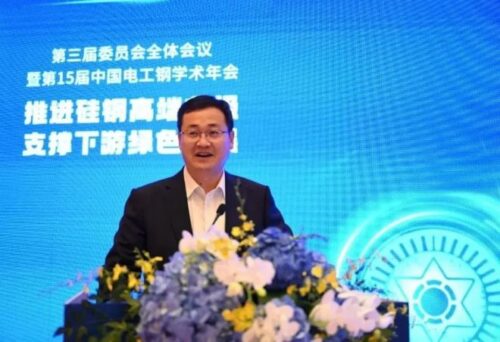
Where are the opportunities for Chinese silicon steel? The first is the demand for high-grade silicon steel in the national ‘dual carbon’ strategy, the second is growing in the Chinese market of large and strong steel, and the third is the industrial development space environment created by the country in accordance with the law, “Wu Shujian pointed out in the work report. He believes that the global low-carbon trend brings about a change in energy structure, and vigorously developing new and renewable energy is an urgent need to address climate change and achieve sustainable development. The change in global energy structure brings opportunities for oriented and non oriented silicon steel.
Under the dual carbon target, the cumulative installed capacity of power generation in China in 2022 is about 2.56 billion kilowatts, a year-on-year increase of 7.8%. Among them, the installed capacity of wind power is about 370 million kilowatts, a year-on-year increase of 11.2%; The installed capacity of solar power generation is about 390 million kilowatts, a year-on-year increase of 28.1%.
The transformation of energy structure and the increase in installed capacity at the power supply end have led to the growth of high-grade non oriented silicon steel and conventional oriented silicon steel; At the transmission end, China’s cross regional power transmission drives a new round of ultra-high voltage construction cycle, leading to an increase in demand for high-grade oriented silicon steel; On the electricity side, variable frequency air conditioning, energy-saving industrial motors, and new energy vehicles have brought about an increase in demand for high-grade non oriented silicon steel. Green and low-carbon bring about an improvement in energy efficiency standards, such as the new national standard for transformers bringing market opportunities for high-grade oriented silicon steel. State Grid Corporation of China has released the “Steady Promotion Plan for the Renovation of 10KV Distribution Transformers that Do Not Meet Energy Efficiency Standards” to implement the spirit of the “Transformer Energy Efficiency Improvement Plan 2021-2023” jointly issued by the Ministry of Industry and Information Technology, the State Administration for Market Regulation, and the National Energy Administration.
In terms of increment, industrial regulatory departments in various regions actively implemented the green procurement system, and application enterprises such as State Grid Corporation of China and Southern Power Grid Corporation of China implemented the green procurement system. Transformer manufacturing enterprises accelerated the supply of high-efficiency and energy-saving transformer products, and the green level of the industrial chain and supply chain was improved, achieving phased results and effectively implementing the main tasks.
The renovation of existing transformers and the improvement of standards for new transformers have led to an increase in demand for high-grade oriented silicon steel, “said Wu Shujian.
According to relevant industry associations, in 2021, China had 17 million transformers in operation on the grid, with a total capacity of 11.2 billion KVA. In 2021, energy-saving grade 2 and above transformers accounted for 21% of newly produced transformers; In 2022, energy-saving grade 2 and above transformers accounted for 62% of newly produced transformers.
Experts predict that the annual net growth of demand for oriented silicon steel in China’s market during the 14th Five Year Plan period is about 200000 to 300000 tons compared to the 13th Five Year Plan period. Taking wind power as an example, from an increase of 152.38 million kilowatts in the 13th Five Year Plan to an increase of 256 million kilowatts in the 14th Five Year Plan, it can bring an increase in demand for 85000 tons of oriented silicon steel.
For non oriented silicon steel, the rapid increase in demand is mainly due to the growth of new energy vehicles. The demand trend for silicon steel in energy-saving and new energy vehicles, calculated based on 8.5 million new energy vehicles in 2023, the global demand for silicon steel in this field is 1.49 million tons per year; By 2035, it is expected to reach 4.42 million tons per year, which means there will still be a demand gap of 293 tons of silicon steel in the next 12 years.
In addition, the implementation of new energy efficiency standards in the industrial motor market has opened a window for the incremental space of high-grade non oriented silicon steel. The demand for non oriented silicon steel for Level 1 and Level 2 energy-efficient motors is 763000 tons in 2023, and 766000 tons in 2025, an increase of 3000 tons.
The production capacity has both imports and exports, with all exports being low grade and most imports being high grade. The trend of the entire industry transitioning towards high-end and efficient production is very clear, “Wu Shujian pointed out.
Recognizing the current development status of silicon steel. Firstly, a fully competitive silicon steel industry is conducive to the rapid development of the industry chain and technological progress. Secondly, the serious surplus supply and demand relationship carries enormous industry risks, “Liu Baojun believes.
Obviously, to solve the structural surplus, the future development focus of the electrical steel industry should be on high-grade electrical steel for new energy vehicles, high magnetic induction oriented electrical steel for energy-saving transformers, high-grade electrical steel for high-efficiency motors, high-grade electrical steel for variable frequency household appliances, ultra-thin electrical steel for medium and high frequencies, high-strength electrical steel, new insulation coating electrical steel products, and special high-grade electrical steel for new fields and industries.
Low carbon – has become a new competitive track
Silicon steel is a core material related to the innovation and progress of power and electrical appliances, as well as a high-tech functional material with important value for energy conservation and emission reduction.
Liu Baojun suggests building a platform for industry, academia, research, and application, paying attention to the development trends of downstream industries such as distribution, home appliances, and automobiles, and maintaining the healthy development of downstream industries.
On October 1, 2023, the EU Carbon Border Adjustment Mechanism (CBAM) regulation came into effect. The transition period is from October 1, 2023 to the end of 2025, and it will gradually be fully implemented from January 1, 2026 to 2034. According to the new regulations, the EU will impose additional taxes on steel, aluminum, cement, and fertilizers imported from overseas. EU importers are now required to report greenhouse gas emissions during the production process of related goods. Starting from January 1, 2026, importers are required to purchase emission certificates, with prices based on the carbon price required to produce these goods within the European Union.
The new policy aims to encourage global manufacturers to shift towards more environmentally friendly production methods and prevent manufacturers within the European Union from profiting by relocating production facilities to countries and regions with less stringent environmental regulations.
The Guiding Opinions on Promoting High Quality Development of the Iron and Steel Industry propose to break through advanced process technologies such as hydrogen metallurgy, low-carbon metallurgy, thin strip casting and rolling, and headless rolling by 2025, increase the proportion of electric furnace steel production to over 15% of the total crude steel production, and ensure that the industry reaches its carbon peak before 2030. The Chinese steel industry is accelerating the pace of green and low-carbon transformation and upgrading, actively exploring cutting-edge disruptive technologies such as hydrogen based direct reduction ironmaking process and endogenous carbon removal mechanism in steel production, blast furnace hydrogen rich pure oxygen smelting, etc., to reduce direct carbon emissions in the production process until carbon neutral steel is produced, leading the world’s steel development.
Low carbon/zero carbon electrical steel has become a trend and direction, both originating from Europe and America
High energy efficiency standards are important factors for the high-end overseas market of silicon steel, as well as peer development of electric furnace electrical steel and user driven factors. For example, a German company has proposed to reduce carbon emissions by 50% for the top 1000 suppliers by 2025. ”Introduction by Wu Shujian.
According to the calculation results of CITIC Securities, under the more likely scenario of including steel in the national carbon market, Chinese steel companies will need to pay a carbon tariff of about 100 yuan/ton per ton of blast furnace steel exported to Europe in 2026.
Of course, CBAM is just the beginning and will not be an exception. The economic experience represented by the European Union has gradually woven into a “network of rules” that covers almost all products sold in the market, as well as the entire lifecycle of products – from design, production, use to disposal.
It is reported that the power generation transformer, as an important electrical equipment for energy transmission in wind and solar power generation, has technical characteristics of intermittent low-voltage connection to high-voltage grid connection, which differs from the current technical indicators of transmission and distribution transformers. Currently, there is no corresponding energy efficiency standard to regulate it, resulting in the no-load loss and load loss of new energy power generation transformers being generally at least 40% higher than conventional transmission and distribution transformers, causing waste of green electricity in transmission.
There are about 17 million transformers operating on the grid in China, with a total capacity of approximately 11 billion kilovolt amperes. Transformer losses account for about 40% of power transmission and distribution losses, and have great energy-saving potential. Since the 14th Five Year Plan, according to the requirements of the “Transformer Energy Efficiency Improvement Plan 2021-2023” issued by the Ministry of Industry and Information Technology and other three ministries, the proportion of high-efficiency and energy-saving transformers operating on the grid should be increased by 10% in 2023, and the proportion of newly added high-efficiency and energy-saving transformers GB20052 (level 2 or above) should reach more than 75% annually. The production of high-efficiency and energy-saving transformers in China accounts for 58% of the total production, approximately 1 billion kVA; During the 14th Five Year Plan period, State Grid and Southern Power Grid increased their investment in transformer renovation by 13% compared to the 13th Five Year Plan period. State Grid completed the energy efficiency upgrade and renovation of 170000 transformers in 2021, and purchased 112 million kVA level 2 and above high-efficiency energy-saving transformers in 2022.
The transformer industry is gradually promoting the application of high-efficiency and energy-saving transformers, and developing towards green, low-carbon and high-quality direction, “Chen Haihong proposed in the progress report on the revision of the” Energy Efficiency Limit Values and Energy Efficiency Grades of Power Transformers “standard.
It is reported that the revision of GB (20052) “Energy Efficiency Limits and Grades for Power Transformers” was approved for project approval in 2023, with project number 20230936-Q-469; This project was proposed and managed by the National Standardization Management Committee, and will be submitted for approval in January 2024.
According to the installed capacity in 2060, the installed capacity of wind and photovoltaic power is calculated to be 6 billion kilowatts. All photovoltaic transformers are upgraded from S11 to S20, reducing carbon dioxide emissions by 620 million tons throughout their lifecycle and achieving an economic benefit of 31 billion yuan. All wind power transformers are upgraded from S11 to S20, reducing carbon dioxide emissions by 410 million tons throughout their lifecycle and achieving an economic benefit of 20.5 billion yuan. The total carbon dioxide emissions reduction throughout their lifecycle is equivalent to the amount of carbon dioxide absorbed by 300000 hectares of broad-leaved forest in 10 years. “Chen Haihong calculated the carbon reduction effect of the new standard.
Obviously, promoting the high-end and green development of the silicon steel industry chain has become the main theme and grand charter of the future of the silicon steel industry.







 English
  Japanese
  Korean
  French
  German
  Spanish
  Portuguese
  Russian
  Arabic
  Italian
  Turkish
  Dutch
Dutch  Polish
  Swedish
  Danish
  Norwegian
  Finnish
  Greek
Greek  Hungarian
  Czech
Czech  Romanian
  Bulgarian
  Slovenian
  Croatian
  Slovak
  Malay
Malay  Indonesian
  Thai
Thai  Vietnamese
  Myanmar
  Khmer
Khmer  Lao
Lao  Tagalog
  Hindi
Hindi  Bengali
  Urdu
Urdu  Nepali
  Sinhala
  Hebrew
  Ukrainian
  Serbian
  Icelandic
  Swahili