
What is core loss P17/50, the most critical indicator of transformer steel
Understanding Core Loss P17/50 in Transformer Steel
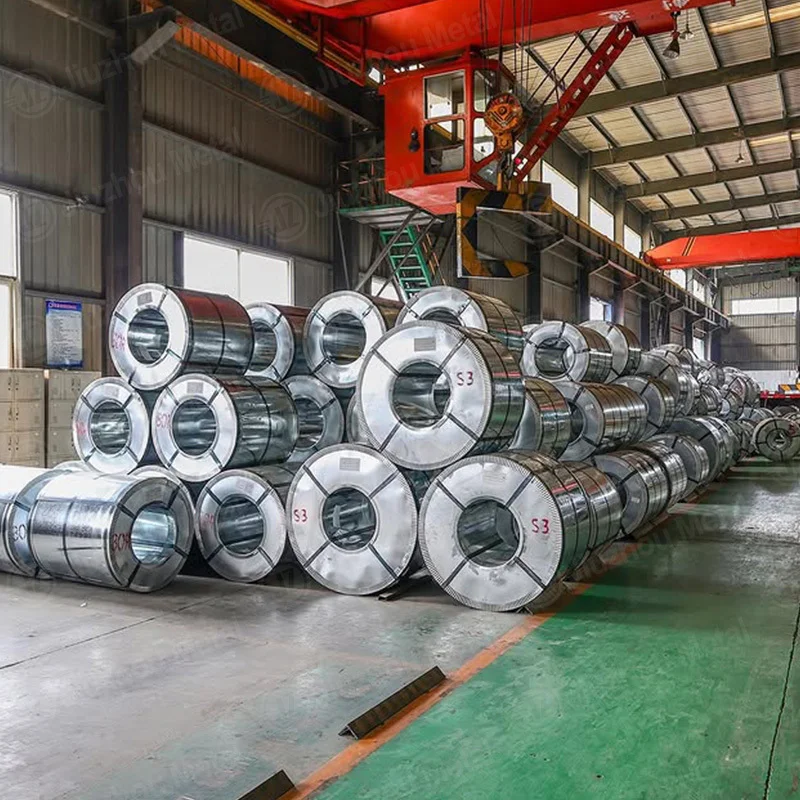
Transformer steel plays a vital role in power systems. Its efficiency depends on one key number. That number is core loss P17/50. Engineers use it to compare materials. Buyers use it to predict energy costs. This article explains what P17/50 means. It also shows why it matters for transformer design and purchasing decisions.
What Core Loss P17/50 Actually Measures
Core loss P17/50 describes magnetic energy lost as heat. The test uses a specific magnetic flux density. That density equals 1.7 Tesla. The frequency stays at 50 Hertz. Under these exact conditions, the steel sample loses a certain wattage per kilogram. Lower values mean better performance. A low P17/50 grade reduces wasted electricity. It also lowers operating temperature. Consequently, the transformer runs cooler and lasts longer.
Why 1.7 Tesla and 50 Hertz Are Chosen
These values reflect common operating conditions. Many power transformers run near 1.7 Tesla. Grid frequency in Europe and Asia sits at 50 Hertz. So P17/50 directly predicts real-world loss. For 60 Hertz markets, a similar metric exists. Yet P17/50 remains the global benchmark. It allows fair comparison across steel suppliers. Without this standard, buyers would struggle to judge quality.
The Role of Silicon Content and Thickness
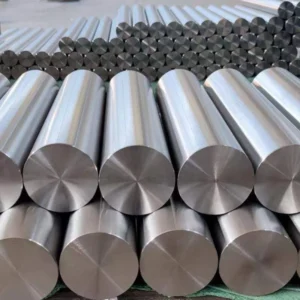
Grain-oriented siliciumstaal dominates transformer cores. Higher silicon content raises electrical resistance. That resistance reduces eddy currents. Thinner steel sheets also cut eddy losses. Producers balance these factors carefully. They aim for low core loss P17/50 without raising cost too much. Advanced production methods like laser scribing further improve the domain structure. As a result, modern steels achieve very low loss values.
How P17/50 Impacts Transformer Efficiency
No-load loss comes mostly from core loss. A transformer runs 24 hours a day. Even a small loss per kilogram adds up over years. For example, a 1000 kg core with P17/50 of 1.0 W/kg wastes 1000 watts continuously. That wasted power costs money and generates heat. Choosing a lower P17/50 grade reduces lifetime energy expenses. It also helps meet efficiency regulations like EU Ecodesign or US DOE standards.
Comparing P17/50 with Other Loss Indicators
P17/50 is not the only metric. Some engineers also look at P15/50 or P17/60. Each reflects different test conditions. However, P17/50 remains the most critical indicator for transformer steel. Why? Because it matches typical flux and frequency in most power grids. It directly links material quality to total ownership cost. Therefore, buyers should always request P17/50 data before ordering steel.
Practical Steps for Selecting Low-Loss Steel
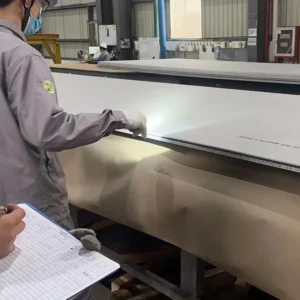
First, define your required P17/50 limit. Second, ask suppliers for certified test reports. Third, compare values across grades like M3, M4, or M5. Fourth, calculate the energy savings over the transformer’s life. Fifth, verify that the steel meets mechanical and insulation needs. Following these steps ensures you get the best core loss P17/50 for your budget.
Conclusion: Why P17/50 Deserves Attention
Core loss P17/50 is more than a technical number. It predicts efficiency, heat, and long-term cost. A lower value means less wasted energy. It also means a smaller carbon footprint. For anyone involved in transformer design or procurement, ignoring P17/50 invites higher operating expenses. By prioritizing this indicator, you make smarter, greener, and more economical choices. Always treat P17/50 as the most critical indicator of transformer steel quality.





 English
  Japanese
  Korean
  French
  German
  Spanish
  Portuguese
  Russian
  Arabic
  Italian
  Turkish
  Dutch
Dutch  Polish
  Swedish
  Danish
  Norwegian
  Finnish
  Greek
Greek  Hungarian
  Czech
Czech  Romanian
  Bulgarian
  Slovenian
  Croatian
  Slovak
  Malay
Malay  Indonesian
  Thai
Thai  Vietnamese
  Myanmar
  Khmer
Khmer  Lao
Lao  Tagalog
  Hindi
Hindi  Bengali
  Urdu
Urdu  Nepali
  Sinhala
  Hebrew
  Ukrainian
  Serbian
  Icelandic
  Swahili