
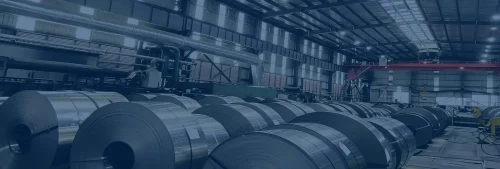
Qualification Requirements for Electrical Steel (Silicon Steel)
Qualification requirements for electrical siliciumstaal include compliance with relevant national standards, valid production licenses, quality certifications and other documents. Familiarity with these criteria enables purchasers to quickly screen qualified products.
I. Core Qualification Mandates
Qualified electrical siliciumstaal must meet two non-negotiable prerequisites. First, material performance indicators such as magnetic flux density and core loss must comply with general industrial technical specifications. Second, manufacturers shall hold valid production permits and pass quality management system certification.
These qualifications serve not only as market access thresholds but also as guarantees of stable material performance. Products lacking a full set of supporting qualifications may suffer magnetic property degradation, local overheating and other defects when applied in critical equipment such as transformers and motors.
Qualification emphasis differs slightly between non-oriented and grain-oriented electrical steel. Non-oriented grades place greater focus on core loss and magnetic isotropy, while grain-oriented types impose strict standards on grain orientation consistency. Purchasers shall check corresponding test reports according to specific applications. For example, non-oriented steel for motor cores requires close review of loss data under medium magnetic fields.
II. Key Matching Principles for Material Selection
Qualification documents represent only the minimum compliance baseline. Three dimensions shall be assessed alongside practical operating conditions:
- Magnetic performance: Low-core-loss grades for high-frequency scenarios; saturation magnetic flux density prioritized for high-power equipment.
- Mechanical machinability: Grades with superior ductility selected for mass stamping production.
- Thickness tolerance: Precision laminations demand thickness variation controlled within ±0.02 mm.
For siliciumstaal dedicated to motor cores, in addition to standard qualifications, buyers shall verify stamping burr height and heat resistance of the insulating coating.
Selecting electrical silicon steel requires multi-layer verification covering qualification documents and performance parameters. Confirm basic compliance first, then match characteristic parameters to equipment-specific requirements to eliminate potential operational risks downstream.





 English
  Japanese
  Korean
  French
  German
  Spanish
  Portuguese
  Russian
  Arabic
  Italian
  Turkish
  Dutch
Dutch  Polish
  Swedish
  Danish
  Norwegian
  Finnish
  Greek
Greek  Hungarian
  Czech
Czech  Romanian
  Bulgarian
  Slovenian
  Croatian
  Slovak
  Malay
Malay  Indonesian
  Thai
Thai  Vietnamese
  Myanmar
  Khmer
Khmer  Lao
Lao  Tagalog
  Hindi
Hindi  Bengali
  Urdu
Urdu  Nepali
  Sinhala
  Hebrew
  Ukrainian
  Serbian
  Icelandic
  Swahili