
How to choose between amorphous alloy and grain-oriented silicon steel (transformer steel)
Choosing the right core material for a transformer often comes down to two main options. These are amorphous alloy and grain-oriented siliciumstaal. Both have strong points and trade-offs. The best choice depends on your specific application needs. This article compares them in a clear and practical way.

Understanding Amorphous Alloy
Amorphous alloy has a unique atomic structure. It does not have the regular crystal pattern found in most metals. This random arrangement reduces energy losses significantly. As a result, amorphous core transformers run cooler and use less power. They are very efficient at low frequencies. This makes them popular for distribution transformers. However, amorphous alloy is more brittle than siliciumstaal. It also costs more to produce. These factors can affect total project costs.
Understanding Grain-Oriented Siliciumstaal
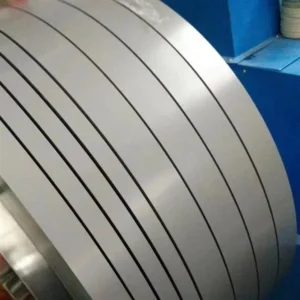
Grain-oriented silicon steel is a traditional core material. It has a crystal structure aligned in one direction. This alignment helps magnetic fields flow easily. It offers high magnetic permeability and low core loss. Manufacturers have used it for decades. The production process is mature and cost-effective. Silicon steel is also easier to handle and cut. It performs well in large power transformers. Yet, its energy losses are higher than amorphous alloy at low loads.
Key Performance Factors
Energy efficiency is a major difference. Amorphous alloy cores reduce no-load losses by up to 70%. This saves money over the transformer’s life. Silicon steel cores have higher no-load losses. But they perform better under heavy loads. Size and weight also matter. Amorphous cores are often larger for the same power rating. Silicon steel cores are more compact. This can be important when space is limited. Temperature rise is another factor. Amorphous cores run cooler. This may extend insulation life. Silicon steel cores run warmer but handle overloads better.
Cost and Availability
Upfront cost favors grain-oriented silicon steel. It is widely available and cheaper to buy. Amorphous alloy costs more per kilogram. However, its lower energy losses can offset this over time. You must calculate total ownership cost. Consider electricity prices and expected load profile. A high electricity cost area may favor amorphous alloy. A low cost area may favor silicon steel. Supply chain is also a concern. Silicon steel has many global suppliers. Amorphous alloy has fewer producers. This can affect lead times and pricing.
Application Suitability
Distribution transformers often use amorphous alloy. They operate at low loads for many hours. This is where amorphous alloy shines. Large power transformers usually use silicon steel. They operate near full load and need high flux density. Renewable energy projects may prefer amorphous alloy. They help meet strict efficiency standards. Industrial plants with steady heavy loads may choose silicon steel. It handles high currents well. Noise level is another point. Amorphous alloy cores tend to hum louder. Silicon steel cores are quieter. This matters for residential areas.
Making the Final Decision
Start by defining your project goals. Ask about efficiency targets and budget limits. Check local regulations for energy losses. Review the load profile carefully. A load that stays low favors amorphous alloy. A load that stays high favors silicon steel. Consider physical space and weight limits. Think about maintenance and lifespan. Both materials last many years. But amorphous alloy may need gentler handling. Finally, get quotes from multiple suppliers. Compare total cost over 20 to 30 years. This includes purchase price and electricity savings. A simple payback analysis can guide you. In short, there is no single best answer. The right choice balances efficiency, cost, space, and application. By weighing these factors, you can select the optimal core material for your transformer.







 English
  Japanese
  Korean
  French
  German
  Spanish
  Portuguese
  Russian
  Arabic
  Italian
  Turkish
  Dutch
Dutch  Polish
  Swedish
  Danish
  Norwegian
  Finnish
  Greek
Greek  Hungarian
  Czech
Czech  Romanian
  Bulgarian
  Slovenian
  Croatian
  Slovak
  Malay
Malay  Indonesian
  Thai
Thai  Vietnamese
  Myanmar
  Khmer
Khmer  Lao
Lao  Tagalog
  Hindi
Hindi  Bengali
  Urdu
Urdu  Nepali
  Sinhala
  Hebrew
  Ukrainian
  Serbian
  Icelandic
  Swahili