
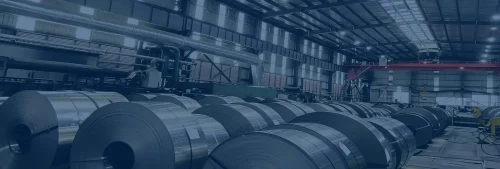
What texture advantages do high magnetic induction grain-oriented silicon steel (HiB steel) possess
Introduction
High magnetic induction grain-oriented सिलिकन स्टील, often called HiB steel, offers clear texture benefits. These advantages matter for efficient power systems. This article explains what makes HiB steel special. It also shows how its texture improves performance in real applications.

What Texture Means in HiB Steel
Grain-oriented सिलिकन स्टील has a specific crystal arrangement. In HiB steel, this texture is highly controlled. Most grains align along a preferred direction. This alignment is called the Goss texture. It allows magnetic domains to move easily. As a result, the material responds strongly to magnetic fields. The texture also reduces energy loss during magnetization. Therefore, HiB steel achieves high magnetic induction with low core loss.
Lower Core Loss and Higher Permeability
The texture of HiB steel directly lowers core loss. Core loss includes hysteresis and eddy current losses. A sharp Goss texture reduces hysteresis loss. It also improves permeability. Higher permeability means the steel needs less current to create a magnetic field. Consequently, transformers and motors run cooler. They also consume less energy. For utility companies, this saves money over time. For equipment makers, it allows smaller and lighter designs.
Better Performance Under Stress
HiB steel maintains its texture advantages under mechanical stress. Ordinary grain-oriented steel can lose performance when bent or wound. HiB steel resists this degradation. Its strong texture stays stable during processing. Thus, manufacturers can cut and stack it with less worry. The final core keeps high magnetic induction. This reliability is vital for large power transformers.
Improved Efficiency in Power Applications
Power transformers benefit most from HiB steel texture. A transformer core with HiB steel has lower no-load loss. This loss occurs even when no power is delivered. Over a year, the savings add up. Electric motors also gain from HiB steel. Their rotors and stators use less energy. As a result, industrial motors meet higher efficiency standards. Renewable energy systems, such as wind turbines, also use HiB steel. The texture helps them convert power with less waste.
Texture Control During Manufacturing
Producing HiB steel requires precise texture control. The process includes hot rolling, cold rolling, and annealing. Each step influences crystal orientation. A key step is the inhibition of normal grain growth. Small particles, like aluminum nitride, stop unwanted grains. Then, secondary recrystallization creates the sharp Goss texture. This method is more complex than for regular grain-oriented steel. However, the texture advantages justify the extra cost.
Comparing HiB Steel to Other Silicon Steels
Regular grain-oriented steel has a weaker texture. Non-oriented steel has no preferred texture at all. HiB steel outperforms both in magnetic induction. It also has lower core loss than regular grain-oriented steel. For high-power applications, HiB steel is the better choice. Its texture provides a clear technical edge. Engineers select it when efficiency and size matter most.
निष्कर्ष
HiB steel possesses unique texture advantages. Its strong Goss texture raises magnetic induction and lowers core loss. It also improves permeability and resists stress. These benefits lead to smaller, cooler, and more efficient electrical equipment. For transformer and motor makers, HiB steel offers a practical path to energy savings. As global demand for efficient power grows, the texture advantages of HiB steel will remain highly valuable.





 English
  Japanese
  Korean
  French
  German
  Spanish
  Portuguese
  Russian
  Arabic
  Italian
  Turkish
  Dutch
Dutch  Polish
  Swedish
  Danish
  Norwegian
  Finnish
  Greek
Greek  Hungarian
  Czech
Czech  Romanian
  Bulgarian
  Slovenian
  Croatian
  Slovak
  Malay
Malay  Indonesian
  Thai
Thai  Vietnamese
  Myanmar
  Khmer
Khmer  Lao
Lao  Tagalog
  Hindi
Hindi  Bengali
  Urdu
Urdu  Nepali
  Sinhala
  Hebrew
  Ukrainian
  Serbian
  Icelandic
  Swahili