
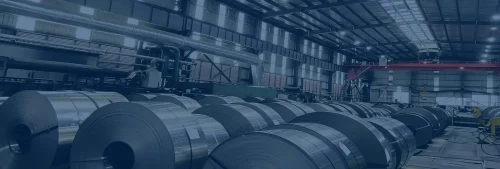
How does the magnetic performance of your CRNGO compare to international standards?
Introduction

Cold-rolled non-oriented grain electrical steel, or CRNGO, plays a vital role in electric motors and generators. Many buyers ask how our magnetic performance compares to international standards. This question matters for efficiency, cost, and reliability. Our answer rests on tested data and transparent reporting. Therefore, we benchmark every grade against recognized global specifications. This approach helps customers choose the right material with confidence.
Core Magnetic Properties and Standard Benchmarks
International standards for CRNGO focus on core loss and magnetic induction. Core loss measures energy wasted as heat during magnetization. Magnetic induction shows how well the steel carries magnetic flux. Our CRNGO grades meet or exceed common global requirements. For instance, we test against ASTM A677 and IEC 60404-8-4. These standards define acceptable loss and permeability limits. Consequently, our material performs reliably in demanding applications.
Core Loss Comparison Across Frequencies
Core loss varies with frequency and thickness. At 50 Hz and 60 Hz, our CRNGO shows low loss values. These values align with major international producers. At higher frequencies, such as 400 Hz, performance depends on silicon content and processing. Our tightly controlled annealing reduces domain wall pinning. As a result, loss stays within narrow standard bands. Customers thus gain predictable motor efficiency.
Magnetic Induction and Permeability
Magnetic induction at a given field strength reflects material quality. Our CRNGO achieves high induction levels at moderate fields. This property supports compact motor designs. Permeability remains stable across a wide temperature range. International standards often require minimum induction values. We consistently exceed those minimums by a small margin. This margin gives engineers extra design freedom.
Thickness Tolerance and Surface Quality
Thickness uniformity affects magnetic performance directly. Our CRNGO holds tight thickness tolerances. These tolerances match or beat ISO 9445 requirements. Surface insulation coating also matters for eddy current loss. We apply coatings that resist heat and pressure. Therefore, stacked cores maintain low loss over time. This detail supports long-term energy savings.
Testing Methods and Certification
We use Epstein frame and single sheet testers for magnetic measurements. These methods follow IEC 60404-3 and ASTM A343. Third-party labs verify our internal results. Certificates accompany each shipment upon request. This transparency builds trust with global buyers. It also simplifies compliance with local regulations.
Performance in Real Applications
Real motors and transformers reveal true magnetic behavior. Our CRNGO performs well in rotating machines and static devices. For example, it reduces no-load losses in induction motors. It also limits temperature rise under continuous load. These benefits come from consistent grain structure and low impurities. International standards provide a baseline, but real-world results confirm value.
Conclusion and Value Summary
Our CRNGO magnetic performance compares favorably to international standards. We meet key benchmarks for core loss, induction, and thickness. We also exceed minimum requirements in several critical areas. This balance delivers efficiency, reliability, and cost control. Buyers can specify our CRNGO with confidence. For detailed grade data, please request our latest test reports. We welcome technical discussions to match your specific needs.





 English
  Japanese
  Korean
  French
  German
  Spanish
  Portuguese
  Russian
  Arabic
  Italian
  Turkish
  Dutch
Dutch  Polish
  Swedish
  Danish
  Norwegian
  Finnish
  Greek
Greek  Hungarian
  Czech
Czech  Romanian
  Bulgarian
  Slovenian
  Croatian
  Slovak
  Malay
Malay  Indonesian
  Thai
Thai  Vietnamese
  Myanmar
  Khmer
Khmer  Lao
Lao  Tagalog
  Hindi
Hindi  Bengali
  Urdu
Urdu  Nepali
  Sinhala
  Hebrew
  Ukrainian
  Serbian
  Icelandic
  Swahili