
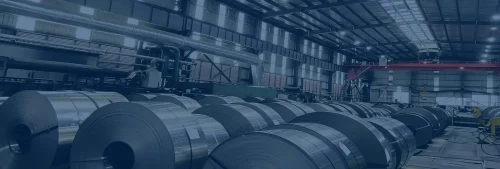
Analysis of Mechanical Strength Parameters of Non-Oriented Silicon Steel
I. Mechanical Properties of Non-Oriented Silicon Steel
Non-oriented ဆီလီကွန်သံမဏိ is an all-rounder among electrical steels. Its unique grain structure delivers distinctive mechanical performance. The material maintains stable properties under alternating magnetic fields while possessing sufficient mechanical strength to sustain motor operation. In practical production, its yield strength generally ranges from 280 MPa to 450 MPa, and tensile strength falls between 350 MPa and 550 MPa. This wider numerical range compared with grain-oriented ဆီလီကွန်သံမဏိ reflects its isotropic characteristic.

II. Key Factors Influencing Mechanical Strength
Similar to temperature and timing control in cake baking, multiple factors jointly regulate the strength of ဆီလီကွန်သံမဏိ:
- Silicon content threshold: Strength peaks at a silicon content of 2.5%–3.5%; excessively high silicon content will increase brittleness.
- Thickness effect: The tensile strength of 0.35 mm thin sheets is on average 15%–20% higher than that of 0.5 mm gauges.
- Annealing process: Products from continuous annealing lines feature smaller strength fluctuation than those produced by batch annealing.
III. Recommendations for Material Selection and Application
Avoid the following common misconceptions to improve the reliability of motor design:
- Misconception 1: Blind pursuit of ultra-high strength, which may worsen core loss indicators.
- Misconception 2: Ignoring work hardening during stamping; a strength margin of 5%–8% is recommended.
- Misconception 3: Neglecting the impact of insulating coatings; certain coatings can reduce yield strength by 3%–5%.




 English
  Japanese
  Korean
  French
  German
  Spanish
  Portuguese
  Russian
  Arabic
  Italian
  Turkish
  Dutch
Dutch  Polish
  Swedish
  Danish
  Norwegian
  Finnish
  Greek
Greek  Hungarian
  Czech
Czech  Romanian
  Bulgarian
  Slovenian
  Croatian
  Slovak
  Malay
Malay  Indonesian
  Thai
Thai  Vietnamese
  Myanmar
  Khmer
Khmer  Lao
Lao  Tagalog
  Hindi
Hindi  Bengali
  Urdu
Urdu  Nepali
  Sinhala
  Hebrew
  Ukrainian
  Serbian
  Icelandic
  Swahili