
Can Conventional Grain-Oriented Electrical Steel Be Used for High-Frequency Transformer Cores
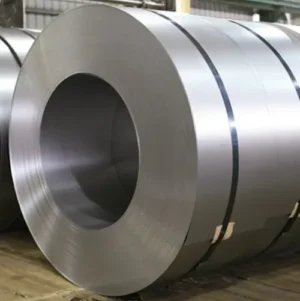
Conventional grain-oriented electrical steel cannot be fully adapted to high-frequency transformer core working conditions. Its performance shows obvious limitations under high-frequency operation.
Conventional oriented steel is designed for 50Hz power frequency working conditions. Its iron loss parameters are calibrated under power frequency. Loss performance deteriorates sharply with frequency increase.
High-frequency operation produces severe eddy current loss in ordinary oriented steel. Eddy current loss is proportional to the square of frequency. Conventional steel has thick thickness and high conductivity. High-frequency eddy current loss surges rapidly.
Excessive high-frequency loss causes serious core heat generation. Ordinary oriented steel cores overheat quickly under high frequency. It leads to insulation aging and equipment failure risks.

Its magnetic domain response speed cannot match high-frequency switching. Ordinary grain structure has slow magnetization response. High-frequency operation causes magnetic flux lag and waveform distortion.
Professional high-frequency electrical steel is the dedicated material for high-frequency transformers. Ultra-thin low-loss steel or ferrite materials adapt high-frequency working characteristics. They control eddy current loss effectively.
In emergency temporary use, ordinary oriented steel can bear low-power high-frequency work. But it cannot meet long-term stable and energy-saving operation standards.
To conclude, conventional grain-oriented electrical steel is only for power frequency transformers. It is not a qualified material for formal high-frequency transformer core manufacturing.






 English
  Japanese
  Korean
  French
  German
  Spanish
  Portuguese
  Russian
  Arabic
  Italian
  Turkish
  Dutch
Dutch  Polish
  Swedish
  Danish
  Norwegian
  Finnish
  Greek
Greek  Hungarian
  Czech
Czech  Romanian
  Bulgarian
  Slovenian
  Croatian
  Slovak
  Malay
Malay  Indonesian
  Thai
Thai  Vietnamese
  Myanmar
  Khmer
Khmer  Lao
Lao  Tagalog
  Hindi
Hindi  Bengali
  Urdu
Urdu  Nepali
  Sinhala
  Hebrew
  Ukrainian
  Serbian
  Icelandic
  Swahili