

What requirements do three-step lap joints and four-step lap joints place on transformer steel
Transformer steel performs best when joints match its magnetic needs. Manufacturers often choose three-step lap joints or four-step lap joints for core assembly. Each joint style places specific demands on the steel. Understanding these requirements helps engineers select the right material. It also protects core efficiency and mechanical stability.

Magnetic Flux Path Requirements
A three-step lap joint creates a simple path for magnetic flux. The steel must handle small air gaps at each step. Consequently, the material needs high permeability. It also needs low core loss. These traits reduce energy waste. The joint design asks for consistent thickness. Variation in thickness can distort flux flow. As a result, the steel must meet tight gauge tolerances. A four-step lap joint offers more overlap points. This design spreads flux across more areas. Therefore, the steel must resist local saturation. It also needs uniform magnetic properties in all directions. Such demands favor grain-oriented steel. This steel aligns its grains for easy magnetization. The extra steps, however, require better surface insulation. Poor insulation can cause short circuits between laminations. Thus, the steel coating must stay intact during cutting and stacking.
Mechanical Strength and Fit Requirements
Three-step lap joints rely on precise alignment. The steel must stay flat after shearing. Any burr or bend harms the joint fit. A loose fit increases noise and vibration. Therefore, the material needs good ductility. It must cut cleanly without cracking. Four-step lap joints involve more mating surfaces. Each surface must sit flush with the next. This need places a premium on edge quality. The steel must also resist deformation under pressure. Core clamping adds stress to the joint. So, the steel needs enough yield strength. It should not yield or warp during assembly. At the same time, excessive hardness can cause edge chipping. Chips block flux and raise losses. Hence, a balanced temper is essential. For both joint types, the steel must hold its shape over time. Thermal cycling during operation can loosen the joint. A stable steel grade minimizes that risk.
Insulation and Coating Demands
Three-step lap joints have fewer interfaces. Still, each interface needs electrical insulation. The steel coating must provide high resistance. It must also survive the annealing process. Some cores face stress relief annealing after cutting. The coating must not burn off or degrade. A four-step lap joint has more interfaces. So, the coating must endure more handling. It must resist scratching and flaking. Any bare metal spot can create a short circuit. That short raises eddy current losses. Therefore, the steel needs a robust insulation layer. Common coatings include inorganic and organic types. The choice depends on the joint step count. Higher step counts often require tougher coatings. They also need better adhesion to the steel surface.
Dimensional Tolerance and Stacking Needs
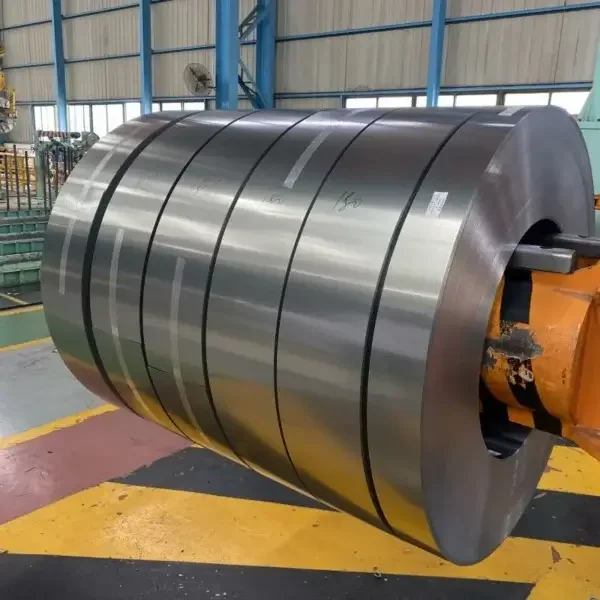
Three-step lap joints demand consistent cut lengths. Each step must match its neighbor. If lengths vary, the joint becomes uneven. That unevenness harms magnetic performance. So, the steel must have minimal camber. Camber is a lengthwise curve in the strip. It makes stacking difficult and reduces core factor. Four-step lap joints need even tighter tolerances. More steps mean more chances for misalignment. The steel must stay within narrow width limits. It also needs uniform thickness across the coil. Any thickness drift changes the stack height. That drift can weaken the joint pressure. As a result, the steel supplier must control flatness. They must also control internal stress. Stress can cause bowing after slitting. Bowed steel will not nest properly in a four-step joint.
Loss and Efficiency Requirements
Both joint types aim to lower core loss. A three-step lap joint reduces loss compared to a simple butt joint. Yet it still creates some flux disturbance. The steel must have low hysteresis loss. It also needs low eddy current loss. These properties keep heat buildup low. A four-step lap joint further reduces loss. It does so by offering a smoother flux path. However, this benefit depends on steel quality. The steel must have high resistivity. It must also have a thin gauge. Thin gauge lowers eddy currents. But thin steel can be harder to handle. It may buckle during stacking. So, the joint design forces a tradeoff. Engineers must balance gauge, coating, and cost. The steel must meet the chosen joint’s loss target. Otherwise, the core wastes energy.
Kesimpulan
Three-step lap joints ask for good permeability, flatness, and coating integrity. Four-step lap joints demand even tighter tolerances and tougher insulation. Both joint types require steel that cuts cleanly and resists stress. They also need low core loss and stable magnetic properties. By matching steel grade to joint step count, builders can improve efficiency. They can also reduce noise and extend core life. The right steel makes the joint work as intended.






 English
  Japanese
  Korean
  French
  German
  Spanish
  Portuguese
  Russian
  Arabic
  Italian
  Turkish
  Dutch
Dutch  Polish
  Swedish
  Danish
  Norwegian
  Finnish
  Greek
Greek  Hungarian
  Czech
Czech  Romanian
  Bulgarian
  Slovenian
  Croatian
  Slovak
  Malay
Malay  Indonesian
  Thai
Thai  Vietnamese
  Myanmar
  Khmer
Khmer  Lao
Lao  Tagalog
  Hindi
Hindi  Bengali
  Urdu
Urdu  Nepali
  Sinhala
  Hebrew
  Ukrainian
  Serbian
  Icelandic
  Swahili