
How to Judge the Quality of Silicon Steel Sheets
September 14, 2026
Blog
I. Preliminary Screening by Visual Inspection and Touch
Do not rush to instrumental testing after receiving pepejal silikon sheets. Examine details just like an antique appraiser:
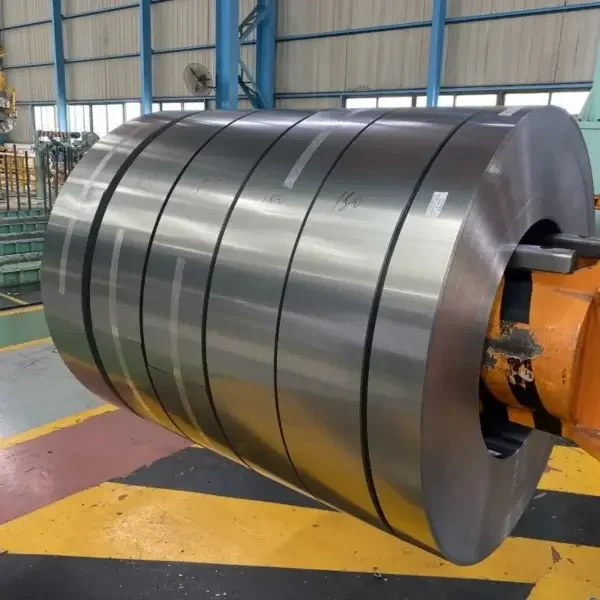
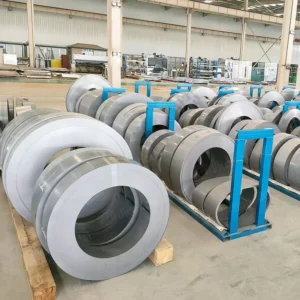
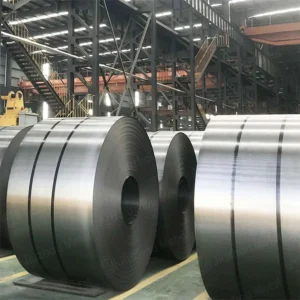
- The surface shall be smooth and mirror-like. Fish-scale patterns or burrs indicate defective rolling processes.
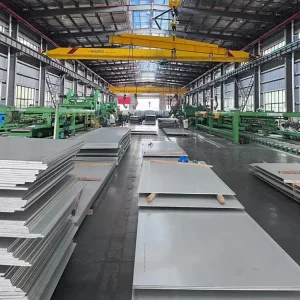
- The neatness of cut edges reflects machining precision; jagged cuts may impair stacking compactness.
- Run fingers lightly over the surface. High-quality pepejal silikon feels silky smooth, while rough texture usually signals incomplete annealing.
- Fold a test piece to check resilience. Excessive brittleness or softness is a sign of improper heat treatment.
II. Practical Tests for Electromagnetic Performance
Lab test reports are important, yet these field-operable inspection methods deliver more intuitive results:
- Comparative core loss test: Test specimens of identical dimensions at 50 Hz. Premium pepejal silikon registers lower loss per unit mass.
- Magnetic permeability check: Bring the sheet close to a magnet and feel the uniformity of attraction. Spots with weak local attraction may suffer from composition segregation.
- Stacking factor verification: Randomly take 20 sheets for stacking, then calculate the ratio of actual thickness to theoretical thickness. Qualified products achieve a stacking factor above 95%.
III. Long-Term Service Performance Verification
Truly high-grade material stands the test of time:
- Dismantle equipment after six months of operation for inspection. Good silicon steel retains its original color, whereas inferior sheets develop oxidized speckles.
- Measure temperature rise after long-term operation. Stable silicon steel limits temperature fluctuation to within 10% of the initial value.
- Dimensional stability after repeated disassembly and assembly. Top-tier sheets maintain flatness above 99% even after five assembly-disassembly cycles.





 English
  Japanese
  Korean
  French
  German
  Spanish
  Portuguese
  Russian
  Arabic
  Italian
  Turkish
  Dutch
Dutch  Polish
  Swedish
  Danish
  Norwegian
  Finnish
  Greek
Greek  Hungarian
  Czech
Czech  Romanian
  Bulgarian
  Slovenian
  Croatian
  Slovak
  Malay
Malay  Indonesian
  Thai
Thai  Vietnamese
  Myanmar
  Khmer
Khmer  Lao
Lao  Tagalog
  Hindi
Hindi  Bengali
  Urdu
Urdu  Nepali
  Sinhala
  Hebrew
  Ukrainian
  Serbian
  Icelandic
  Swahili