
How Distribution Transformers Realize Noise Reduction and Energy Saving Through Electrical Steel Selection
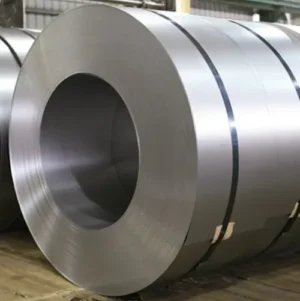
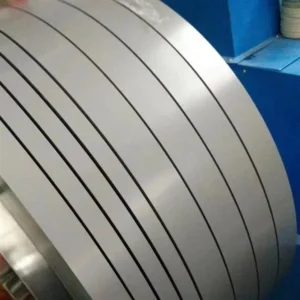
Distribution transformers are widely used in urban and rural power grids. Reasonable electrical steel selection is the core method to achieve equipment noise reduction and energy saving.
First, select high magnetic induction HiB electrical steel to reduce basic loss. High-B steel has lower hysteresis loss under rated working magnetic density. It cuts long-term no-load energy consumption of distribution transformers. It helps equipment reach S13 and S20 energy-saving grades.
Second, adopt laser scribed oriented electrical steel for noise suppression. Laser domain refinement weakens magnetostriction vibration. It reduces core high-frequency vibration noise during magnetization. It adapts residential and urban low-noise scenarios.
Third, optimize steel thickness specification to balance loss and stability. Replacing 0.30mm steel with 0.27mm thin steel reduces eddy current loss. It does not increase processing difficulty significantly. It realizes obvious energy-saving improvement.
Fourth, select high-quality insulating coating to reduce vibration noise. Uniform and dense coating buffers steel plate micro-vibration. It avoids friction noise between stacked steel layers. It optimizes overall equipment noise performance.
Fifth, match steel grade precision with core splicing process. High-precision low-loss steel adapts full step-lap stacking structure. It reduces joint gap loss and unbalanced vibration. It further improves energy-saving and noise-reduction effects.

Sixth, eliminate low-grade hot-rolled and ordinary cold-rolled steel. Traditional high-loss steel causes severe energy waste and loud noise. Upgrading to modern oriented steel realizes fundamental performance improvement.
In conclusion, targeted electrical steel grade and specification selection effectively improves distribution transformer performance. It achieves dual goals of grid energy saving and on-site noise reduction.





 English
  Japanese
  Korean
  French
  German
  Spanish
  Portuguese
  Russian
  Arabic
  Italian
  Turkish
  Dutch
Dutch  Polish
  Swedish
  Danish
  Norwegian
  Finnish
  Greek
Greek  Hungarian
  Czech
Czech  Romanian
  Bulgarian
  Slovenian
  Croatian
  Slovak
  Malay
Malay  Indonesian
  Thai
Thai  Vietnamese
  Myanmar
  Khmer
Khmer  Lao
Lao  Tagalog
  Hindi
Hindi  Bengali
  Urdu
Urdu  Nepali
  Sinhala
  Hebrew
  Ukrainian
  Serbian
  Icelandic
  Swahili