
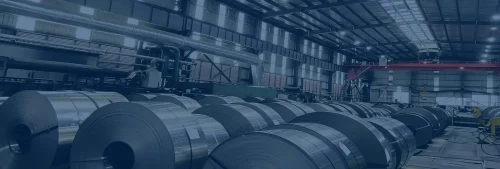
Why grain-oriented silicon steel is mainly adopted as transformer steel
Why Grain-Oriented Silicon Steel Dominates Transformer Cores
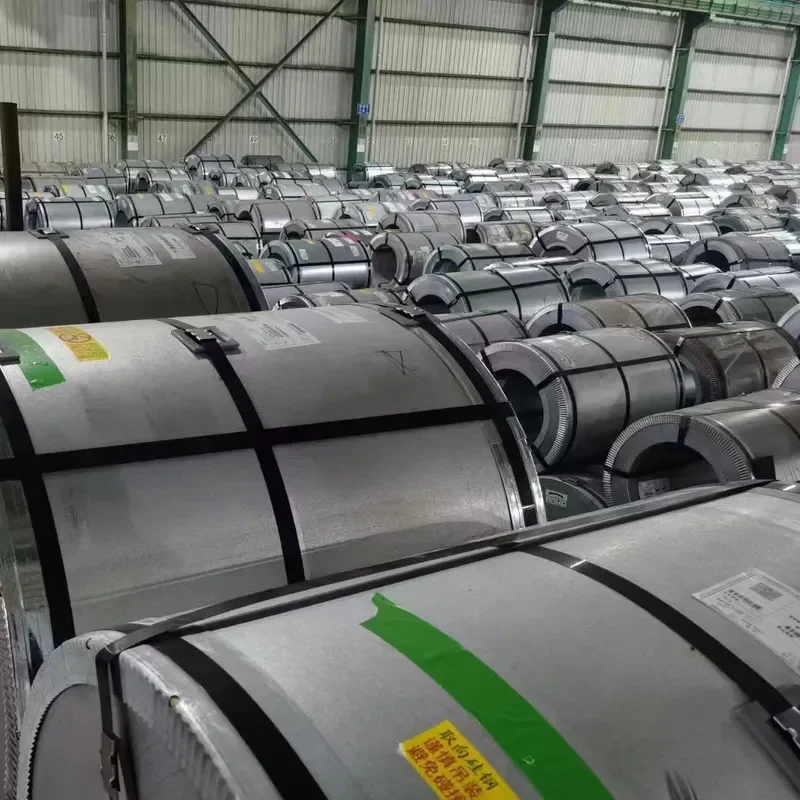
Transformers form the backbone of modern power grids. Their efficiency depends heavily on the core material. For decades, grain-oriented silicon steel has been the top choice. This article explains the technical and economic reasons behind its dominance.
The Role of Core Material in Transformer Performance
A transformer core guides magnetic flux between windings. Energy losses occur as heat during this process. Two main losses matter: hysteresis loss and eddy current loss. Lower losses mean higher efficiency and lower operating costs. Therefore, utilities demand core materials that minimize these losses. Grain-oriented silicon steel meets this demand better than most alternatives.
What Makes Grain-Oriented Silicon Steel Special
This material contains about 3% silicon. Silicon increases electrical resistivity. Higher resistivity reduces eddy current losses. The “grain-oriented” part refers to a specific crystal structure. During production, manufacturers align grains in the rolling direction. This alignment creates a preferred magnetic direction. As a result, magnetic domains rotate easily under an applied field. Easy domain rotation cuts hysteresis loss significantly. No other bulk steel achieves this combination at scale.
Superior Magnetic Properties in the Rolling Direction
Grain-oriented silicon steel shows extremely high magnetic permeability along its rolling direction. Permeability measures how easily a material supports magnetic flux. High permeability means less current is needed to magnetize the core. Consequently, transformers operate with lower excitation current. The material also has low magnetostriction. This property reduces humming noise and mechanical vibration. For large power transformers, quiet operation is a practical advantage.
Low Core Loss Saves Energy and Money
Core loss directly affects a transformer’s lifetime cost. A typical power transformer runs continuously for decades. Even a small reduction in loss yields huge energy savings. Grain-oriented silicon steel offers the lowest core loss among mass-produced steels. Manufacturers further reduce loss with laser scribing or domain refinement. These treatments fine-tune domain wall movement. Therefore, the material remains the benchmark for energy-efficient transformer cores.
Manufacturing and Cost Considerations
Producing grain-oriented silicon steel is complex. It requires precise control of rolling, heating, and cooling. The process includes a high-temperature secondary recrystallization step. This step grows only the desired grain orientation. Only a few steelmakers worldwide master this technology. Despite higher production cost, the material pays off through lower losses. For large transformers, the energy savings quickly outweigh the initial price premium.
Comparison with Other Core Materials
Amorphous steel offers even lower hysteresis loss. However, it has lower saturation flux density. This limitation forces larger core sizes. Ferrite cores suit high-frequency applications but not power grids. Regular non-oriented silicon steel costs less but has higher loss. Grain-oriented silicon steel balances performance, size, and cost best. For 50 Hz and 60 Hz power transformers, no rival matches its overall value.
Long-Term Reliability and Industry Standards
Power transformers must operate reliably for 30 years or more. Grain-oriented silicon steel has a proven track record. Its magnetic properties remain stable under thermal cycling. International standards like IEC 60404 define its grades. Utilities and manufacturers trust these standards. This trust supports global supply chains and maintenance planning. Reliability, therefore, reinforces its market position.
Conclusion: A Material of Strategic Importance
Grain-oriented silicon steel is mainly adopted as transformer steel for clear reasons. It combines low core loss with high permeability. It supports compact, quiet, and efficient transformer designs. Its manufacturing maturity ensures consistent quality. Although alternatives exist, none match its balanced performance and cost. As grids demand greater efficiency, this material will likely remain essential. Its role in sustainable energy delivery is hard to replace.





 English
  Japanese
  Korean
  French
  German
  Spanish
  Portuguese
  Russian
  Arabic
  Italian
  Turkish
  Dutch
Dutch  Polish
  Swedish
  Danish
  Norwegian
  Finnish
  Greek
Greek  Hungarian
  Czech
Czech  Romanian
  Bulgarian
  Slovenian
  Croatian
  Slovak
  Malay
Malay  Indonesian
  Thai
Thai  Vietnamese
  Myanmar
  Khmer
Khmer  Lao
Lao  Tagalog
  Hindi
Hindi  Bengali
  Urdu
Urdu  Nepali
  Sinhala
  Hebrew
  Ukrainian
  Serbian
  Icelandic
  Swahili