
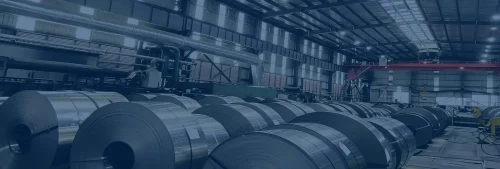
What type of transformer steel is adopted for large 220kV power transformers
Large 220kV power transformers require a special kind of steel. This steel must handle high voltage and heavy loads. The most common choice is grain-oriented electrical steel. This material is also called CRGO steel. CRGO stands for cold-rolled grain-oriented steel. It is used in the core of these transformers. The core directs magnetic flux efficiently. Without this steel, energy losses would be too high. Therefore, utilities and manufacturers rely on it for reliable grid operation.

Why Grain-Oriented Electrical Steel Is Preferred
Grain-oriented electrical steel has a unique crystal structure. This structure aligns in one direction during rolling. As a result, magnetic properties become highly directional. Along the rolling direction, core loss is very low. Permeability is also very high. For a 220kV transformer, these traits are critical. The transformer operates continuously under load. Even small efficiency gains matter over decades. Thus, CRGO steel reduces wasted heat and electricity. It also lowers operating costs for power companies.
Key Properties of Transformer Steel for 220kV Units
Several properties make this steel suitable for large 220kV transformers. First, low core loss is essential. Core loss includes hysteresis and eddy current losses. Grain-oriented steel minimizes both. Second, high magnetic permeability allows a strong magnetic field. This field links the primary and secondary windings. Third, the steel must be thin. Typical thickness ranges from 0.23 mm to 0.35 mm. Thin sheets reduce eddy currents further. Fourth, the steel needs insulation coating. This coating prevents short circuits between layers. Finally, mechanical strength must withstand winding and clamping forces.
Types of CRGO Steel Used in Practice
Manufacturers use different grades of CRGO steel. High-permeability grades are common for 220kV transformers. These grades offer even lower loss than standard CRGO. Another type is domain-refined steel. It uses laser or mechanical scribing. This process reduces domain wall energy. As a result, core loss drops further. Some transformers use step-lap cores. Others use wound cores. Both designs benefit from CRGO steel. However, the choice depends on cost and efficiency targets. For a 220kV unit, high-permeability CRGO is often the best balance.
How the Steel Core Is Built for 220kV Transformers
Building a core for a 220kV transformer is precise work. The steel sheets are cut into shapes. They are then stacked in a laminated structure. Each layer is insulated from the next. This lamination reduces circulating currents. The core is then annealed to relieve stress. Annealing also improves magnetic properties. After that, the core is clamped tightly. It must stay rigid during operation. Any movement can cause noise and vibration. Therefore, the steel must be flat and consistent. Quality control is strict at every step.
Comparison with Other Steel Types
Not all transformer steel is grain-oriented. Some smaller transformers use non-oriented steel. Non-oriented steel has random crystal orientation. It is cheaper but has higher core loss. For a 220kV transformer, non-oriented steel is unsuitable. Amorphous steel is another option. It has very low loss but is brittle and costly. It also has lower saturation flux density. Thus, it needs a larger core. For large 220kV units, CRGO steel remains the standard. It offers the best mix of performance, size, and cost.
Conclusion: Value for Grid Reliability
In summary, large 220kV power transformers adopt grain-oriented electrical steel. This CRGO steel provides low core loss and high permeability. It supports efficient and stable power transmission. By choosing the right grade, engineers reduce heat and energy waste. They also extend transformer life. For utilities, this means lower costs and fewer failures. As grids demand more renewable power, efficient transformers become even more vital. Therefore, CRGO steel will remain a key material for high-voltage transformer cores.





 English
  Japanese
  Korean
  French
  German
  Spanish
  Portuguese
  Russian
  Arabic
  Italian
  Turkish
  Dutch
Dutch  Polish
  Swedish
  Danish
  Norwegian
  Finnish
  Greek
Greek  Hungarian
  Czech
Czech  Romanian
  Bulgarian
  Slovenian
  Croatian
  Slovak
  Malay
Malay  Indonesian
  Thai
Thai  Vietnamese
  Myanmar
  Khmer
Khmer  Lao
Lao  Tagalog
  Hindi
Hindi  Bengali
  Urdu
Urdu  Nepali
  Sinhala
  Hebrew
  Ukrainian
  Serbian
  Icelandic
  Swahili