
Analysis of Shear Strength of Silicon Steel Sheets
ກັນຍາ 14, 2026
Blog
I. Basic Understanding of Shear Strength
Shear strength can be regarded as the material’s critical toughness threshold, defining the maximum load silicon steel sheets can withstand under shear force. This indicator directly governs the yield rate of stamping forming and cutting processes:
- Grain orientation: The smaller the angle between grain alignment and the direction of shear force, the higher the shear strength.
- Carbon content: Every 0.1% rise in carbon content increases shear strength by approximately 15–20 MPa.
- Temperature effect: When ambient temperature exceeds 150°C, shear strength drops by roughly 3% per 10°C temperature increment.

II. Guide to Key Selection Parameters
Selecting silicon steel sheets is analogous to choosing armor, which needs both protective capacity and workability:
- Thickness matching: Sheets of 0.5 mm thickness deliver 30–40% lower shear resistance per unit area than 1.0 mm sheets.
- Grade comparison: Non-oriented silicon steel (e.g. 50W600) boasts an average shear strength 12% higher than grain-oriented silicon steel (e.g. 30Q130).
- Surface treatment: Sheets coated with insulating film exhibit a 5–8% reduction in shear strength compared to uncoated blanks.
III. Lesser-Known Tips for Application and Maintenance
These details help silicon steel sheets maintain stable performance long-term:
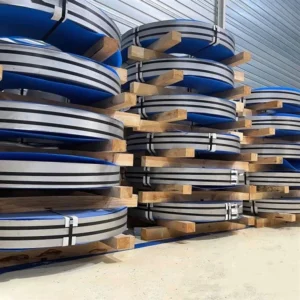
- Storage restriction: Stack heights over 1 meter degrade the shear performance of bottom sheets.
- Processing tip: Laser cutting retains 15% more shear strength than mechanical blanking and shearing.
- Performance warning sign: Minor edge microcracks indicate shear strength has fallen below 70% of the original value.



 English
  Japanese
  Korean
  French
  German
  Spanish
  Portuguese
  Russian
  Arabic
  Italian
  Turkish
  Dutch
Dutch  Polish
  Swedish
  Danish
  Norwegian
  Finnish
  Greek
Greek  Hungarian
  Czech
Czech  Romanian
  Bulgarian
  Slovenian
  Croatian
  Slovak
  Malay
Malay  Indonesian
  Thai
Thai  Vietnamese
  Myanmar
  Khmer
Khmer  Lao
Lao  Tagalog
  Hindi
Hindi  Bengali
  Urdu
Urdu  Nepali
  Sinhala
  Hebrew
  Ukrainian
  Serbian
  Icelandic
  Swahili