

What is the standard limit for burrs generated during transformer steel shearing
Transformer steel shearing often leaves small metal edges called burrs. These burrs can harm core performance and safety. So, what is the standard limit for burrs generated during transformer steel shearing? The answer depends on the application and industry norms. Generally, a burr height of less than 0.05 mm is acceptable for many electrical steels. However, high-grade transformers may require tighter limits. This article explains common standards and practical targets.
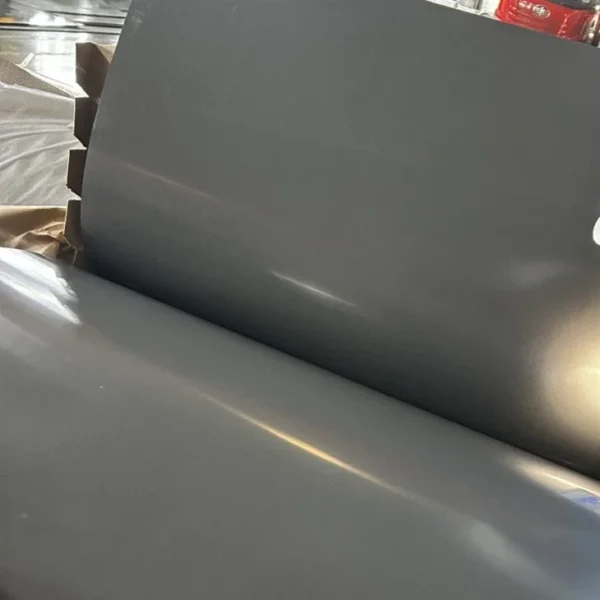
Why Burr Limits Matter in Transformer Steel Shearing
Burrs are raised edges created when shear blades cut metal. In transformer steel, even tiny burrs can cause problems. For instance, they can pierce insulation coatings. This leads to short circuits between laminations. As a result, eddy current losses increase. The transformer then runs hotter and less efficiently. Therefore, setting a burr limit is not optional. It is a core quality control step. Most manufacturers aim for burr heights below 0.05 mm. Some precision applications demand less than 0.02 mm. These numbers come from years of field experience and testing.
Common Industry Standards for Burr Height
Different organizations publish guidelines for burr limits. The American Society for Testing and Materials (ASTM) offers general advice. ASTM A976 covers surface insulation resistance for electrical steels. It does not give a single burr number. Instead, it ties burr limits to coating thickness and voltage stress. In practice, many US firms follow a 0.05 mm maximum for standard grain-oriented steel. For high-frequency transformers, the limit drops to 0.025 mm. Meanwhile, European standards like EN 10106 focus on magnetic properties. They indirectly control burrs through lamination factor tests. A low lamination factor often signals excessive burrs. So, checking that factor is a simple way to monitor shear quality.
Factors That Influence Acceptable Burr Limits
Several variables change what burr limit is reasonable. First, steel thickness plays a role. Thinner sheets, such as 0.23 mm, need smaller burrs. A 0.05 mm burr on thin steel is a large percentage of the total thickness. Second, the type of transformer matters. Distribution transformers tolerate slightly larger burrs than power transformers. Third, the shearing method affects burr size. Sharp blades and proper clearance reduce burr formation. Worn blades produce taller, rougher burrs. Finally, the coating type matters. A thin inorganic coating is less forgiving than a thick organic one. Thus, a one-size-fits-all limit does not exist. Engineers must balance cost, speed, and performance.
How to Measure Burrs from Transformer Steel Shearing
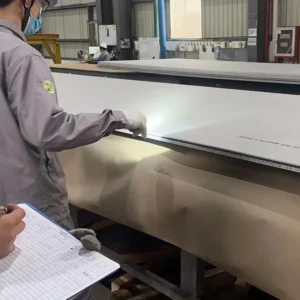
Accurate measurement is key to enforcing any limit. A common tool is a dial indicator with a fine probe. The probe touches the cut edge and records the peak height. Another method uses a digital microscope with image analysis. This gives a clear picture of burr shape and height. For production lines, a quick visual check with a comparator can work. However, visual checks miss small burrs. So, periodic lab testing is wise. Always measure at multiple points along the cut. Burrs often vary across the sheet length. Also, record the blade wear and clearance settings. This data helps predict when to change blades. Without good measurement, a burr limit is just a number on paper.
Practical Steps to Stay Within Burr Limits
Meeting a burr limit requires good shearing practice. First, maintain sharp blades. Dull blades crush metal instead of cutting it. This creates large, irregular burrs. Second, set the correct blade clearance. Too much clearance pulls metal and forms tall burrs. Too little clearance causes rapid wear. A rule of thumb is 5% to 10% of sheet thickness. Third, use a proper hold-down system. It keeps the sheet flat and reduces vibration. Fourth, consider deburring after shearing. Light sanding or brushing can remove small burrs. But deburring adds cost and may damage coatings. So, prevention is better. Finally, train operators to spot burr problems early. A small adjustment now saves a large rejection later.
Balancing Cost and Quality in Burr Control
Every manufacturer faces a trade-off. Tighter burr limits mean slower shearing and more blade changes. That raises production costs. Looser limits risk transformer failure and warranty claims. The best approach is to define a burr limit based on the final use. For example, a dry-type transformer for a data center needs very low burrs. A small distribution transformer for a rural area may accept slightly higher burrs. Document this limit in your quality plan. Then, audit it regularly. This balanced view keeps both customers and accountants happy. It also aligns with standard quality systems like ISO 9001.
In summary, the standard limit for burrs from transformer steel shearing is not a single fixed value. Most industries accept 0.05 mm as a general maximum. High-performance transformers often require 0.02 mm or less. The exact limit depends on steel thickness, coating, and application. By measuring burrs carefully and controlling blade sharpness and clearance, you can meet your target. This protects transformer efficiency and extends service life. Always review your burr standard as designs and materials evolve.




 English
  Japanese
  Korean
  French
  German
  Spanish
  Portuguese
  Russian
  Arabic
  Italian
  Turkish
  Dutch
Dutch  Polish
  Swedish
  Danish
  Norwegian
  Finnish
  Greek
Greek  Hungarian
  Czech
Czech  Romanian
  Bulgarian
  Slovenian
  Croatian
  Slovak
  Malay
Malay  Indonesian
  Thai
Thai  Vietnamese
  Myanmar
  Khmer
Khmer  Lao
Lao  Tagalog
  Hindi
Hindi  Bengali
  Urdu
Urdu  Nepali
  Sinhala
  Hebrew
  Ukrainian
  Serbian
  Icelandic
  Swahili