
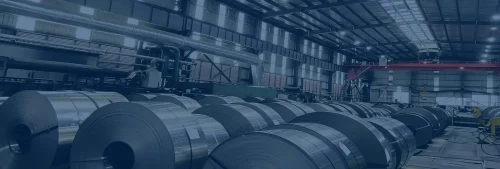
The Secrets of Silicon Steel Laminations for Transformer Cores
I. Physical Principle to Suppress Eddy Currents
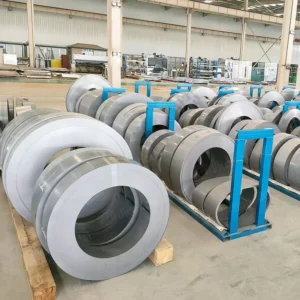
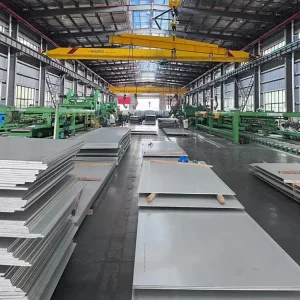
A solid monolithic core exposed to alternating magnetic fields acts like an invisible electric heating pad. Eddy currents circulate inside the core in countless tiny loops, wasting energy in the form of heat. Stacked 珪素鋼 laminations cut off these conductive paths by inserting insulating barriers between sheets, slashing eddy current loss by more than 80%. For laminated cores with 2 mm total thickness, eddy current loss is merely one-fifth of that of a solid core of identical dimensions.
II. Precise Balance of Magnetic Permeability
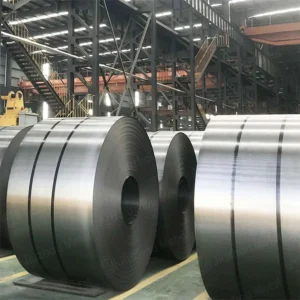
Silicon steel laminations excel not only in structural design but also magnetic circuit optimization. Alloyed with 3%–4.5% silicon, the steel acquires two outstanding advantages:
- Reduced hysteresis loss: Silicon atoms regularize lattice arrangement and enable easier reorientation of magnetic domains.
- Higher electrical resistivity: Silicon quadruples resistivity, further restraining eddy currents.
This special alloy maintains favorable magnetic permeability under a magnetic field strength of 15,000 gauss, while ordinary steel quickly reaches magnetic saturation at much lower flux levels.
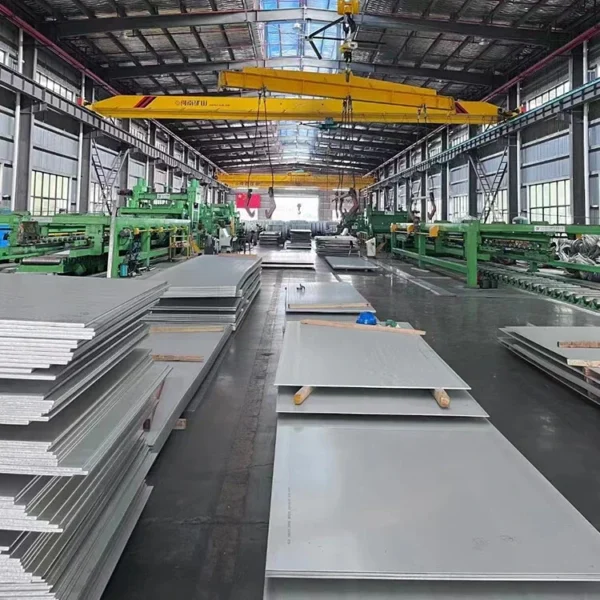
III. Optimal Engineering Design of Laminated Manufacturing
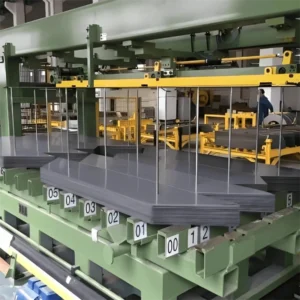
Though stacked lamination structures seem intricate, they represent the most cost-effective engineering solution:
- Superior heat dissipation: Inter-lamination gaps form natural ventilation channels, lowering temperature rise by 20 °C compared with solid cores.
- Vibration damping: Laminations absorb electromagnetic vibration energy and reduce operational noise by 15 decibels.
- Convenient maintenance: Only damaged single sheets need replacement, cutting maintenance costs by 70%.
Modern 珪素鋼 sheets have achieved ultra-thin gauges down to 0.18 mm. Each ton of transformer core cuts no-load loss by 3.7 kW, equivalent to a 2.6-ton annual reduction in carbon dioxide emissions.





 English
  Japanese
  Korean
  French
  German
  Spanish
  Portuguese
  Russian
  Arabic
  Italian
  Turkish
  Dutch
Dutch  Polish
  Swedish
  Danish
  Norwegian
  Finnish
  Greek
Greek  Hungarian
  Czech
Czech  Romanian
  Bulgarian
  Slovenian
  Croatian
  Slovak
  Malay
Malay  Indonesian
  Thai
Thai  Vietnamese
  Myanmar
  Khmer
Khmer  Lao
Lao  Tagalog
  Hindi
Hindi  Bengali
  Urdu
Urdu  Nepali
  Sinhala
  Hebrew
  Ukrainian
  Serbian
  Icelandic
  Swahili