
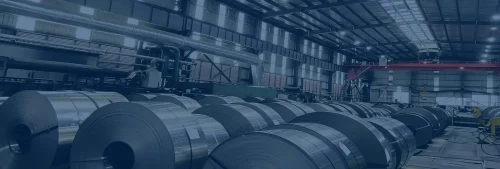
How Silicon Steel Became the Core Heart Material of Power Equipment
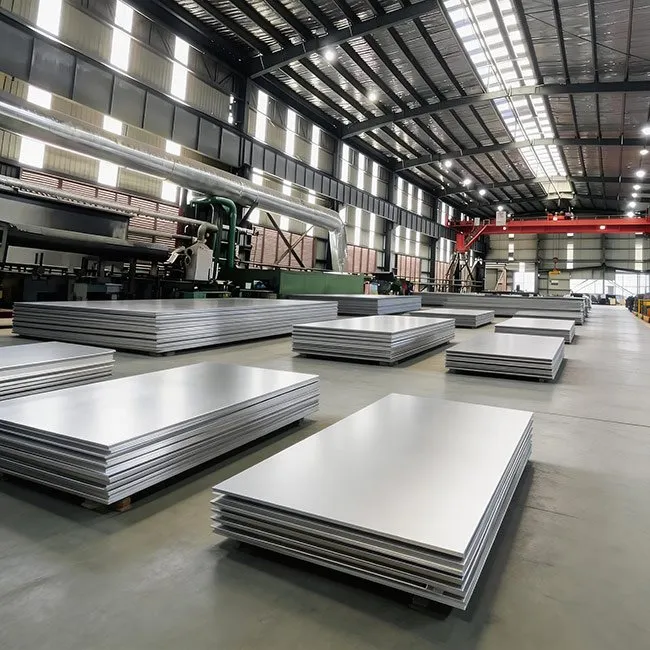
Silicon steel is silicon-alloyed steel with a silicon mass fraction ranging from 1.0% to 4.5%. Characterized by low core loss and high magnetic permeability, it serves as the core material for iron cores of transformers, motors and generators, whose performance directly determines the energy efficiency and operational stability of power equipment.
I. Types and Properties of Silicon Steel
Cold-rolled and hot-rolled 珪素鋼 represent the two mainstream manufacturing processes, and material selection requires balancing magnetic performance and production costs:
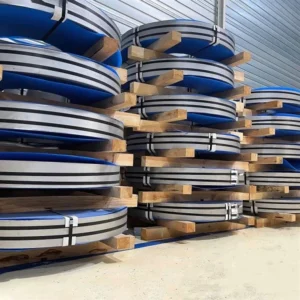
- Cold-rolled 珪素鋼 is rolled at low temperatures to produce ultra-thin gauges (0.15–0.35 mm), with magnetic induction 15%–20% higher than hot-rolled equivalents, ideal for compact high-efficiency small motors.
- Hot-rolled silicon steel generally comes in thicknesses of 0.35–0.5 mm. Despite slightly inferior magnetic properties, its manufacturing cost is roughly 30% lower, widely adopted for medium and large transformers.
🔍 Core Distinction: Cold-rolled grades fit applications with strict constraints on installation space and energy efficiency, while hot-rolled silicon steel gains advantages in cost-sensitive projects.
Magnetic anisotropy differentiates the application scenarios of non-oriented and grain-oriented silicon steel:
- Non-oriented silicon steel delivers isotropic magnetization performance, suited for rotating machinery with frequently reversed magnetic fields such as motor rotors.
- Grain-oriented silicon steel features drastically enhanced permeability along the rolling direction, with core loss 40%–50% lower than non-oriented types, making it the optimal core material for transformers.
💡 Selection Tip: Semi-process non-oriented silicon steel can be used for motor stators, and ultra-thin grain-oriented silicon steel strips are driving the miniaturization of high-frequency transformers.
II. The Determinant of Transformer Energy Efficiency
Transformer-grade grain-oriented silicon steel achieves aligned magnetic domains through precise grain orientation control, bringing three core benefits:
- Reduced no-load loss: The specific core loss of 0.23 mm thin-gauge products can be controlled below 0.9 W/kg.
- Noise suppression: Magnetostriction coefficient is 30%–40% lower than ordinary silicon steel.
- Thermal stability: Loss rises by no more than 5% for every 10 °C increase in operating temperature.
✅ Reliable Practice: When selecting low-core-loss silicon steel, simultaneously verify the temperature resistance grade of its insulating coating and compatibility with transformer oil.

III. Performance Booster for Electric Motors
High-magnetic-induction silicon steel offers three prominent advantages in motor manufacturing:
- Saturation magnetic flux density exceeds 1.8 T, boosting torque output by 12%–15% under the same core volume.
- Suppressed high-frequency core loss flattens the motor efficiency curve, with efficiency fluctuation less than 2% across 30%–120% load range.
- Excellent stamping formability enables ultra-narrow slot designs with dimensional accuracy up to 0.1 mm.
📌 Key Note: Ultra-thin motor steel thinner than 0.2 mm is prioritized for new energy vehicle drive motors, cutting eddy current loss by 30%.
IV. Application Limitations of Alternative Soft Magnetic Materials
Alternative electromagnetic steels can replace conventional silicon steel in partial scenarios, yet they carry clear applicable boundaries:
- Amorphous alloy strips: Core loss only one-fifth that of silicon steel, but low saturation magnetic induction (1.56 T), fit for no-load working conditions of distribution transformers.
- Nanocrystalline alloys: Outstanding high-frequency performance, yet costing 8–10 times more than silicon steel, only deployed in special frequency converters.
- Soft magnetic composites: Isotropic and capable of 3D forming, yet maximum magnetic induction capped at 1.3 T.
⚠️ Pitfall Reminder: Any alternative soft magnetic material must be verified for matching operating frequency and magnetic flux density.
V. Selection of Silicon Steel Processing Equipment
Processing machinery directly governs the retention rate of the material’s intrinsic magnetic properties:
- Silicon steel cutting machines shall be equipped with diamond cutters to control cutting-edge burrs within 0.02 mm.
- Silicon steel stamping presses shall support high-speed continuous blanking at 200–300 strokes per minute.
- Silicon steel annealing furnaces must precisely maintain the dew point of protective atmosphere below −40 °C.
🔍 Core Distinction: General-purpose equipment works for non-oriented silicon steel processing, while grain-oriented silicon steel production requires auxiliary magnetic domain optimization devices.
Silicon steel testing instruments form a closed-loop quality control system with irreplaceable functions:
- Magnetic property testers shall simultaneously measure B50 and P1.5/50 parameters.
- Coating insulation resistance shall fall within the range of 10–100 Ω·cm².
- Thickness tolerance inspection equipment requires a resolution of ±0.005 mm.
💡 Inspection Advantage: On-line testing systems detect 23% more hidden defects than periodic sampling inspection.
From power transformers to new energy vehicle traction motors, silicon steel selection always hinges on balancing three core indicators: core loss, magnetic induction and machinability. In the future, breakthroughs in mass production technology for 6.5% high-silicon steel will spark a new round of energy efficiency upgrades for all power equipment.






 English
  Japanese
  Korean
  French
  German
  Spanish
  Portuguese
  Russian
  Arabic
  Italian
  Turkish
  Dutch
Dutch  Polish
  Swedish
  Danish
  Norwegian
  Finnish
  Greek
Greek  Hungarian
  Czech
Czech  Romanian
  Bulgarian
  Slovenian
  Croatian
  Slovak
  Malay
Malay  Indonesian
  Thai
Thai  Vietnamese
  Myanmar
  Khmer
Khmer  Lao
Lao  Tagalog
  Hindi
Hindi  Bengali
  Urdu
Urdu  Nepali
  Sinhala
  Hebrew
  Ukrainian
  Serbian
  Icelandic
  Swahili