
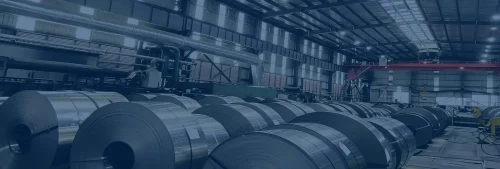
CRNGO (Non-Grain Oriented) Electrical Steel FAQs
Understanding CRNGO Electrical Steel

CRNGO electrical steel plays a key role in modern industry. Its name stands for non-grain oriented steel. This material carries magnetic properties in all directions. As a result, it suits many rotating machines. Manufacturers often choose it for motors and generators.
What Makes CRNGO Steel Different
CRNGO electrical steel differs from grain-oriented types. Grain-oriented steel performs best along one rolling direction. In contrast, CRNGO steel offers uniform magnetic behavior. This happens because its grains lack a preferred orientation. Therefore, it works well in complex magnetic circuits. It also handles changing magnetic fields without severe losses.
Key Magnetic Properties
Core loss remains a critical measure for this steel. Low core loss means less wasted energy as heat. High permeability allows easy magnetization and demagnetization. These traits improve motor efficiency. They also reduce operating temperatures. Additionally, good stacking factor saves space in tight designs. Such properties matter for electric vehicle traction motors.
Common Applications in Industry
CRNGO electrical steel appears in many everyday devices. It forms the core of induction motors and small transformers. It also serves in alternators and magnetic clutches. Appliances like refrigerators and washing machines rely on it. Even power tools use this steel for reliable performance. Its versatility makes it a staple in electrical engineering.
Manufacturing and Processing Steps
Producers make CRNGO steel through careful rolling and annealing. Hot rolling breaks down the cast structure. Cold rolling then reduces thickness to precise gauges. Annealing relieves stress and grows grains. Finally, an insulating coating prevents eddy currents. Each step affects the final magnetic quality.
Why Thickness and Coating Matter
Thinner steel sheets lower eddy current losses. However, thinner material can raise manufacturing costs. Coating types also influence performance. Organic coatings suit punching and shearing. Inorganic coatings withstand high annealing temperatures. Engineers balance these factors for each application.
適切なグレードの選定
Grade selection depends on frequency and flux density. Low-frequency motors often use thicker sheets. High-frequency transformers need thinner, high-resistance grades. Designers also consider mechanical strength. Yield strength affects how the core handles stress. Corrosion resistance may matter in humid environments.
Benefits for Energy Efficiency
Energy efficiency drives demand for CRNGO steel. Better magnetic properties cut electricity waste. This reduces carbon emissions from power plants. It also lowers consumer electricity bills. Governments often set efficiency standards for motors. Thus, CRNGO steel supports global sustainability goals.
Challenges and Limitations
CRNGO steel has some drawbacks. It offers lower permeability than grain-oriented steel in rolling direction. So, it may not suit large power transformers. Its magnetic losses can rise at very high frequencies. Additionally, proper handling prevents surface damage. Damaged edges can increase core loss.
Future Trends and Innovations
Researchers seek to improve CRNGO steel further. New alloys may reduce core loss even more. Advanced coatings could allow higher annealing temperatures. Recycling methods also gain attention. Electric vehicles and renewable energy will boost demand. Therefore, CRNGO steel will remain vital for decades.
Conclusion: Value for Modern Engineering
CRNGO electrical steel offers balanced magnetic performance. It supports efficient motors, generators, and transformers. Its non-oriented nature simplifies design for rotating machines. By choosing the right grade, engineers achieve energy savings. As electrification grows, this steel will stay essential. Understanding its properties helps businesses make smart material choices.





 English
  Japanese
  Korean
  French
  German
  Spanish
  Portuguese
  Russian
  Arabic
  Italian
  Turkish
  Dutch
Dutch  Polish
  Swedish
  Danish
  Norwegian
  Finnish
  Greek
Greek  Hungarian
  Czech
Czech  Romanian
  Bulgarian
  Slovenian
  Croatian
  Slovak
  Malay
Malay  Indonesian
  Thai
Thai  Vietnamese
  Myanmar
  Khmer
Khmer  Lao
Lao  Tagalog
  Hindi
Hindi  Bengali
  Urdu
Urdu  Nepali
  Sinhala
  Hebrew
  Ukrainian
  Serbian
  Icelandic
  Swahili