
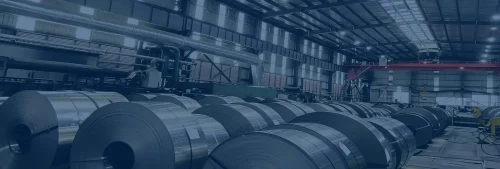
How Is Silicon Steel Manufactured? A Complete Step-by-Step Guide
Silicon steel, also called electrical steel, is a special soft‑magnet alloy made from iron and silicon. It acts as a key raw material for transformers, electric motors, generators and many electrical inductance parts. It delivers low magnetic loss, strong magnetic permeability and reliable electrical insulation. For this reason, 珪素鋼 plays a critical role in power transmission, new‑energy vehicles, industrial electric devices and smart grid sectors. Many industry workers and buyers want to know: how is 珪素鋼 manufactured. Making silicon steel demands precise, multi‑step industrial work that combines metallurgy, rolling and heat treatment. This guide walks you through its full production workflow, from raw material prep to final product checks. You will gain clear insight into how makers produce high‑quality electrical steel.

Manufacturers complete silicon steel production in six key phases. These phases cover raw material mixing and smelting, continuous casting, hot rolling, cold rolling, annealing plus coating, and final finishing with testing. Workers closely manage temperature, pressure and chemical makeup at every step. These tight controls secure good magnetic performance and stable mechanical properties for end‑use silicon steel.
1. Raw Material Preparation and Vacuum Smelting
High‑quality silicon steel starts with careful raw‑material selection and smelting‑based purification. Producers use high‑purity molten iron, low‑carbon steel scrap and industrial silicon as main inputs. They add small amounts of manganese and aluminum to tune alloy behaviors. Teams must limit carbon, sulfur and phosphorus impurities. Extra carbon raises magnetic loss and shortens the service life of electric equipment.
During smelting, factories run vacuum‑induction or electric‑arc furnace processes. High heat and vacuum settings strip harmful gases and impurities out of molten steel. Operators mix silicon evenly into molten iron following strict ratio rules. Most commercial silicon steel holds 1.5 %‑4.5 % silicon content. Low‑silicon grades (1.5 %‑3.0 %) fit high‑speed rotating motors. High‑silicon grades (3.0 %‑4.5 %) work best for static transformer hardware. Lab staff sample and test molten steel after smelting. Material can move onward only once it meets global and local industry standards.
2. Continuous Casting to Form Steel Billets
Workers feed purified liquid silicon steel into continuous‑casting machines for solidification and shaping. This process turns liquid steel into solid rectangular or square steel billets. Continuous casting beats older ingot‑casting methods. It creates more consistent internal material structure. It also lowers defects like air holes and cracks, and keeps later rolling results uniform.
Operators fine‑tune cooling speed inside casting equipment. Fast cooling creates unwanted internal stress in billets. Slow cooling leads to uneven grain spread across the metal. Once casting finishes, billets cool down slowly over time. This step removes thermal stress and stops cracks during later hot rolling work. Staff sort and store qualified billets for upcoming hot‑rolling jobs.
3. High‑Temperature Hot Rolling Processing
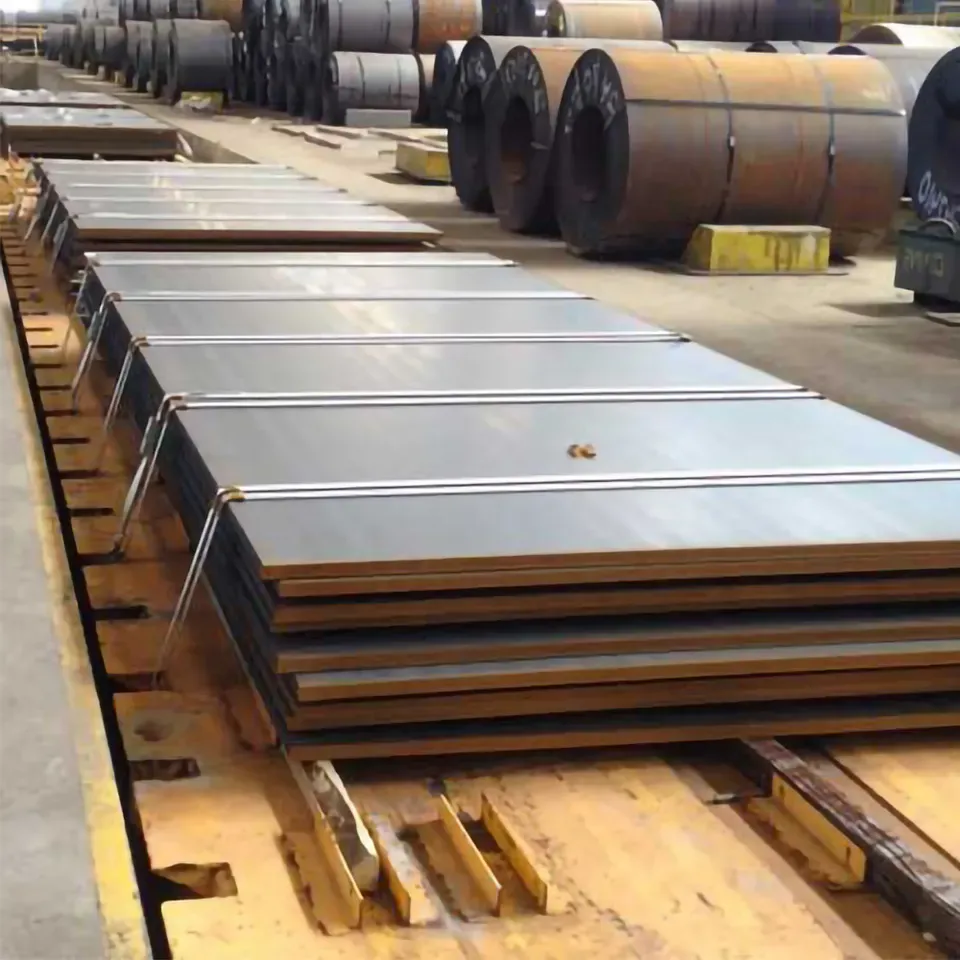
Hot rolling turns thick silicon‑steel billets into early‑stage steel strips. First, a heating furnace brings billets up to 1100‑1200℃. Heat gives the metal good flexibility for shaping. Next, multi‑stand rolling mills process hot billets continuously. Mills compress thick billets step‑by‑step into hot‑rolled strips 2.0‑4.0 mm thick.
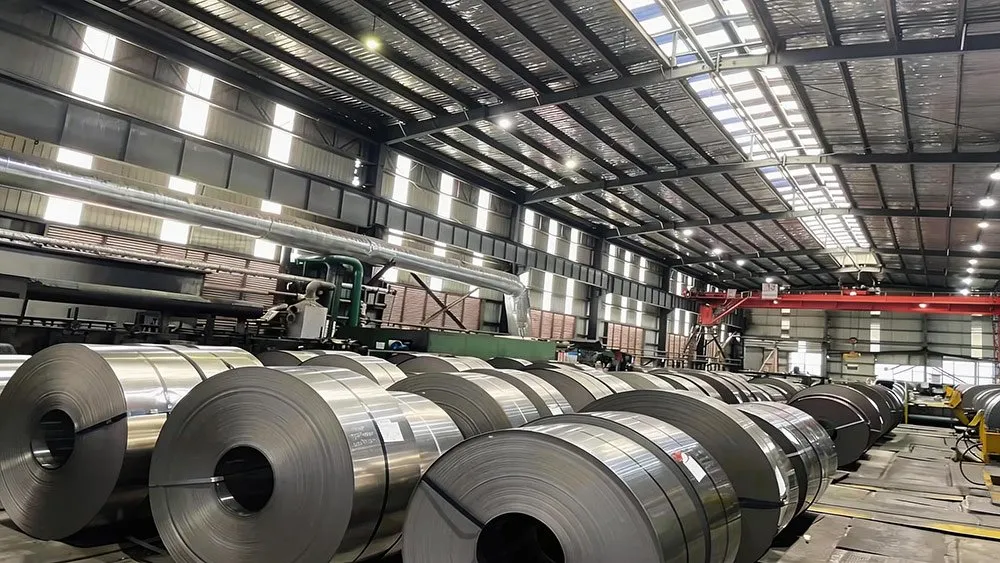
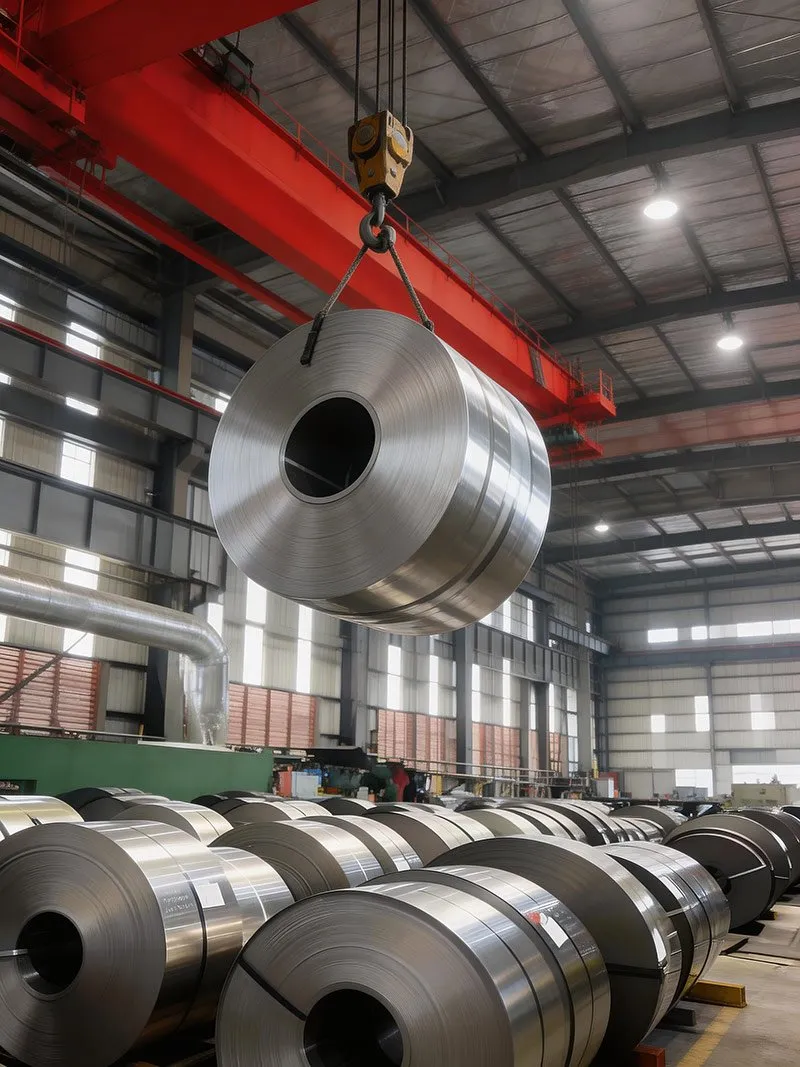
Hot rolling breaks large, coarse grains inside billets. It builds uniform, dense base micro‑structures. Rolling also removes leftover impurities and boosts metal compactness. Once rolling completes, fast cooling systems treat hot strips to lock in favorable material texture. Factories then coil these strips for storage. Note that hot‑rolled silicon steel cannot go straight into electric‑device assembly. Its thickness varies and its magnetic performance remains unstable. It still needs cold rolling and further processing.
4. Precision Cold Rolling for Thickness Calibration
Cold rolling defines finished silicon steel’s size accuracy and surface quality. Factories pickle hot‑rolled strips first. Pickling washes away surface oxide and rust. Clean surfaces prevent flaws that would hurt later processing and insulation effects. Clean strips then go into high‑precision cold mills for multiple rolling passes at room temperature.
Technicians adjust roller gaps with high accuracy. Cold mills squeeze hot‑rolled feedstock into thin strips of standard sizes: 0.35 mm, 0.5 mm and 0.65 mm. These sizes represent mainstream commercial silicon‑steel specs. Cold rolling delivers even thickness and flat surfaces. It refines inner grain structures and helps cut magnetic loss later. Makers follow different rolling rules for oriented and non‑oriented silicon steel. Oriented grades use directional rolling to create ordered grain layouts. Non‑oriented grades apply balanced rolling so magnetic properties stay consistent in every direction.
5. Annealing and Insulation Coating Treatment
Cold rolling creates inner stress and warps grain structures inside silicon steel. These changes weaken magnetic permeability. For this reason, high‑temperature annealing proves necessary. Factories feed cold‑rolled strips into continuous annealing furnaces. Furnaces heat and hold strips under mixed nitrogen‑hydrogen protective gas. This setup removes rolling stress, fixes distorted grains and triggers recrystallization. The metal forms soft, magnetically favorable grain patterns.
After annealing, production lines add special inorganic insulating coatings onto steel surfaces. This coating offers solid insulation, heat resistance and strong adhesion. It cuts eddy‑current loss between stacked steel sheets and lifts energy efficiency for electric hardware. Producers tweak coating thickness and formulas for different use‑cases. Transformer‑grade silicon steel gets thicker, high‑insulation coatings. Motor‑grade products use thinner, flexible coatings that suit stamping work.
6. Finishing, Inspection and Finished Product Storage
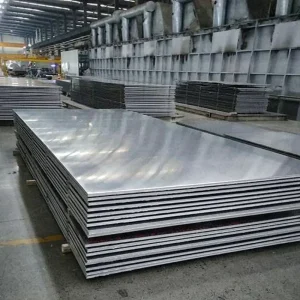
Finishing and quality checks form the final phase of silicon‑steel manufacturing. Machines level, trim edges and slit coated steel strips per client requirements. These steps remove uneven edges and keep dimensions precise. Next, inspectors run full professional tests. Tests cover size tolerance, surface condition, magnetic loss, permeability and insulation performance.
Only parts passing all parameter checks receive packaging for warehouse storage. Teams rework or scrap defective stock. This rule guarantees factory‑output silicon steel meets demands for high‑precision electric equipment. Fully tested finished silicon steel serves grid transformers, new‑energy vehicle drive motors, wind‑power hardware and home appliances.

結論
All in all, silicon‑steel manufacturing counts as high‑precision industrial work. It combines smelting, casting, rolling, heat treatment and surface coating. Every single stage — from raw‑material purification through final inspection — shapes silicon steel’s magnetic performance and working lifespan. As new‑energy and smart‑power industries expand fast, silicon‑steel production technology keeps improving. Manufacturers aim for higher permeability, lower loss and more custom‑tailored output. Learning how silicon steel is manufactured supports industry buyers to pick proper electrical‑steel grades. It also helps teams grasp core quality points for electric‑equipment production.





 English
  Japanese
  Korean
  French
  German
  Spanish
  Portuguese
  Russian
  Arabic
  Italian
  Turkish
  Dutch
Dutch  Polish
  Swedish
  Danish
  Norwegian
  Finnish
  Greek
Greek  Hungarian
  Czech
Czech  Romanian
  Bulgarian
  Slovenian
  Croatian
  Slovak
  Malay
Malay  Indonesian
  Thai
Thai  Vietnamese
  Myanmar
  Khmer
Khmer  Lao
Lao  Tagalog
  Hindi
Hindi  Bengali
  Urdu
Urdu  Nepali
  Sinhala
  Hebrew
  Ukrainian
  Serbian
  Icelandic
  Swahili