
How to identify high magnetic induction grain-oriented silicon steel grades such as 30QG110 and 27QG105
Introduction
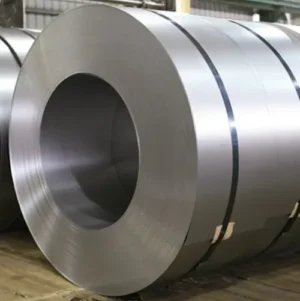
High magnetic induction grain-oriented acciaio al silicio is vital for efficient transformers. Grades like 30QG110 and 27QG105 offer low core loss and high permeability. Yet, identifying these grades correctly prevents costly mistakes. This article explains practical methods to recognize them. It covers thickness, coating, magnetic properties, and standards. By the end, you will know how to verify these grades with confidence.
Check the Nominal Thickness First
Thickness is the easiest starting point. Grade names often include a number that shows thickness in millimeters. For 30QG110, the “30” means 0.30 mm. For 27QG105, the “27” means 0.27 mm. However, a caliper or micrometer confirms the actual value. Always measure at several points. Variation beyond 0.02 mm may signal a wrong grade. Therefore, thickness alone is not enough. You must combine it with other tests.
Examine the Surface Coating
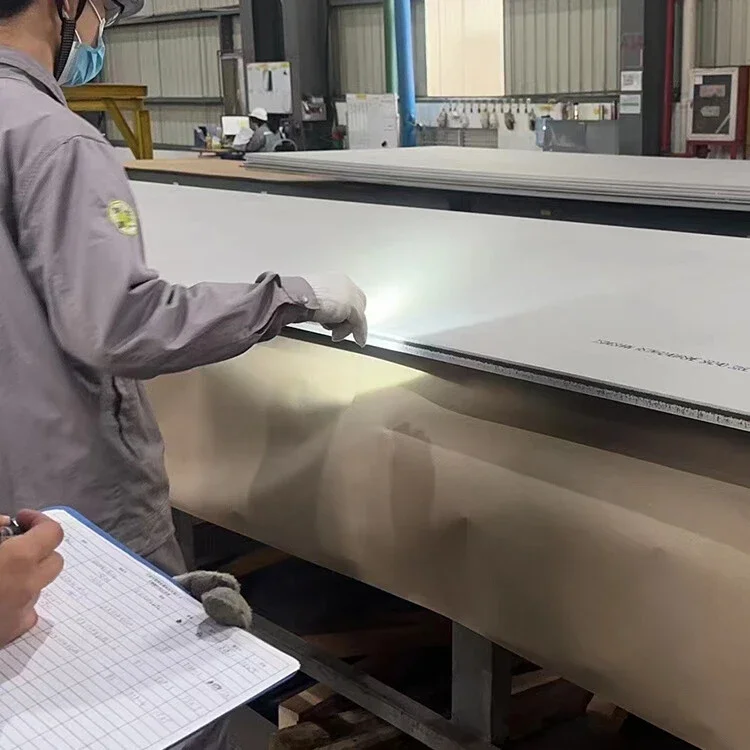
Grain-oriented acciaio al silicio usually has an insulating coating. This coating reduces eddy current losses. For high induction grades, the coating is often thin and uniform. A visual check under good light reveals its color and texture. Typically, it looks gray or light brown. Scratches or bare spots indicate poor quality. In addition, a coating tester measures surface resistance. Low resistance suggests a standard grade, not a high induction one. So, coating quality supports grade identification.
Measure Magnetic Induction (B800)
Magnetic induction at 800 A/m is a key parameter. It is written as B800. High induction grades like 30QG110 and 27QG105 have B800 above 1.88 T. You need a single sheet tester or Epstein frame. First, prepare samples in the rolling direction. Then, apply a magnetic field and record the flux density. Repeat the test for accuracy. If B800 is lower than 1.85 T, the steel is likely a regular grade. Thus, this measurement directly separates high induction products.
Determine Core Loss (P17/50)
Core loss at 1.7 T and 50 Hz is another critical value. It is written as P17/50. For 30QG110, the maximum loss is 1.10 W/kg. For 27QG105, it is 1.05 W/kg. A wattmeter and power supply measure this loss. Keep the frequency stable at 50 Hz. Also, control the temperature near 23°C. Higher loss means lower efficiency. If the loss exceeds the limit, the grade is not genuine. Hence, core loss testing confirms the grade name.
Verify the Magnetostriction and Stress Relief
High induction grades often show low magnetostriction. This property reduces transformer noise. You can test it with a strain gauge. In addition, these steels respond well to stress relief annealing. After annealing, their magnetic properties improve. A poor response suggests a different grade. However, this test is less common in routine checks. Use it when other methods give unclear results. Therefore, magnetostriction and annealing serve as secondary evidence.
Review the Mill Certificate and Standards
Every coil or sheet comes with a mill certificate. This document lists the grade, thickness, and magnetic values. Check that the certificate matches the physical sample. Also, look for international standards like IEC 60404-8-7 or ASTM A876. These standards define the requirements for 30QG110 and 27QG105. A genuine certificate includes test results from the producer. If the certificate is missing or altered, treat the steel as unknown. Thus, paperwork is a strong identification tool.
Conclusione
Identifying high magnetic induction grain-oriented acciaio al silicio grades requires a step-by-step approach. Start with thickness and coating. Then measure B800 and P17/50. Finally, review the mill certificate and standards. No single test is perfect. But combining these methods gives reliable results. For 30QG110 and 27QG105, the values are clear and measurable. Always document your findings for future reference. This practice saves time, reduces waste, and ensures transformer performance.





 English
  Japanese
  Korean
  French
  German
  Spanish
  Portuguese
  Russian
  Arabic
  Italian
  Turkish
  Dutch
Dutch  Polish
  Swedish
  Danish
  Norwegian
  Finnish
  Greek
Greek  Hungarian
  Czech
Czech  Romanian
  Bulgarian
  Slovenian
  Croatian
  Slovak
  Malay
Malay  Indonesian
  Thai
Thai  Vietnamese
  Myanmar
  Khmer
Khmer  Lao
Lao  Tagalog
  Hindi
Hindi  Bengali
  Urdu
Urdu  Nepali
  Sinhala
  Hebrew
  Ukrainian
  Serbian
  Icelandic
  Swahili