

Why magnetic conductivity reaches the maximum only along the rolling direction
Why Magnetic Conductivity Peaks Along the Rolling Direction
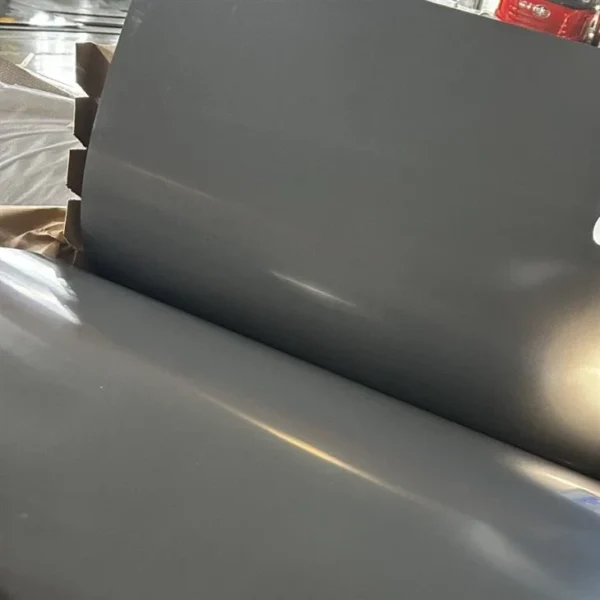
Magnetic conductivity, often called permeability, varies with direction in many metals. This property matters for motors, transformers, and sensors. Engineers notice a clear pattern in rolled steel. The highest value appears along the rolling direction. This article explains the physical reasons behind that peak. It also covers practical effects for material selection.
The Role of Grain Orientation in Rolled Metals
Rolling forces metal grains to rotate and align. Most grains end up with a preferred crystal orientation. This alignment is called texture. In body-centered cubic metals like iron, easy magnetization axes lie along cube edges. The rolling process pushes more grains to align those edges with the rolling direction. As a result, magnetic domains switch more easily along that axis. Permeability therefore reaches its maximum there. Across the rolling direction, grains offer more resistance to domain rotation.
Domain Wall Motion and Easy Axes
Magnetic conductivity depends on how freely domain walls move. Domain walls separate regions with different magnetization directions. When an external field applies, walls shift to grow favorable domains. This motion is easiest when the field aligns with a crystal easy axis. In rolled steel, the rolling direction hosts more easy axes. Thus, walls glide with less pinning. Permeability rises. In contrast, transverse directions create more obstacles. Walls face higher energy barriers. So magnetic conductivity drops.
Stress Anisotropy and Its Influence
Rolling also introduces residual stress. This stress is not uniform. It tends to align with the rolling direction. Compressive stress along that axis can reduce domain wall pinning. Tensile stress across the direction can increase it. The net effect favors magnetization along rolling. Additionally, stress relief annealing can enhance this anisotropy. Without annealing, stress may randomize some grains. But the rolling texture usually remains dominant. Consequently, the peak permeability stays along the rolling axis.
Impurities, Inclusions, and Directional Pinning
Non-metallic inclusions and impurities disrupt domain wall motion. These defects often string out during rolling. They form elongated lines parallel to the rolling direction. Such lines create less pinning for walls moving along them. Walls moving across the lines hit more obstacles. Therefore, magnetic conductivity stays higher along rolling. Cleaner steels show a stronger peak. Dirty steels show a weaker but still present peak. This effect combines with grain texture to reinforce the directional maximum.
Practical Implications for Magnetic Components
Designers use this knowledge in electrical steel. Transformer cores cut laminations along the rolling direction. Motor stators orient teeth to match that axis. This choice lowers hysteresis loss and raises efficiency. If a designer ignores the direction, performance suffers. Permeability drops. Core loss rises. Heat builds up. So the rolling direction becomes a critical design parameter. Testing standards also measure magnetic properties along that axis. Buyers should request data that reflects the intended field direction.
Measurement and Quality Control
Epstein frames and single-sheet testers measure permeability in specific directions. A good test report shows values parallel and perpendicular to rolling. The parallel value is always higher. Quality control checks that this anisotropy stays within limits. Excessive cross-rolling or poor annealing can weaken the peak. Thus, manufacturers monitor texture and stress. They adjust rolling schedules and heat treatments. The goal is a sharp, predictable maximum along the rolling direction.
Conclusion and Value Summary
Magnetic conductivity reaches its maximum along the rolling direction due to three linked factors. First, grain texture aligns easy magnetization axes with that direction. Second, domain walls move more freely along those axes. Third, elongated inclusions and stress patterns favor that same direction. Together, these effects create a reliable peak. For engineers, this means better efficiency when designing magnetic cores. For buyers, it means specifying the correct orientation. Understanding this principle leads to smarter material choices and improved device performance.





 English
  Japanese
  Korean
  French
  German
  Spanish
  Portuguese
  Russian
  Arabic
  Italian
  Turkish
  Dutch
Dutch  Polish
  Swedish
  Danish
  Norwegian
  Finnish
  Greek
Greek  Hungarian
  Czech
Czech  Romanian
  Bulgarian
  Slovenian
  Croatian
  Slovak
  Malay
Malay  Indonesian
  Thai
Thai  Vietnamese
  Myanmar
  Khmer
Khmer  Lao
Lao  Tagalog
  Hindi
Hindi  Bengali
  Urdu
Urdu  Nepali
  Sinhala
  Hebrew
  Ukrainian
  Serbian
  Icelandic
  Swahili