
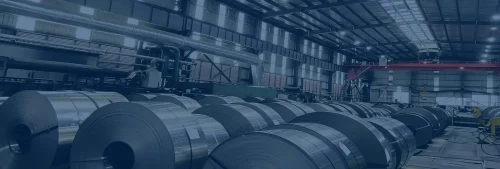
Is Silicon Steel Harder Than Ordinary Steel?
I. Hardness Properties of Silicon Steel
Silicon steel is an alloy material produced by adding 1%–3% silicon to plain carbon steel. However, the addition of silicon slightly reduces its hardness instead. Silicon atoms intrude into the interstices of iron lattices and trigger lattice distortion, making the material brittle rather than harder. Actual measured hardness data are as follows:
- Hardness of ordinary low-carbon steel: approximately 120–150 HB
- Typical hardness of acciaio al silicio: approximately 100–130 HB
Interestingly, this slight softening property makes acciaio al silicio ideal for motor cores—it delivers excellent stamping formability along with low magnetic loss.
II. Performance Comparison Beyond Hardness
Despite its lower hardness, silicon steel boasts remarkable advantages in other critical properties:
- Electromagnetic performance: Its electrical resistivity is five times higher than that of ordinary steel, drastically cutting eddy current loss.
- Magnetic permeability: 2–3 times that of regular steel, enabling higher efficiency of electric energy conversion.
- Thermal stability: Magnetic properties remain nearly unchanged below 200 °C.
These characteristics render silicon steel an irreplaceable material for power equipment, even though a knife can leave deeper scratches on its surface.

III. Balanced Thinking for Material Selection
Engineers select materials much like chefs pick ingredients—no single performance indicator alone determines suitability:
- Wear-resistance scenarios: High-carbon steel is preferred (hardness up to 60 HRC).
- Magnetic conduction requirements: Silicon steel serves as the optimal choice despite its lower hardness.
- Extreme service environments: Stainless steel with moderate hardness may be adopted.
Materials science has developed thousands of special steel grades, analogous to multi-function Swiss Army knives; the best choice hinges entirely on the intended application.





 English
  Japanese
  Korean
  French
  German
  Spanish
  Portuguese
  Russian
  Arabic
  Italian
  Turkish
  Dutch
Dutch  Polish
  Swedish
  Danish
  Norwegian
  Finnish
  Greek
Greek  Hungarian
  Czech
Czech  Romanian
  Bulgarian
  Slovenian
  Croatian
  Slovak
  Malay
Malay  Indonesian
  Thai
Thai  Vietnamese
  Myanmar
  Khmer
Khmer  Lao
Lao  Tagalog
  Hindi
Hindi  Bengali
  Urdu
Urdu  Nepali
  Sinhala
  Hebrew
  Ukrainian
  Serbian
  Icelandic
  Swahili